Disputed Society Dues Can Disqualify Members From Contesting Housing Society Elections: Bombay High Court
Saksham Vaishya
28 Nov 2026 4:00 PM IST
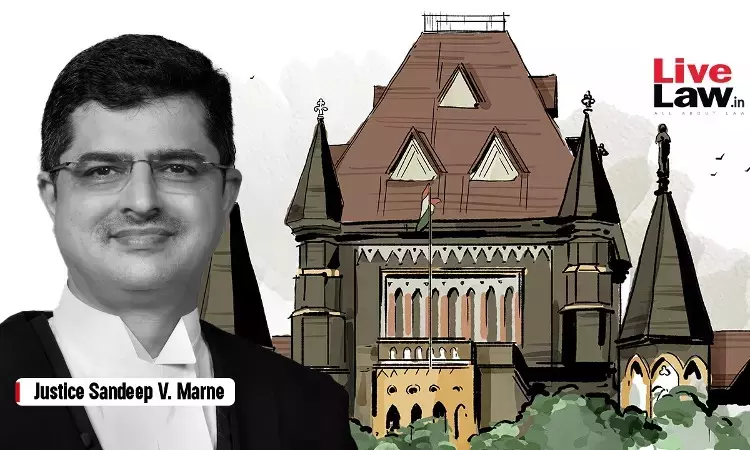
The Bombay High Court has held that a member of a co-operative housing society can be disqualified from contesting managing committee elections for failing to pay demanded society dues, even if the amount is disputed and recovery proceedings are pending. The Court observed that the statutory disqualification under the Maharashtra Co-operative Societies Act, 1960, is triggered automatically once the demanded dues remain unpaid for three months, and is not suspended by pending recovery proceedings.
Justice Sandeep V. Marne was hearing two writ petitions filed challenging orders passed by the Deputy Registrar of Co-operative Societies on November 19, 2026. The Deputy Registrar had allowed appeals filed by Respondent No. 4, setting aside the Election Officer's decision to reject their nominations for the managing committee elections on the ground that they were defaulters.
The dispute arose after the two members paid their outstanding regular maintenance charges but withheld amounts demanded by the society towards major repairs. They disputed liability for ₹3,04,966 in respect of each flat, contending that they had already contributed towards earlier repair and lift-installation expenses.


The Court noted that the members were entitled to contest the society's demand in recovery proceedings, including by arguing that they were not liable to contribute towards major repairs. However, disputing the demand did not take them outside the definition of defaulters. Once the society had demanded the dues and the statutory three-month period had expired, the default occurred automatically, irrespective of the justification offered for non-payment.
The Court further clarified that the right to defend recovery proceedings and the right to contest society elections are distinct. Mere pendency of proceedings under Section 154B-29 does not suspend the consequences of default.
“Mere pendency of recovery proceedings initiated by the Society under Section 154B-29 of the Act does not result in suspension of consequences flowing out of default. Once a bill or notice for payment is served on a member by the Society and a period of 3 months has expired, the default automatically occurs. The disqualification attached to the default also triggers immediately and the same does not get suspended during pendency of the recovery proceedings,” the Court remarked.
Rejecting the distinction drawn by the Deputy Registrar between regular maintenance dues and contributions towards major repairs, the Court held that the MCS Act does not treat the two categories differently.
“The concept of a 'defaulter' applied in respect of every demanded 'dues' of the society and the Act does not differentiate between the regular maintenance dues and contribution to the repair fund. Even default in contributing to the repair fund would make Respondent No. 4 in both Petitions as 'defaulters' automatically attracting the disqualification under Section 154B-23 of the MCS Act,” the Court observed.
Accordingly, the High Court allowed both writ petitions, set aside the Deputy Registrar's orders dated November 19, 2026, and restored the Election Officer's decisions dated November 9, 2026, declaring the two members disqualified from contesting the elections.
Case Title: Sameer Lalit Kanodia v. State of Maharashtra [Writ Petition Nos. 15657 of 2026 and 15658 of 2026]