




Calcutta High Court
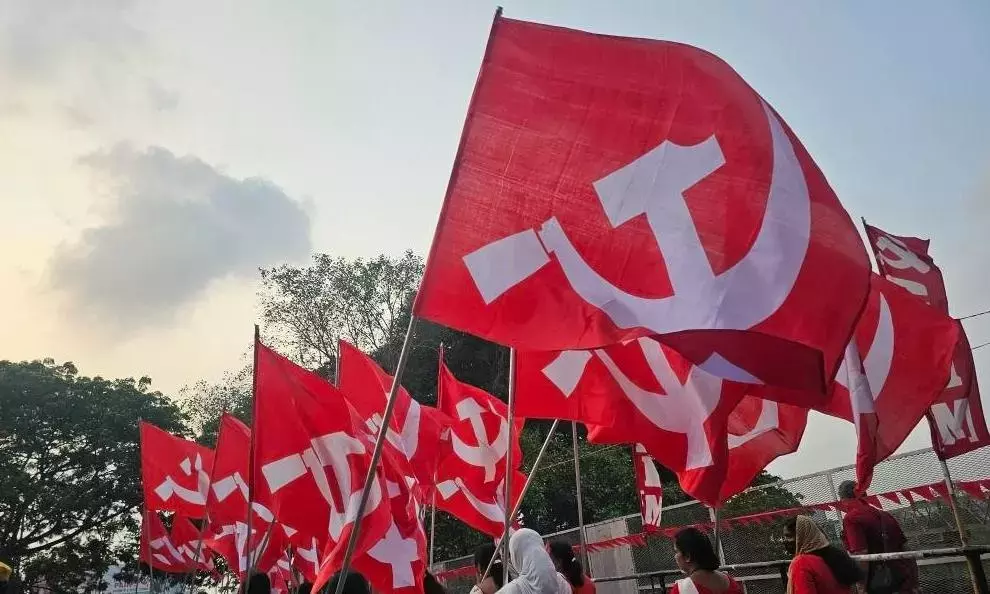
“Different Ideologies Welcome In Democracy”: Calcutta High Court Directs Police Protection For CPI(M) Durga Puja Book Stall
The Calcutta High Court has directed the police to ensure that members of the Communist Party of India (Marxist) [CPI(M)] can erect and operate their book stall during Durga Puja without obstruction, observing that the dissemination of different political ideologies is essential for a fruitful, deep-rooted and mature democracy.Justice Saugata Bhattacharyya directed the Superintendent of...
Calcutta High Court Sets Aside Appointment Of Govt College Principal, Says State Cannot Create 'Eminent Artist' Criteria Outside UGC Norms
The Calcutta High Court has held that the State cannot create an alternative eligibility route for appointing a college principal on the basis of eminence as a professional artist if it is inconsistent with the binding University Grants Commission (UGC) Regulations, 2010.Setting aside the appointment of Chhatrapati Dutta as Principal of the Government College of Art and Craft, Kolkata,...
Calcutta High Court Commutes Death Sentence Of Man Convicted Of Murdering Wife, 18-Month-Old Daughter
The Calcutta High Court has commuted the death sentence awarded to a man convicted of murdering his wife and 18-month-old daughter to life imprisonment, holding that the circumstances of the crime did not justify classifying it as one of the “rarest of rare” cases warranting capital punishment.A Division Bench of Justice Shampa Sarkar and Justice Smita Das De upheld the conviction of...
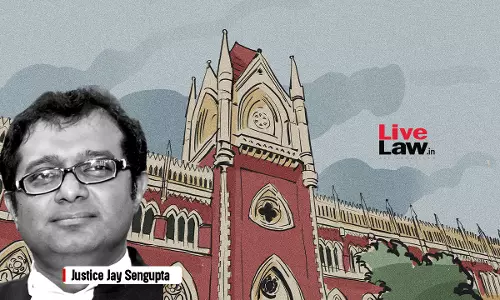
Calcutta High Court Reduces Bangladeshi Woman's Sentence For Illegal Entry To Period Already Served, Orders Repatriation
The Calcutta High Court has reduced the prison sentence of a Bangladeshi woman convicted under Section 14A(b) of the Foreigners Act, 1946, to the period already undergone and directed that she be released forthwith and repatriated to Bangladesh in accordance with law.Justice Jay Sengupta passed the order while hearing an appeal filed by Tanushree Sarkar alias Putul, who had been sentenced...
Calcutta High Court Upholds Life Sentence Of Couple For Murder Of 6-Year-Old Girl, Concealing Body In Bag Under Cot
The Calcutta High Court has upheld the conviction and life sentences imposed on a couple for murdering a six-and-a-half-year-old girl and concealing her body inside a bag kept under their cot in 2011, holding that the chain of circumstantial evidence established their guilt beyond reasonable doubt.A Division Bench of Justice Rajasekhar Mantha and Justice Anuj Singh dismissed the criminal...
"No Masjid On Calcutta High Court Rooftop, Room With Religious Text Found": HC Clarifies, Questions Advocate Over Possession Of Keys
In a peculiar development, the Calcutta High Court has found that there is no masjid constructed on the rooftop of the High Court building, following an inspection by the Registry, which discovered a small room containing religious literature and other belongings. The Court has sought an explanation from an advocate who was found to be in custody of the keys to the room.A Division Bench of...
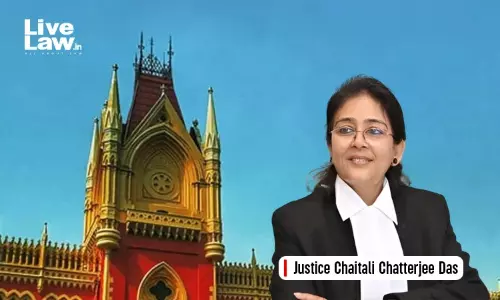
Calcutta High Court Grants Interim Bail To Former Bidhannagar Mayor Sabyasachi Dutta In Corruption Case
The Calcutta High Court has granted interim bail to former Bidhannagar Mayor and former Trinamool Congress MLA Sabyasachi Dutta in a corruption case, noting that the complaint alleging a demand for money in 2018 was lodged only in 2026 without any explanation for the inordinate delay.Justice Chaitali Chatterjee (Das) granted Dutta interim bail until November 30, 2026, subject to...
'Stifling Other Parties Not Spirit Of Democracy': Calcutta High Court Tells State In CPM's Plea Seeking Durga Puja Book Stall
The Calcutta High Court on Wednesday (October 14) observed that the State should “not stifle the voice of other parties, as that is not the spirit of democracy” while hearing a plea filed by the Communist Party of India (Marxist) (CPIM) seeking permission to set up a book stall outside its office during Durga Puja.Justice Saugata Bhattacharya questioned why the CPIM should be prevented...

Mahua Moitra Disputes WB Govt Statement Before Calcutta High Court Claiming She Was Given X-Category Security
The Calcutta High Court on Wednesday (October 14) permitted Trinamool Congress MP Mahua Moitra to implead the Union Ministry of Home Affairs (MHA) in her plea seeking enhanced security cover, after her counsel disputed the West Bengal government's submission that she was already being provided a personal security officer (PSO) round the clock, as claimed by the state.Justice Saugata...

“More Enthused To Write Social History Than Judgment”: Calcutta High Court Criticises District Judge For Ignoring Statute In Succession Case
The Calcutta High Court has held that the Hindu Succession Act, 1956, overrides customary law of primogeniture governing succession to a Mankiary estate, observing that the customary rule stood abrogated after the enactment came into force.Justice Sugato Majumdar set aside a first appellate court judgment that had recognised a plaintiff's right to an eight-anna (half) share in the...
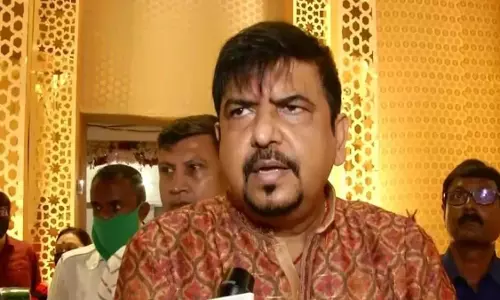
Calcutta High Court Rejects TMC Leader Sujit Bose's Bail Plea In Alleged Municipal Recruitment Scam
The Calcutta High Court has rejected the bail plea of former West Bengal Minister Sujit Bose in a money laundering case linked to alleged irregularities in municipal recruitments, marking the third time the High Court has declined to grant him bail in the case.Justice Tirthankar Ghosh rejected Bose's bail application on October 13, 2026, after hearing arguments from both sides. Bose was...
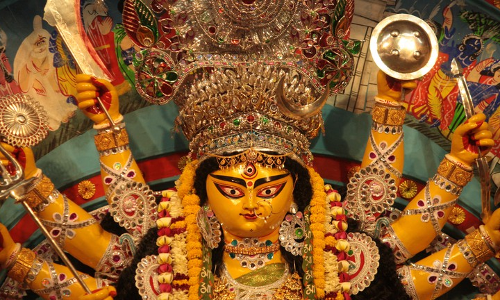
Durga Puja Is For Public, Organisers Have No Vested Right: Calcutta High Court Allows Railway Workers' Union Puja
The Calcutta High Court has allowed an employees' union of the Eastern Railway's Sealdah Division to organise Durga Puja on a demarcated portion of a railway ground, alongside the Sealdah Railway Athletic Club, observing that Puja is meant for the public and that organisers merely execute the celebrations.A Division Bench of Justice Shampa Sarkar and Justice Arjun Ray Mukherjee set aside a...