




Chhattisgarh High Court
Chhattisgarh High Court Awards ₹25,000 Compensation For Illegal Detention After Man Kept In Jail Despite Furnishing Court-Ordered Bail Bond
The Chhattisgarh High Court has awarded ₹25,000 as compensation to a man whose right to life and personal liberty under Article 21 of the Constitution was violated after he was kept in judicial custody despite furnishing the bail bond directed by the Executive Magistrate. The Court observed that a person arrested merely on suspicion, against whom no cognizable or non-bailable offence is...
Chhattisgarh High Court To Monitor Statewide Implementation Of SOP To Prevent Dog-Bite Incidents, Manage Stray Dogs
The Chhattisgarh High Court has directed continued monitoring of the implementation of the Standard Operating Procedure (SOP) for the prevention of dog-bite incidents and management of stray dogs, observing that effective compliance across all districts is necessary to safeguard public safety. The Court observed that the steps reflected in the affidavit indicate that substantial steps have...
Employer Must Verify Voluntariness Of Employee's Resignation If Letter Mentions 'Threat Or Pressure': Chhattisgarh High Court
The Chhattisgarh High Court has held that where a resignation letter itself expressly states that it is being tendered under "threat" or "pressure", the employer is under an obligation to verify whether the resignation is voluntary before accepting it. The Court observed that acceptance of such a resignation without any inquiry into its voluntariness renders the acceptance legally...
Protection Of Defence Land From Illegal Mining Is 'Continuing Statutory Obligation': Chhattisgarh High Court In Suo Moto PIL
The Chhattisgarh High Court has held that protection of Defence land from illegal mining and prevention of unlawful excavation of minor minerals constitute a continuing statutory obligation of the authorities concerned. The Court observed that although the purpose of the present suo motu public interest litigation had been substantially achieved through coordinated action by the Union and...
Criminal Liability Can't Be Imposed On Directors Solely Due To Designation: Chhattisgarh High Court Grants Bail In CSMCL Corruption Case
The Chhattisgarh High Court has granted regular bail to two Directors of a manpower supply company arraigned in the Chhattisgarh State Marketing Corporation Limited (CSMCL) corruption case, holding that criminal liability cannot be fastened upon a person merely because of his designation as a Director. The Court observed that, unless a statute specifically creates vicarious criminal liability...

Continuous Stalking & Death Threats For Refusing Marriage Constitute Instigation For Suicide: Chhattisgarh High Court
The Chhattisgarh High Court has held that continuous stalking, harassment, pressure to marry, and repeated death threats for refusing marriage constitute a "positive act" of instigation capable of attracting the offence of abetment of suicide under Section 306 IPC. The Court observed that the conduct of the accused clearly demonstrated a continuous course of conduct constituting...
Married Woman Can Claim Compassionate Appointment After Father's Death, No Presumption Of Dependence On Husband: Chhattisgarh High Court
The Chhattisgarh High Court has held that a married daughter cannot be denied consideration for compassionate appointment merely on the presumption that she is dependent upon her husband and not upon her deceased father. The Court observed that dependency is a question of fact to be determined on the evidence in each case and that marital status, by itself, cannot furnish a valid basis to...
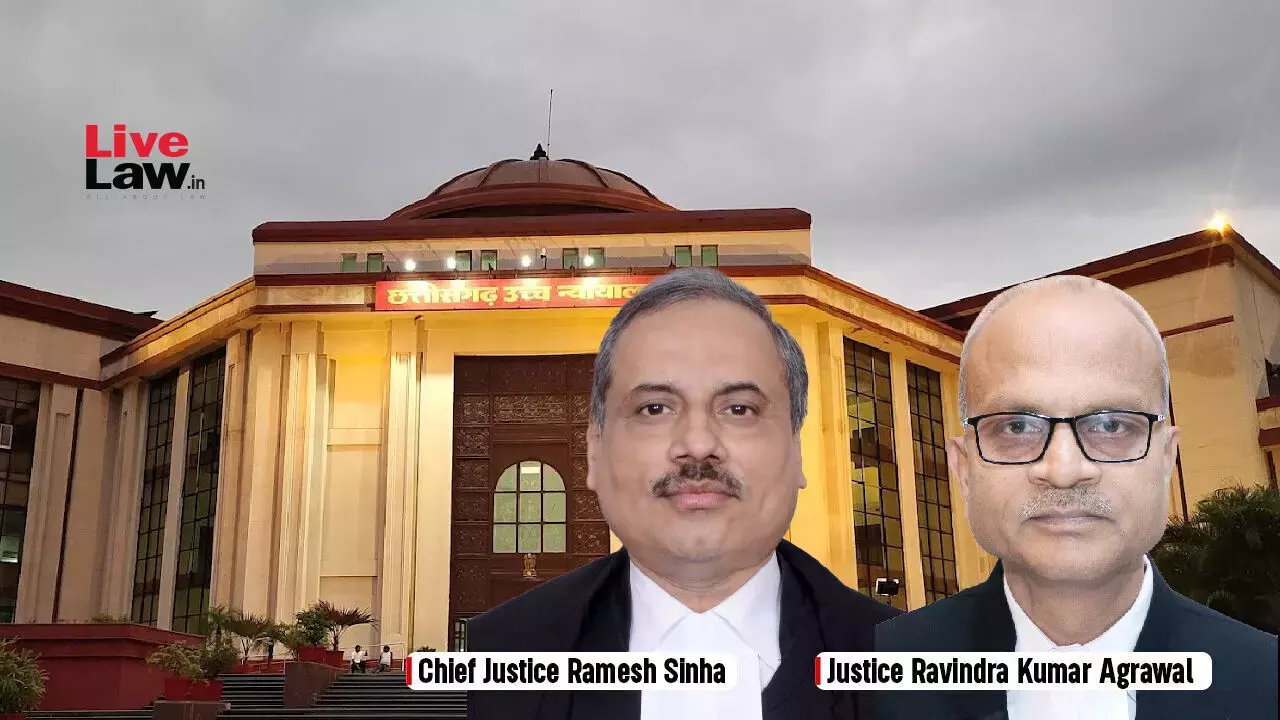
Police Must Strictly Comply With Arnesh Kumar Safeguards; Procedural Lapses Cannot Be Taken Lightly: Chhattisgarh High Court
The Chhattisgarh High Court has held that strict adherence to the safeguards governing arrest and remand, particularly the principles laid down by the Supreme Court in Arnesh Kumar v. State of Bihar, is of paramount importance and that procedural lapses by police officials cannot be treated casually. [2026 LiveLaw (Chh) 81]The Court observed that every police officer is under a...
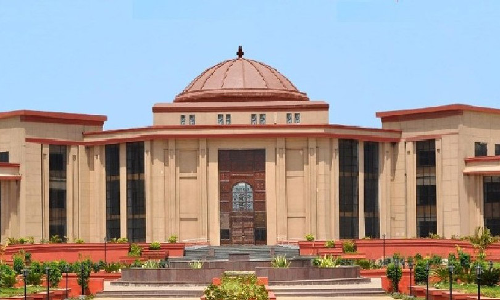
Municipal Corporation Employees Can Only Be Sent To Other Corporations On Deputation, Not By Transfer Order: High Court
The Chhattisgarh High Court has held that under Sections 58(5) and 58(6) of the Chhattisgarh Municipal Corporation Act, 1956, an employee of one Municipal Corporation can be sent to another Corporation only on deputation or while retaining lien, and not through a pure transfer order. The Court observed that where an order neither places the employee on deputation nor protects his lien in...
Absence Of Promotional Avenues Does Not Render Service Rules Unconstitutional; No Right To Promotion: Chhattisgarh High Court
The Chhattisgarh High Court has held that the mere absence of promotional avenues in a service cadre does not render statutory service rules unconstitutional, reiterating that no government servant possesses a fundamental or vested right to promotion. The Court observed that while an employee has a right to be considered for promotion where the applicable service rules provide a...
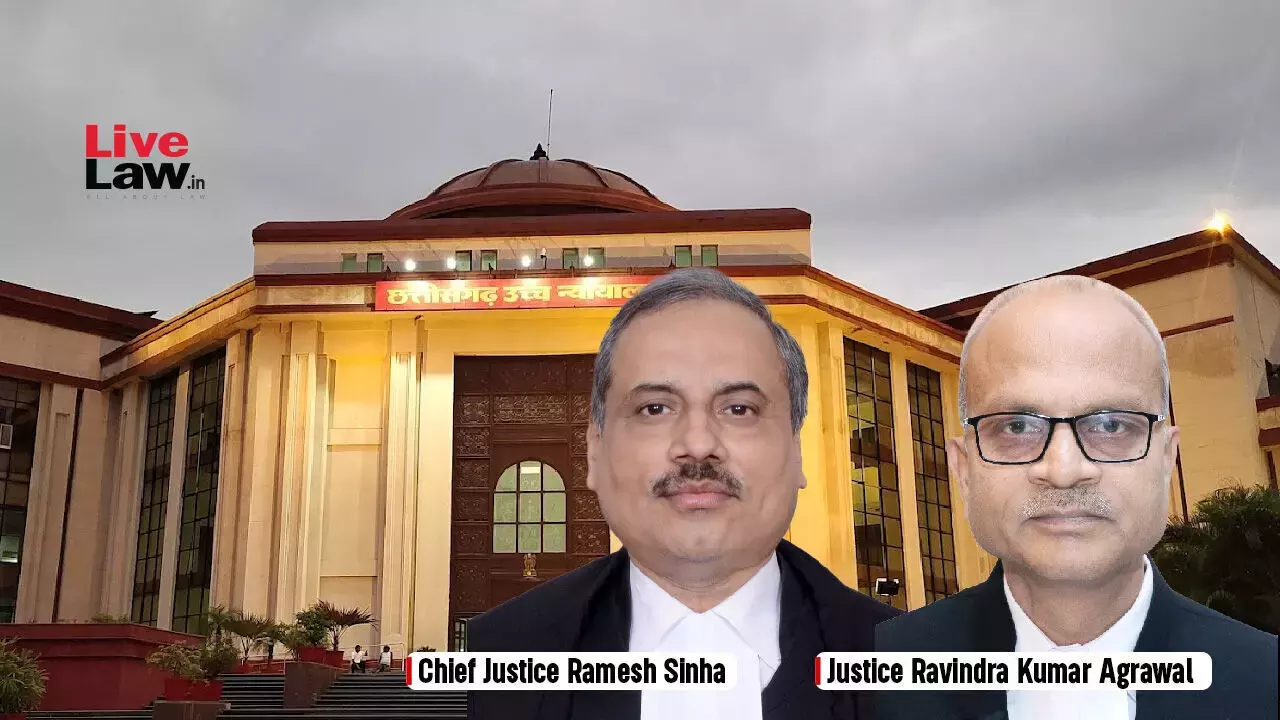
Employees Can't Be Left In Perpetual Stagnation Due To Lack Of Promotion Policy: Chhattisgarh High Court
The Chhattisgarh High Court has held that the absence of any promotional avenue resulting in perpetual stagnation of a cadre is arbitrary and violative of Articles 14 and 16 of the Constitution. The Court observed that the Chhattisgarh Health and Family Welfare Department Non-Clerical Paramedical and Nursing (Directorate Health Service) Class-III Recruitment Rules, 2013, do not provide...
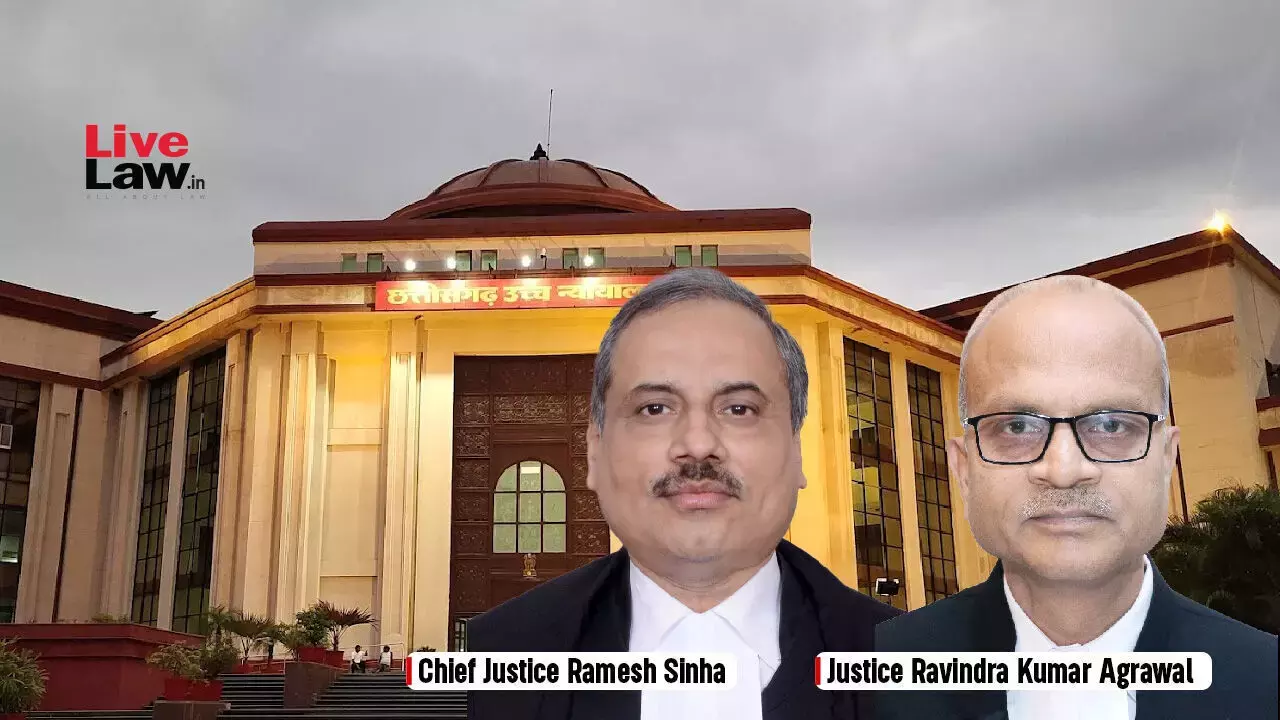
'Last Heard' Over Phone Can't Be Treated As 'Last Seen Together' Evidence: Chhattisgarh High Court Acquits Murder Convict
The Chhattisgarh High Court has held that the circumstance of a deceased informing a person during a telephonic conversation that he was in the company of the accused constitutes, at best, a case of "last heard" and cannot be equated with the doctrine of "last seen together". The Court observed that the trial court had erroneously treated evidence of "last heard" as proof of "last...