



- Home
- /
- High Courts
- /
- Delhi High Court
- /
- Caregiver Of Disabled Dependent...
Caregiver Of Disabled Dependent Entitled To Transfer Exemption; Interests Of PwD Prevail Over Administrative Convenience : Delhi HC
Namdev Singh
7 Dec 2025 9:08 AM IST
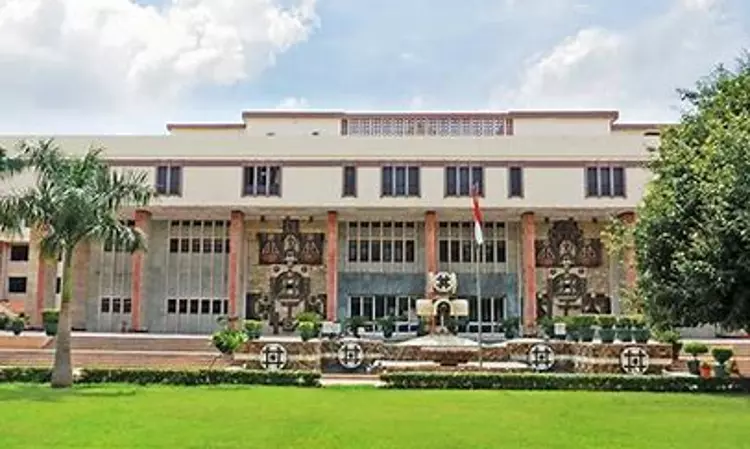
A Division Bench of the Delhi High Court comprising Justice C. Hari Shankar and Justice Om Prakash Shukla held that the interests of a disabled dependent prevail over administrative convenience, and caregivers of persons with disabilities are entitled to exemption from routine transfers, and reasonable accommodation is mandatory. Background Facts The petitioner is an...
This is a premium content
Available exclusively to
Our subscribers
Subscribe Premium 
INR 1099+GST
Your support helps us to bring you more content at
an affordable subscription scheme !!!
All payment options available
A Division Bench of the Delhi High Court comprising Justice C. Hari Shankar and Justice Om Prakash Shukla held that the interests of a disabled dependent prevail over administrative convenience, and caregivers of persons with disabilities are entitled to exemption from routine transfers, and reasonable accommodation is mandatory.
Background Facts
The petitioner is an Assistant Sub-Inspector/General Duty posted in the 171st Battalion of the Border Security Force (BSF). His son resides in Delhi. He suffers from Muscular Dystrophy in his lower limbs which is a condition certified as a 50% permanent disability. The son requires the employee's assistance even for normal daily activities therefore, he must be close to super-specialty hospitals for ongoing treatment.
The employee sought a transfer to Delhi, Kolkata, or Bangalore to care for his son. Earlier, he had challenged his initial transfer from Delhi to Silchar before the Delhi High Court. The Court declined to interfere with the transfer, however extended the period for the employee to relocate from Delhi to Silchar till 31 January 2025. However, employee was granted liberty to re-approach the Court if he found any policy justifying his continuance at Delhi.
Therefore, the employee cited Ministry of Home Affairs (MHA) Office Memoranda from 2017 and 2018, which exempt caregivers of disabled dependents from routine transfers. The Court directed the BSF to consider posting him to Kolkata or Bangalore. However, the BSF rejected his request citing internal rules on static-to-static postings requiring an eight-year cooling-off period.
Aggrieved by the rejection, the petitioner again approached the Delhi High Court by filing the writ petition.
It was argued by the employee that his son suffers from disability requiring constant care and proximity to super-specialty hospitals. Medical certificates from AIIMS and other institutions confirmed that the son cannot travel alone and needs long-term treatment. It was interrupted when the employee was posted to a distant place.
The petitioner asserted that it was irrelevant fact that his son is a 30-year-old employed adult earning a handsome salary. His son was dependent on others for daily activities. Further that he was not in a position to travel to office, therefore, he was working from home.
The petitioner further argued that the OM dated 19 March 2018 was based on the statutory and fundamental rights of persons with disabilities as they could not effectively function without the support of their caregivers. Therefore, the benefit under the MHA policy is not an act of charity.
On the other hand, it was argued by the respondents that the OM provides that a government servant, who is also a caregiver of a disabled child “may be exempted” from the routine exercise of transfer/rotational transfer, subject to administrative constraints, therefore, it is discretionary. Hence, the petitioner had been extended the benefit of exemption from transfer twice over a period of nine years and it cannot continue forever.
The respondents emphasized that adequate medical facilities were available at the Government Medical College in Silchar, fulfilling the requirement that a personnel be posted at a location with rehabilitation facilities.
Findings of the Court
It was noted by the Court that no cooling-off period was prescribed in the 2000 Rules. The provision was introduced later in April 2024 guidelines, which were not applicable when the employee was initially posted.
It was emphasized by the court that the exemption under the 2017 OM is continuous for caregivers of disabled children and cannot be denied merely because it has been granted multiple times, as the benefit exists primarily to protect the interests of the disabled dependent, not the employee. Therefore, it cannot be denied on the ground that it has been granted multiple times earlier.
Relying on the Division Bench judgment in Ircon International Ltd v. Bhavneet Singh, the Court emphasized that when transferring a caregiver of a differently-abled person, the burden lies on the employer to prove real administrative constraint. However, the respondents failed to discharge this burden.
These constraints must be substantial and compelling, significant enough to justify compromising the interests of the disabled child or dependent. Normally, the interests of the disabled person must prevail, which aligns with the purpose of the RPWD Act.
Further, the Court relied on judgments in Rajive Raturi v. Union of India, Vikash Kumar v. UPSC and In Re: Recruitment of Visually Impaired in Judicial Services, where the Supreme Court has emphasised the need for inclusion and integration of persons with disabilities into the societal fabric and to ensure that their interests are provided reasonable accommodation, so as to mitigate the effect of their disabilities.
Relying upon Rajive Raturi case, it was held that accessibility for persons with disabilities ensures full, independent participation in public life. It covers physical, communication, information, and digital access. The RPWD Act and UN Convention mandate built-in accessibility which is supplemented by reasonable accommodation.
Further as per the Vikash Kumar judgment, the RPwD Act, 2016 gives effect to fundamental rights of Disabled persons by promoting inclusion, dignity, and non-discrimination. The 2016 Act shifted from the 1995 Act's medical model to a social model. It views disability as resulting from societal barriers rather than just medical conditions. It defines disability aligning with the UNCRPD, and emphasizes that employment and inclusion depend on removing social and practical obstacles.
As per In Re: Recruitment of Visually Impaired in Judicial Services, the RPwD Act, 2016 adopts a rights-based, dignity-centred approach. It was held that excluding visually impaired candidates from judicial posts based on clinical opinion violates the Constitution, the RPwD Act, and UNCRPD obligations.
It was held by the Court that the RPwD Act, 2016 mandates a rights-based, non-discriminatory approach for persons with disabilities. It treats disability-based equality as a fundamental right. Reasonable accommodation is compulsory before assessing merit. Further, any indirect discrimination through rigid rules or procedural hurdles must be struck down.
It was held by the Court that the employee's son suffers from progressive muscular dystrophy, requiring full-time care and proximity to super-speciality medical facilities. Further, that son's employment status is irrelevant to denying statutory protections.
Consequently, the rejection order of the employee's posting request was quashed. It was directed by the Division Bench to the respondents to immediately relocate the employee to Delhi. If it was administratively not possible then relocate to one of the other specified cities with super-specialty facilities, preferably Kolkata or Bangalore, within three weeks.
With the aforesaid observations, the writ petition filed by the employee was disposed of by the Division Bench.
Case Name : Shambhu Nath Rai v. Union of India & Ors.
Citation: 2025 LiveLaw (Del) 1676
Case No. : W.P.(C) 7318/2025
Counsel for the Petitioner : Rahul Bajaj, Amritesh Mishra and Sarah, Advs.
Counsel for the Respondents : Viplav Acharya, Sr. PC for UOI


