



- Home
- /
- High Courts
- /
- Delhi High Court
- /
- Delhi High Court Rejects Writ To...
Delhi High Court Rejects Writ To Declare Its Bar Association A 'Public Authority' Under RTI Act
Nupur Thapliyal
27 Nov 2026 11:58 AM IST
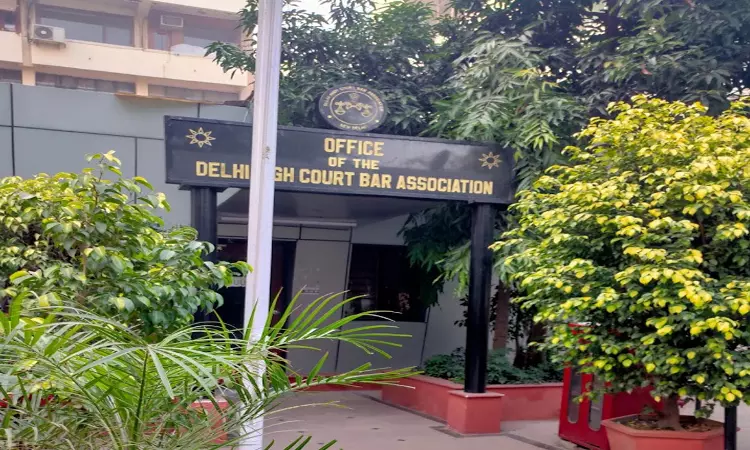
The Delhi High Court has rejected a plea seeking a direction to declare the Delhi High Court Bar Association (DHCBA) a public authority under the Right to Information (RTI) Act, 2005, holding that the association is not amenable to writ jurisdiction.Justice Amit Mahajan observed that in view of an earlier Division Bench ruling, no relief could be granted to the petitioner, an advocate, who...
This is a premium content
Available exclusively to
Our subscribers
Subscribe Premium 
INR 1099+GST
Your support helps us to bring you more content at
an affordable subscription scheme !!!
All payment options available
The Delhi High Court has rejected a plea seeking a direction to declare the Delhi High Court Bar Association (DHCBA) a public authority under the Right to Information (RTI) Act, 2005, holding that the association is not amenable to writ jurisdiction.
Justice Amit Mahajan observed that in view of an earlier Division Bench ruling, no relief could be granted to the petitioner, an advocate, who had sought directions to declare the DHCBA a public authority under the RTI Act and appoint a Central Public Information Officer (CPIO).
The Court relied on a January 16 judgment passed by a Division Bench in an appeal concerning the New Delhi Bar Association.
In that case, the Division Bench had held that Bar Associations are bodies comprising private individual lawyers and do not ordinarily perform any public functions.
It had observed that Bar Associations are private entities registered under the Societies Registration Act, 1860, whose affairs are governed by their Memorandum of Association, Constitution and Rules.
The Division Bench had further held that such associations cannot be treated as the State, its instrumentality, agency or authority under Article 12 of the Constitution of India.
“In absence of any public functions being discharged by the Bar Association, and the Bar Association not being a 'State' or its instrumentality within the meaning of State in Article 12 of the Constitution of India, no Mandamus can be issued by the Court to Bar Association in exercise of our jurisdiction under Article 226 of the Constitution of India,” the Division Bench had held.
Applying the said ruling, Justice Mahajan observed:
“In view of the judgement passed by Hon'ble Division bench, Respondent No. 1 is not amenable to writ jurisdiction, therefore, no relief can be granted to the petitioner in the present proceedings.”

Nupur Thapliyal
Nupur Thapliyal is a Principal Correspondent with LiveLaw, based in New Delhi. She reports from the Delhi High Court and trial courts in the national capital

