- Home
- /
- High Courts
- /
- Delhi High Court
- /
- DTC Conductor's Dismissal Invalid:...
DTC Conductor's Dismissal Invalid: Charge Of Collecting Fare Without Issuing Tickets Not Established Without Cash Verification : Delhi HC
Namdev Singh
16 Jun 2026 5:17 PM IST
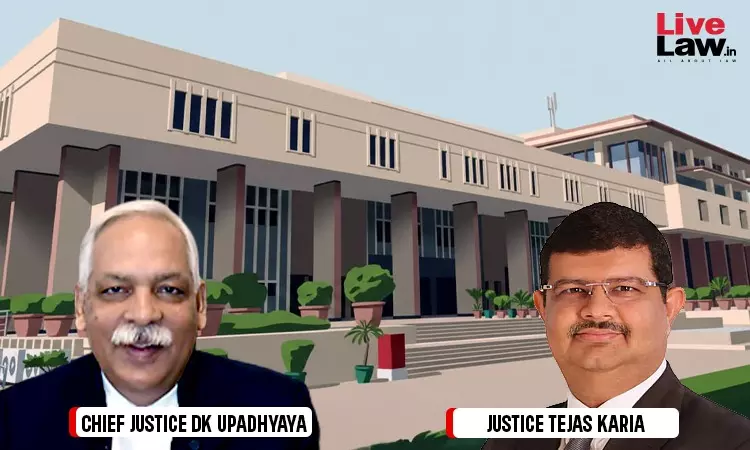
A Division Bench of the Delhi High Court comprising Chief Justice Devendra Kumar Upadhyaya and Justice Tejas Karia held that the failure to supply relevant documents (like the Log Book and past service record) and the absence of cash verification to prove misappropriation vitiates the disciplinary enquiry, entitling the conductor to reinstatement with continuity of...
This is a premium content
Available exclusively to
Our subscribers
Subscribe Premium 
INR 1099+GST
Your support helps us to bring you more content at
an affordable subscription scheme !!!
All payment options available
A Division Bench of the Delhi High Court comprising Chief Justice Devendra Kumar Upadhyaya and Justice Tejas Karia held that the failure to supply relevant documents (like the Log Book and past service record) and the absence of cash verification to prove misappropriation vitiates the disciplinary enquiry, entitling the conductor to reinstatement with continuity of service.
Background Facts
The employee joined the Delhi Transport Corporation (DTC) as a daily-rated Conductor in July 1983. Later he was placed on monthly-rated service. On 24 April 1992, while he was on duty, a Vigilance Checking Squad found ten passengers travelling without tickets.
The passengers told upon enquiry that they had paid the fare to the conductor. The un-punched tickets were recovered from conductor's possession. Therefore, the DTC issued a chargesheet to the Conductor. After a disciplinary enquiry, the charges of misconduct were held to be proved. The DTC removed him from service from October 1994.
Aggrieved by his dismissal, the conductor challenged it before the Labour Court. The Labour Court set aside the punishment of removal and directed the DTC to reinstate him with continuity of service for the purposes of seniority, pension and gratuity, but without back wages. The DTC challenged the decision of Labour Court before the Delhi High Court by filing a Writ Petition.
A Single Judge dismissed the DTC's petition and upheld the Labour Court's order. Aggrieved, the DTC filed the Appeal before the Division Bench of the Delhi High Court.
It was argued by the DTC that the Conductor had participated in the proceedings, cross-examined the witnesses. Further he had declined the assistance of a co-worker or the Labour Commissioner. It was further argued that the conductor had a history of collecting fares without issuing tickets, as evident from his past record. Therefore, the Labour Court had declined to award him back wages.
It was further contended that the Labour Court and the Single Judge erred in holding that the Log Book, Driver Memo and Statements of Passengers were not supplied, as the Conductor himself had admitted in cross-examination that his bus was checked and a challan was issued. Therefore, there was no violation of principles of natural justice during the enquiry proceedings.
On the other hand, it was argued by the conductor that the charges were false and fabricated. The Squad did not produce any co-passenger as a witness. Further, proper statements of the passengers were not recorded. The cash in conductor's possession was never checked. It was submitted that the necessary witnesses to substantiate the charges were not examined.
Further, the disciplinary authority had passed the order without affording any opportunity of hearing. The Conductor contended that the Log Book, the Statements of Passengers, and his past service record were neither supplied to him nor enclosed with the chargesheet.
It was further argued that the Enquiry Officer did not explain to him that he was entitled to the assistance of a co-worker as a Defence Assistant. Reliance was placed on judgment in Delhi Transport Corporation v. Shyam Singh, where it was held that in the absence of a cash check of the Conductor, the charges could not be said to have been proved.
Findings and Observations of the Court
It was observed by the Division Bench that the Squad intercepted the Bus and found ten passengers travelling without tickets. However, no verification of the cash in the possession of the conductor was undertaken at the time of such checking. It was further observed that the Statements of Passengers were incomplete and suffered from material inconsistencies. The statements did not disclose the precise point of commencement of travel, the destination, or the fare paid. Therefore, the DTC did not discharge its burden of proving the charge of 'misconduct' by reliable and consistent evidence.
The judgment in Delhi Transport Corporation v. Shyam Singh was relied upon wherein it was held that the Squad had failed to verify the cash found in the possession of the Conductor at the time of the checking. Therefore, in the absence of such cash verification, the charge of misappropriation of fare could not be said to have been conclusively established on the evidence.
It was further observed that the Log Book (part of conductor's defence) was denied to him on the ground that the Enquiry Officer considered it irrelevant. Second, the Statements of Passengers were not supplied to the conductor, he was merely permitted to inspect the same. Third, the conductor was not informed about the availability of a Defence Assistant. Fourth, the chargesheet itself stated that the past service record of the Respondent would be taken into consideration while passing the final order, yet the past record was not enclosed there and no opportunity was afforded to the conductor to explain or rebut the same. Therefore, it constituted violation of the principles of natural justice.
It was held that the Single Judge rightly upheld the findings of the Labour Court. It was found by the Labour Court that the enquiry proceedings were vitiated. It was also found that the DTC failed to prove the charge of 'misconduct' through cogent and reliable evidence because the conductor's cash was not checked, there were inconsistencies in the passenger statements, and relevant documents were not supplied during the enquiry.
It was held by the Division Bench that the order of reinstatement with continuity of service was justified. Further, the denial of back wages, on account of the conductor's unsatisfactory past record, was also held to be justified.
With the aforesaid observations, the Single Judge's order was upheld by the Division Bench. Consequently, the appeal filed by the DTC was dismissed by the Division Bench.
Case Name : Delhi Transport Corporation vs Ram Avtar Sharma
Citation: 2026 LiveLaw (Del) 562
Case No. : LPA 972/2024 & CM APPL. 57378/2024
Counsel for the Appellant : Rahul Kumar Verma, Raj Shekhar Awasthi and Bhumi Panjwani
Counsel for the Respondent : Vikram Singh, Advocate