



- Home
- /
- High Courts
- /
- Delhi High Court
- /
- Delhi High Court Allows Recording...
Delhi High Court Allows Recording Of US Based Witness' Evidence Via Video Conferencing In Official Secrets Act Case
Nupur Thapliyal
29 Oct 2025 10:00 AM IST
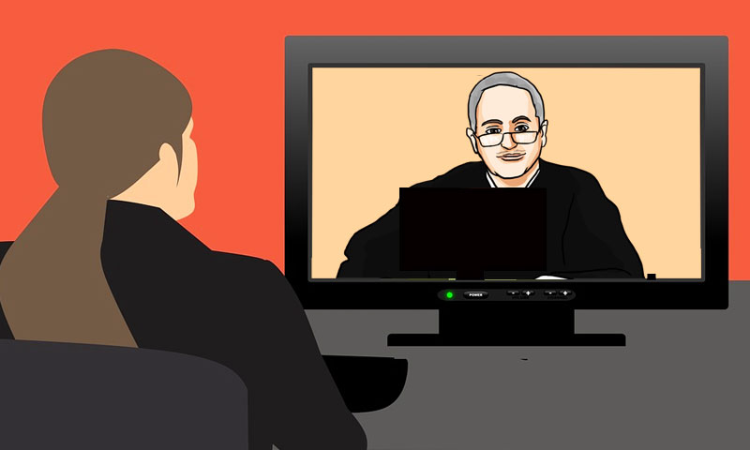
The Delhi High Court has allowed recording of evidence of a US based prosecution witness via video conferencing in an Official Secrets Act case concerning businessman Abhishek Verma.Justice Sanjeev Narula said that the apprehension of the Trial Court, that using video conferencing may result in leakage of classified material, can be taken care of through regulation and safeguards and...
This is a premium content
Available exclusively to
Our subscribers
Subscribe Premium 
INR 1099+GST
Your support helps us to bring you more content at
an affordable subscription scheme !!!
All payment options available
The Delhi High Court has allowed recording of evidence of a US based prosecution witness via video conferencing in an Official Secrets Act case concerning businessman Abhishek Verma.
Justice Sanjeev Narula said that the apprehension of the Trial Court, that using video conferencing may result in leakage of classified material, can be taken care of through regulation and safeguards and not prohibition.
The case was registered by CBI in 2012 under Section 3 of the Official Secrets Act, 1923, read with Section 120B of the Indian Penal Code, 1860, pursuant to a complaint from the Ministry of Defence.
This was after a letter of C. Edmonds Allen, the witness in question, was sent to then Defence Minister, containing information and enclosing documents relating to Indian defence matters.
The documents were referred to the Ministry of Defence, which opined that the said documents were classified and had been unauthorisedly communicated.
The FIR was then registered alleging that Abhishek Verma and his associate, in conspiracy with others, had obtained and transmitted classified defence information to unauthorised persons, including Allen.
CBI had filed an application before the trial court seeking Allen's examination through video conferencing, which was rejected.
While seeking the same permission from the High Court, the CBI contended there is no statutory prohibition under OSA against recording evidence through video conferencing, particularly where secrecy is preserved through in-camera proceedings and controlled handling protocols.
It was submitted that Allen was essential to prove the chain of custody and the specific emails or accounts through which documents were received.
Allowing CBI's plea, the Court observed that Rule 5.3.11 of the Delhi High Court VC Rules is a fairness provision, which ensures that the accused's fair-trial rights are kept in view before resort is taken to video conferencing.
It added that the provision does not confer a substantive veto over the prosecution's ability to lead material evidence.
“We therefore invoke Rule 18 and relax the operation of Rule 5.3.11 for PW-46, while preserving the accused's rights through contemporaneous viewing and full cross examination on a secure, court- controlled feed,” the Court said.
“That objective of the stringent OSA provisions is achievable through calibrated safeguards, including conducting the examination from a secured State-controlled facility, ensuring an in-camera regime, restricting devices, and controlling the display and movement of documents. The law demands reasonable containment of risk. On that touchstone, a safeguarded video examination is the apposite course,” it added.
The Court said that the VC Rules do not mandate uncontrolled dissemination of sensitive material and that the conditions mentioned therein are met through a Court-controlled, view-only mode of exhibition and, where strictly necessary, sanitised certified copies can be transmitted through the Consulate.
Justice Narula relaxed the requirement of obtaining the accused's consent for the limited purpose of recording the testimony of Allen.
The Court directed the Trial Court to record his evidence via video conferencing from the Indian Consulate, New York, in accordance with the Delhi High Court Video Conferencing Rules, 2020, together with the following additional safeguards necessitated by the sensitivity of OSA- protected material.
Adding that the proceedings shall be conducted in camera, the judge directed:
“The examination shall take place on a court-approved, end-to-end encrypted VC platform, with no recording, download, save, print, copy, or screenshot functions enabled at the Remote Point. No departure from the foregoing safeguards shall be made without prior leave of the Trial Court, with brief reasons recorded.”
Title: CENTRAL BUREAU OF INVESTIGATION v. SH ABHISHEK VERMA & ORS
Citation: 2025 LiveLaw (Del) 1386
Tags

Nupur Thapliyal
Nupur Thapliyal is a Principal Correspondent with LiveLaw, based in New Delhi. She reports from the Delhi High Court and trial courts in the national capital

