



- Home
- /
- High Courts
- /
- Delhi High Court
- /
- Setting Aside Or Modifying Trial...
Setting Aside Or Modifying Trial Court Order Not Reflection On Judge's Integrity: Delhi High Court
Nupur Thapliyal
13 March 2026 7:37 PM IST
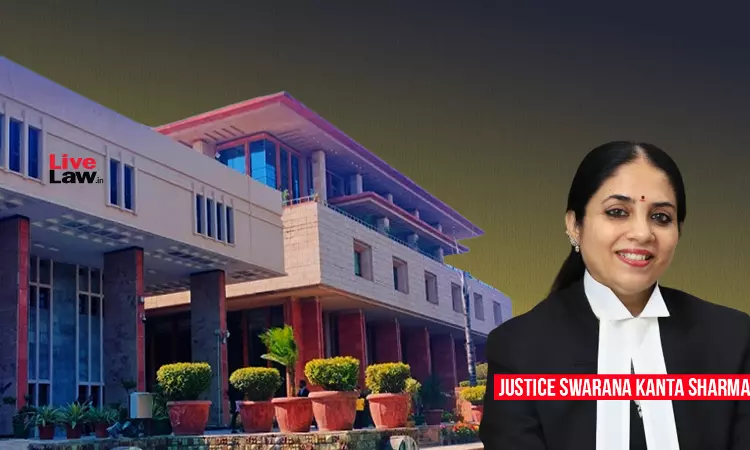
The Delhi High Court has observed that merely because an order passed by a trial court is set aside or modified by a higher court, no inference can be drawn regarding the competence, integrity, or ability of the judicial officer concerned, unless specific adverse observations to that effect are recorded.Justice Swarana Kanta Sharma said that such judicial scrutiny is an inherent feature of...
This is a premium content
Available exclusively to
Our subscribers
Subscribe Premium 
INR 1099+GST
Your support helps us to bring you more content at
an affordable subscription scheme !!!
All payment options available
The Delhi High Court has observed that merely because an order passed by a trial court is set aside or modified by a higher court, no inference can be drawn regarding the competence, integrity, or ability of the judicial officer concerned, unless specific adverse observations to that effect are recorded.
Justice Swarana Kanta Sharma said that such judicial scrutiny is an inherent feature of the hierarchical structure of courts and forms part of the ordinary course of the adjudicatory process.
“…the fact that an order passed by a court, whether Trial Court or even High Court, is stayed, modified, or otherwise interfered with by a higher court such as High Court or Supreme Court respectively, cannot, by itself, be regarded as a reflection on the competence or ability of the judge who passed the order,” the Court said.
Justice Sharma made the observation while dismissing an application filed by a judicial officer seeking expunction of alleged adverse remarks made against him in a 2023 judgment passed in a criminal writ petition.
It was contended that certain observations made while expunging remarks against police officials had caused prejudice to his service record, including alleged downgrade of his ACR and transfer.
He argued that the earlier judgment was passed without notice to him and without examining the trial court record.
It was also submitted that the judgment was circulated among judicial officers with his name mentioned in the covering letter, which caused embarrassment and adversely affected his career prospects.
Refusing to grant the relief, the Court said that the earlier judgment had not recorded any personal remarks against the judge and had only examined the legality of the orders passed by the trial court.
“Thus, merely because an order of the Trial Court is set aside or modified or stayed by the High Court or modified to some extent or set aside to some extent, as in the present case, no inference can be drawn against the general competence, ability or integrity of the concerned judicial officer in the absence of any specific adverse observations,” the Court said.
It observed that the hierarchical scrutiny of judicial orders is an essential feature of the Indian judicial system, wherein orders are examined at successive levels, but essentially in accordance with law.
The Court clarified that the 2023 judgment did not mention the name of the judicial officer and only referred to the “trial court”, since the legality of the order and not the conduct of the judge was under examination.
It further clarified that the observations made in the 2023 decision were confined to adjudication of the writ petition and shall not be treated as adverse remarks for the purpose of assessing the judge's Annual Confidential Report or service record.
The Court also noted the grievance that the judicial officer's name was mentioned in the covering letter while circulating the judgment and said that where possible, circulation should refer to the court designation rather than the name of the judge.
Title: SANJAY KUMAR SAIN v. STATE
Citation: 2026 LiveLaw (Del) 257
Tags

Nupur Thapliyal
Nupur Thapliyal is a Principal Correspondent with LiveLaw, based in New Delhi. She reports from the Delhi High Court and trial courts in the national capital

