



- Home
- /
- High Courts
- /
- Delhi High Court
- /
- Trial Court Can Summon Witness...
Trial Court Can Summon Witness After Reserving Judgment When Evidence Is Necessary: Delhi High Court
Nupur Thapliyal
6 Sept 2026 1:00 PM IST
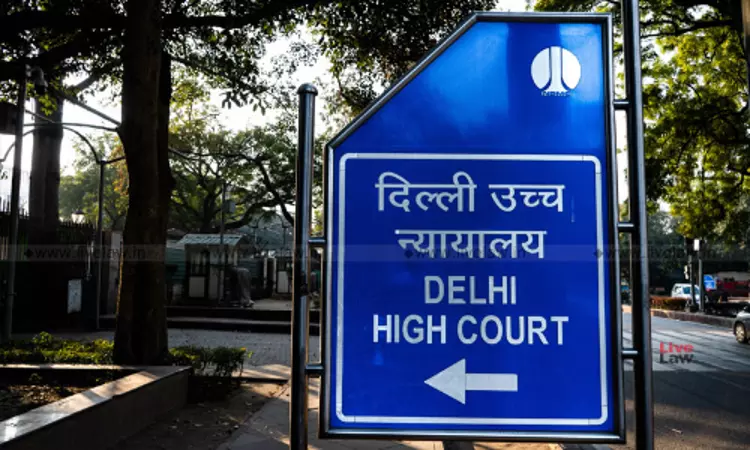
The Delhi High Court has held that a trial court is not barred from exercising powers under Section 311 of the Code of Criminal Procedure (CrPC) to summon or recall a witness, after reserving judgment, where the evidence is considered necessary for a just decision of the case. [2026 LiveLaw (Del) 819]Justice Madhu Jain made the observation while dismissing a plea filed by an accused-Raman Soni,...
This is a premium content
Available exclusively to
Our subscribers
Subscribe Premium 
INR 1099+GST
Your support helps us to bring you more content at
an affordable subscription scheme !!!
All payment options available
The Delhi High Court has held that a trial court is not barred from exercising powers under Section 311 of the Code of Criminal Procedure (CrPC) to summon or recall a witness, after reserving judgment, where the evidence is considered necessary for a just decision of the case. [2026 LiveLaw (Del) 819]
Justice Madhu Jain made the observation while dismissing a plea filed by an accused-Raman Soni, a 69-year-old senior citizen, challenging an order of the Special Judge (PC Act) allowing the CBI's application under Section 311 of CrPC after the matter had been reserved for judgment.
The case arose from a preliminary inquiry registered by the CBI in 2006 concerning the alleged failure of MCD officials to act against encroachment on public land, allegedly resulting in pecuniary advantage to private builders. Soni was subsequently arrayed as an accused in the chargesheet filed in 2008.
The Trial Court had listed the matter for final arguments on April 20, April 28 and May 04. After hearing final arguments, the matter was reserved for judgment.
Thereafter, CBI moved an application under Section 311 of CrPC seeking to examine a witness in relation to certain aspects allegedly left out during his earlier examination.
The Trial Court allowed the application on July 08, observing that although the CBI had been “lackadaisical” in moving the plea and recording the witness's testimony, the trial or its outcome could not be allowed to be hindered by such an approach.
Before the High Court, Soni argued that once the matter had been reserved for judgment, the trial had come to an end and the Trial Court had effectively become functus officio for the purpose of recording fresh evidence.
Rejecting the said contention, the Court said,
“Reservation of a matter for judgment undoubtedly marks the conclusion of the ordinary course of trial. It does not, however, render the Court powerless to exercise a jurisdiction expressly conferred upon it by the Code where the Court is satisfied that such exercise is necessary for a just decision of the case.”
It added that the mere fact that a matter stands reserved for judgment cannot operate as an absolute bar to the exercise of power under Section 311 of CrPC.
The Court noted that the provision confers a wide power upon courts to summon or recall witnesses. It added that while the stage at which such a power is invoked is a relevant consideration, it cannot, by itself, constitute an absolute bar where the Court is satisfied that the evidence is essential for a just decision.
“The Trial Court is required to remain an active participant in the pursuit of truth,” the Court observed, while emphasising that a proper balance must be maintained between the prosecution's role and the rights of the accused.
“The Court is not expected to remain a passive spectator to the proceedings, but is required to exercise the powers vested in it to ensure a fair and effective adjudication,” the judge said.
Further, the Court also rejected the argument of the accused that CBI's explanation of “inadvertence” was insufficient to invoke Section 311 of CrPC.
It noted that the jurisdiction under Section 311 is vested in the Court and its exercise does not depend exclusively upon the sufficiency of the averments made in an application by a party. It added that the provision empowers the Court to summon or recall a witness even suo motu where the evidence appears essential for a just decision.
“The object of a criminal trial is to enable the Court to arrive at the truth on the basis of the best available evidence. An omission at an earlier stage, therefore, cannot by itself constitute a bar to the exercise of power under Section 311 CrPC, where the Court is satisfied that the evidence sought to be brought on record is necessary for a just decision of the case,” the Court said.
Finding no merit in the challenge, the Court held that the Trial Court's exercise of power under Section 311 of CrPC was justified and dismissed the petition.
Title: RAMAN SONI v. CENTRAL BUREAU OF INVESTIGATION
Citation: 2026 LiveLaw (Del) 819

Nupur Thapliyal
Nupur Thapliyal is a Principal Correspondent with LiveLaw, based in New Delhi. She reports from the Delhi High Court and trial courts in the national capital

