- Home
- /
- High Courts
- /
- Gujarat High Court
- /
- S.163A MV Act | Borrower Driving...
S.163A MV Act | Borrower Driving Owner's Vehicle Not 'Third Party'; Legal Heirs Can't Claim No-Fault Compensation: Gujarat High Court
Ananya Tangri
28 Feb 2026 10:00 AM IST
The Gujarat High Court has held that the legal representatives of a deceased borrower-driver cannot maintain a claim under Section 163A of the Motor Vehicles Act against the insurer, reiterating that a person who borrows a vehicle and drives it “steps into the shoes of the owner” and cannot be treated as a third party.Section 163A provides for compensation on a no-fault basis,...
This is a premium content
Available exclusively to
Our subscribers
Subscribe Premium 
INR 1099+GST
Your support helps us to bring you more content at
an affordable subscription scheme !!!
All payment options available
The Gujarat High Court has held that the legal representatives of a deceased borrower-driver cannot maintain a claim under Section 163A of the Motor Vehicles Act against the insurer, reiterating that a person who borrows a vehicle and drives it “steps into the shoes of the owner” and cannot be treated as a third party.
Section 163A provides for compensation on a no-fault basis, allowing victims of motor accidents (or their legal heirs) to claim compensation without having to prove negligence of the driver or owner.
The Court was hearing an appeal filed by the original claimants–deceased's family, challenging the Motor Accident Claims Tribunal's decision dismissing their claim petition under Section 163A of the Motor Vehicles Act, 1988.
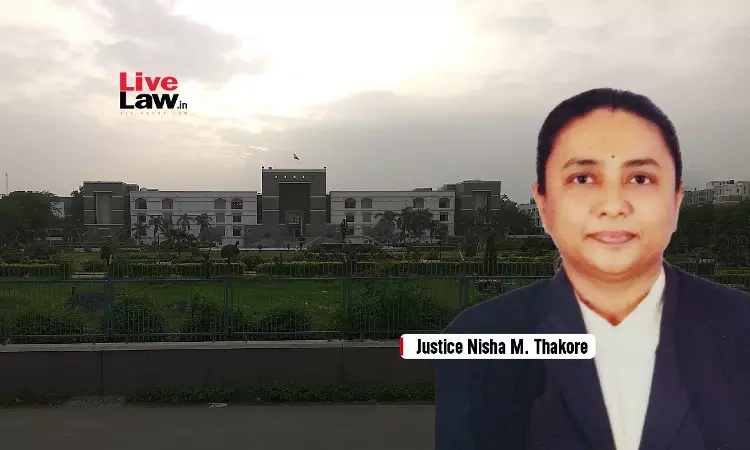
Emphasising the limited scope of compulsory insurance coverage, Justice Nisha M. Thakore observed:
“Applying the aforesaid principles, in peculiar facts of the present case, in absence of any other vehicle / offending vehicle involved, the deceased, who himself was driving the insured vehicle, cannot be treated as third party / any person. Thus, the insurance company cannot be statutorily held liable to compensate for the death of the driver of the insured vehicle under section 163A of the Act, 1988.”
The deceased, a Police Inspector, died in a motor accident on 27 October 2009 while driving an Esteem car borrowed from its owner. His legal heirs initially filed a claim petition seeking compensation, which was later converted into a petition under Section 163A of the Motor Vehicles Act.
The Tribunal dismissed the claim holding that the deceased had borrowed the vehicle and therefore “stepped into the shoes of the owner,” making the claim under Section 163A not maintainable.
Before the High Court, Advocate Nishit A. Balodi, appearing for the claimants, argued that Section 163A of the Motor Vehicles Act is a special provision containing a non-obstante clause, and therefore the insurer was liable to pay compensation either under the statutory scheme or under the contractual coverage, particularly since additional premium had been paid towards personal accident cover. He contended that the Tribunal had “failed to exercise the jurisdiction vested in it” and ought to have granted compensation treating the case as falling within third-party risk or, alternatively, under the personal accident cover available to the owner-driver. In support of these submissions, reliance was placed on decisions including United India Insurance Co. Ltd. v. Sunil Kumar and National Insurance Co. Ltd. v. Swaran Singh, to emphasise the scope and object of beneficial compensation provisions under the Act.
Opposing the appeal, Advocate Vibhuti Nanavati, appearing for the Insurance Company, argued that the deceased, being a borrower of the vehicle, could not be treated as a third party, nor was he covered under the personal accident policy meant exclusively for the registered owner-driver. He submitted that insurance liability is purely contractual and must be strictly interpreted. Hence, the Tribunal had rightly rejected the claim. Placing reliance on the judgments of the Supreme Court in Ningamma v. United India Insurance Co. Ltd. and Ramkhiladi v. United India Insurance Co. Ltd., he contended that a borrower steps into the shoes of the owner and therefore cannot maintain a claim as a third party under Section 163A.
The Court noted that Section 163A was enacted as a social security provision providing compensation on a structured formula basis without proof of fault, but clarified that it does not create automatic or unlimited liability on insurers.
The Court found that premium had been paid under different heads, including third-party liability, personal accident cover for owner-driver, and personal accident cover for passengers. However, personal accident cover for owner-driver applied strictly to the registered owner and not a borrower. Insurance contracts must be interpreted based on their terms and that statutory liability cannot be extended beyond what is mandated.
Finding no error in the Tribunal's decision, the Court dismissed the appeal.
Case Title: Manjuben alias Manjulaben Shantilal Garasia & Ors. v. Sirajbhai Imamuddin Luhar & Anr.
Case No.: R/First Appeal No. 23 of 2022
Appearance: Nishit A. Bhalodi for the Appellants; Vibhuti Nanavati for the Insurance Company; Rule unserved for Respondent No. 1.
Click Here To Read/Download Order
Case Citation: 2026 LiveLaw (Guj) 69
Tags