



Pendency Of Civil Suit Cannot Be Basis For Quashing Criminal Proceedings If Prima Facie Cognizable Offence Is Made Out: J&K&L High Court
LIVELAW NEWS NETWORK
28 Nov 2026 3:40 PM IST
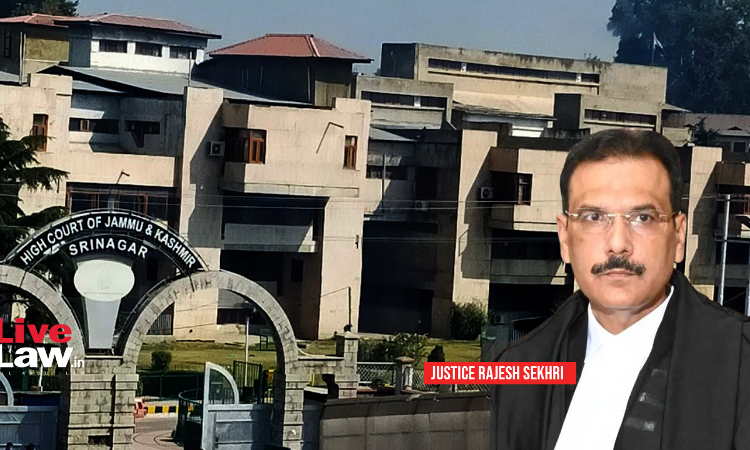
The High Court of Jammu & Kashmir and Ladakh at Jammu has held that the pendency of a civil action in a different court, even though higher in status and authority, cannot be made a basis for quashing criminal proceedings when the investigation prima facie discloses the commission of a cognizable offence.
The Court dismissed a petition seeking quashing of an FIR arising out of a land dispute, while observing that while the investigation disclosed offences against petitioner No. 1, no offence was established against the remaining petitioners.
The Court was hearing a petition filed under Section 482 of the Code of Criminal Procedure seeking quashing of an order passed by the Chief Judicial Magistrate, Doda, under Section 156(3) Cr.P.C., and the consequent FIR registered for offences punishable under Sections 447, 379, 384, 354, 147, 323, 504, and 506 of the Indian Penal Code.
The petition was heard by Justice Rajesh Sekhri, who observed,


“Criminal cases have to be proceeded with in accordance with the procedure as prescribed under the Code of Criminal Procedure and the pendency of a civil action in a different court even though higher in status and authority, cannot be made a basis for quashing of the proceedings.”
Background
As per the factual matrix, respondent No. 2 filed a complaint before the Chief Judicial Magistrate, Doda, alleging that the petitioners, in furtherance of common criminal intention, entered upon land which was under the joint possession of her mother and them. They allegedly damaged and removed the maize crop, abused, and threatened her and her mother.
It was further alleged that the accused trespassed upon the land, manhandled her, and inflicted injuries, and that a gold chain along with a locket was snatched from her. The complainant specifically alleged that accused Yog Raj tore her clothes and outraged her modesty. The complaint was forwarded to the police station, whereupon the impugned FIR came to be registered.
The petitioners contended that a civil dispute was sought to be given a criminal colour. The status report filed by the official respondent revealed that during investigation, statements of independent witnesses were recorded, who stated that there was an ongoing land dispute between the complainant's mother and Om Raj Manhas, and that heated arguments took place between the parties. They specifically stated that no incident of theft or snatching had taken place.
The medical opinion revealed that the injuries received by the complainant were simple in nature, and as per the revenue clarification, the ingredients of criminal trespass were established. Further investigation revealed that no offence had been committed by petitioners other than Yog Raj, who were only called to the spot to resolve the dispute and were not found to have participated in any criminal act. However, offences under Sections 354, 323, 504, and 506 IPC were established against petitioner Yog Raj.
The respondents opposed the petition, contending that there is no bar to the prosecution of an accused if offences punishable under criminal law are made out, even where a civil suit is pending between the parties.
Court's Observation
The Court observed that there is no dispute to the settled position of law that the High Court, in exercise of its inherent jurisdiction, is vested with the power to prevent the abuse of the process of law. However, it is equally settled that investigation of a crime cannot be scuttled at its threshold if the allegations contained in the complaint or the material collected during investigation prima facie disclose the commission of a cognizable offence.
The Court relied on the judgment of the Supreme Court in Pratibha Rani v. Suraj Kumar (1985), which explained the distinction between civil and criminal remedies. The Court quoted: “There are a large number of cases where criminal law and civil law can run side by side. The two remedies are not mutually exclusive but clearly coextensive and essentially differ in their content and consequence.”
The Court further referred to Kamaladevi Agarwal v. State of W.B. (2002) and K. Jagdish v. Udaya Kumar G. S. (2020) to reiterate that the very same set of facts may give rise to remedies in civil as well as criminal proceedings, and a party is not precluded from setting in motion criminal proceedings merely because a civil remedy is availed. The Court held: “It is thus well settled that in certain cases the very same set of facts may give rise to remedies in civil as well as in criminal proceedings and even if a civil remedy is availed by a party, he is not precluded from setting in motion the proceedings in criminal law.”
The Court, applying these principles to the facts of the case, held,
“Though civil litigation is pending inter se the parties, the investigation conducted so far prima facie discloses commission of cognizable offences against petitioner no. 1, namely, Yog Raj, though no offence is found to has been established against the rest of the petitioners.”
Accordingly, the petition was dismissed. The interim order stood vacated, and the investigating agency was granted liberty to file the final report against petitioner No. 1 in the competent Court.


