



- Home
- /
- High Courts
- /
- Karnataka High Court
- /
- Karnataka High Court Questions Mutt...
Karnataka High Court Questions Mutt Over Ill-Treatment Of Captive Elephant, Asks Why It Is Kept In Confinement
Sebin James
11 Sept 2026 2:12 PM IST
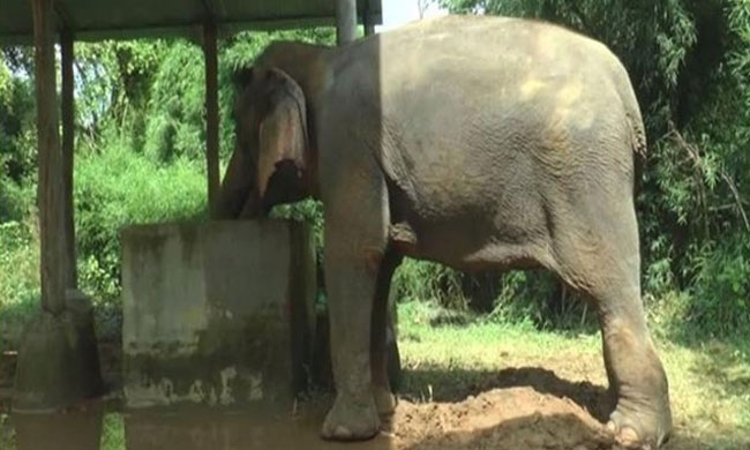
If you do not have the space to keep an elephant, whether or not you should be keeping it? Court asked.
The Karnataka High Court on Friday (September 11) questioned the Shri Karisiddheshwara Mutt over the alleged ill-treatment of a captive elephant, Dhruva, and raised concerns about the animal being kept in confinement without adequate space for free movement. A Division Bench comprising Justice Anu Sivaram and Justice T.P. Vivekananda was hearing a Public Interest Litigation filed...
This is a premium content
Available exclusively to
Our subscribers
Subscribe Premium 
INR 1099+GST
Your support helps us to bring you more content at
an affordable subscription scheme !!!
All payment options available
The Karnataka High Court on Friday (September 11) questioned the Shri Karisiddheshwara Mutt over the alleged ill-treatment of a captive elephant, Dhruva, and raised concerns about the animal being kept in confinement without adequate space for free movement.
A Division Bench comprising Justice Anu Sivaram and Justice T.P. Vivekananda was hearing a Public Interest Litigation filed by party-in-person G.R. Govind, seeking directions to release three captive elephants—Padma, Dhruva and Menaka—from the custody of the concerned ashram, mutt and temple respectively, and shift them to the Elephant Care Facility at Bannerghatta.
During the hearing, the Bench perused the veterinary reports concerning the three elephants, particularly the report relating to Dhruva, which is in the custody of the Mutt.
The Court questioned the Mutt's counsel about the conditions in which the elephant was being kept and orally observed:
“You are aware of the animal you are dealing with? Then necessary precautions have to be taken care of. We want to see your affidavit.”
The Bench also questioned the confinement of the elephant and whether the Mutt had adequate space to house it.
“With regard to the contention that the elephants must be kept in the open—the area of your confinement—why are they kept in confinement? If you do not have the space to keep an elephant, whether or not you should be keeping it?”
The Court directed the Mutt to specifically disclose in its affidavit the space available for the elephant's free movement.
The Bench also took note of deficiencies in the animal's diet highlighted in the veterinary report.
“Even your diet is found to be defective. There is a deficiency in the diversity of the diet served by you as per the report.”
The Court further orally observed, in response to submissions concerning Dhruva's condition, “It is clear that there was ill-treatment,” and directed the Mutt to place on record the remedial measures taken to address the deficiencies noted by the veterinary officer.
The Mutt's counsel submitted that Dhruva had developed wounds on its limbs during its musth period, when elephants can become highly aggressive. Counsel said the wound on the right hind limb had since healed and that necessary care and diligence had been taken.
The counsel also submitted that the elephant had been chained only during the musth period and that photographs would demonstrate that it currently had sufficient space for movement. The veterinary report, counsel said, also contained photographs of the animal and its enclosure.
The Court directed Respondent No. 4—the Mutt—to file a detailed affidavit based on the veterinary officer's report, setting out specifically the steps taken to rectify the deficiencies noticed in the report.
The petitioner was also directed to place on record his objections and suggestions to the report submitted by the Chief Veterinary Officer.
The matter has been listed after three weeks.
The PIL seeks directions to the Principal Chief Conservator of Forests to consider the petitioner's representation dated January 18, 2025, seeking release of the three elephants from captivity and their relocation to the Elephant Care Facility at Bannerghatta.
Earlier, on August 5, 2025, the Court had directed the Chief Veterinary Officers of the concerned districts to examine the condition of all three elephants. Pursuant to the direction, veterinary reports were placed before the Court.
Case Title: G.R Govind v. State of Karnataka & ors.
Case Number: WP 17693/2025 (PIL)
Tags
Sebin James
Sebin James is a Correspondent with LiveLaw, covering the Karnataka High Court

