



- Home
- /
- High Courts
- /
- Karnataka High Court
- /
- Gulbarga Fort: Karnataka High Court...
Gulbarga Fort: Karnataka High Court Asks ASI To Verify Encroachments Within 100-Metre Protected Area
Sebin James
15 Sept 2026 5:38 PM IST
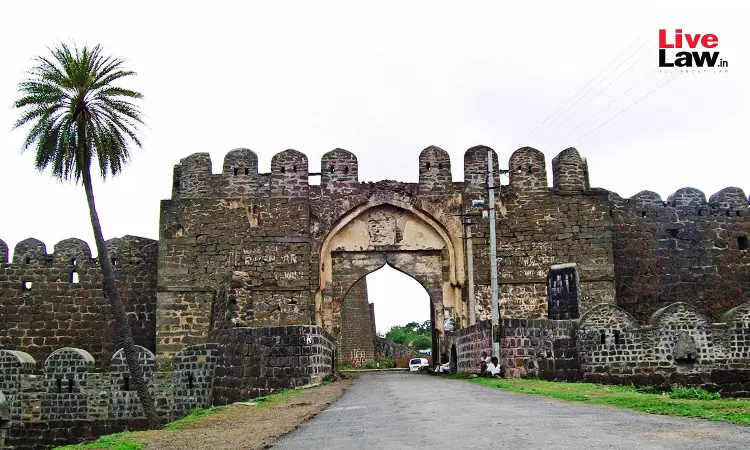
The Karnataka High Court on Tuesday (September 15) directed the Archaeological Survey of India (ASI) to verify whether any encroachments exist outside the Gulbarga (Kalaburagi) Fort but within the 100-metre protected area surrounding the historic monument.A Division Bench of Justice Anu Sivaraman and Justice T.P. Vivekananda was hearing a 2018 public interest litigation (PIL) filed by...
This is a premium content
Available exclusively to
Our subscribers
Subscribe Premium 
INR 1099+GST
Your support helps us to bring you more content at
an affordable subscription scheme !!!
All payment options available
The Karnataka High Court on Tuesday (September 15) directed the Archaeological Survey of India (ASI) to verify whether any encroachments exist outside the Gulbarga (Kalaburagi) Fort but within the 100-metre protected area surrounding the historic monument.
A Division Bench of Justice Anu Sivaraman and Justice T.P. Vivekananda was hearing a 2018 public interest litigation (PIL) filed by architect and urban planner Sharan Desai, seeking implementation of the ASI's 1998 order and subsequent directions issued by the Court for removal of illegal constructions within and around the protected monument.
During the hearing, the State Government informed the Court that rehabilitation of the inhabitants inside the fort was progressing. The Government Advocate submitted that drainage work at the rehabilitation site would be completed shortly, after which sites would be allotted to the identified families. He also stated that a report regarding the rehabilitation was ready and would be placed before the Court.
The petitioner however submitted that while action was being taken in respect of encroachments inside the fort, illegal occupants continued to remain outside the fort within the 100-metre zone.
He claimed that there were 167 illegal occupants outside the fort, in addition to the 282 families identified for rehabilitation from within the fort area.
The Court then asked whether there was any report on record concerning encroachments outside the fort which also formed part of the protected area. The State indicated that this would have to be verified.
The Court accordingly directed Additional Solicitor General Arvind Kamath, appearing for the ASI, to obtain instructions on whether any encroachments exist outside the fort within the 100-metre radius.
The ASG submitted that if illegal occupants were found in the area, directions could be issued to the local authorities for their eviction, as removal of such encroachments was to be carried out by the local authorities and not the ASI.
The matter has been listed after two weeks for status reports.
The PIL seeks implementation of an order dated December 14, 1998 passed by the Superintending Archaeologist, ASI, for removal of illegal encroachments in the area surrounding the monument.
The Gulbarga Fort and the Great Mosque situated within it were declared an ancient and historical monument and archaeological site of national importance by a Government of India notification dated November 29, 1951.
In its June 4, 2019 order, the High Court had referred to the provisions of the Ancient Monuments and Archaeological Sites and Remains Act, 1958, including Section 19, which prohibits construction of buildings in a protected area without permission of the Central Government.
The Court had directed the authorities to ascertain whether buildings had been constructed in violation of Section 19(1) and take necessary action. A subsequent survey identified 282 structures inside the protected area as having been erected in violation of the law.
In March 2020, the Court took on record a memo filed by the State Government stating that arrangements were being made to provide alternative accommodation to the 282 families.
The Deputy Commissioner, Kalaburagi, in an affidavit sworn on August 4, 2025, stated that approximately 12 to 18 months would be required to complete the rehabilitation activities.
Case Title: Sharan Desai AND The Superintending Archaeologist & Others
Case No: Writ Petition No 4370 of 2018.
Tags

Sebin James
Sebin James is a Correspondent with LiveLaw, covering the Karnataka High Court

