



- Home
- /
- High Courts
- /
- Orissa High Court
- /
- Whether Appointment Of Deputy Chief...
Whether Appointment Of Deputy Chief Ministers Unconstitutional? Orissa High Court Reserves Order
LIVELAW NEWS NETWORK
29 Aug 2026 10:15 AM IST
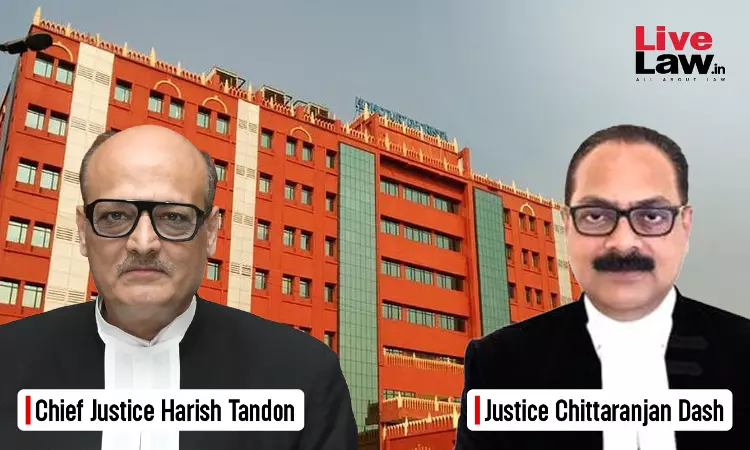
The Orissa High Court on Thursday (August 27) heard and reserved verdict in a Public Interest Litigation (PIL) challenging constitutionality of the appointment of Bharatiya Janata Party (BJP) leaders Kanak Vardhan Singh Deo and Pravati Parida as Deputy Chief Ministers (Deputy CMs) of the State pursuant to the election victory of the party in 2024 Assembly elections, as there is no stipulation...
This is a premium content
Available exclusively to
Our subscribers
Subscribe Premium 
INR 1099+GST
Your support helps us to bring you more content at
an affordable subscription scheme !!!
All payment options available
The Orissa High Court on Thursday (August 27) heard and reserved verdict in a Public Interest Litigation (PIL) challenging constitutionality of the appointment of Bharatiya Janata Party (BJP) leaders Kanak Vardhan Singh Deo and Pravati Parida as Deputy Chief Ministers (Deputy CMs) of the State pursuant to the election victory of the party in 2024 Assembly elections, as there is no stipulation of such position in the scheme of the Constitution.
A Division Bench of Chief Justice Harish Tandon and Justice Chittaranjan Dash was hearing a petition filed by Advocate Eleena Dash. Primary challenge was laid to the legality of such office allegedly 'bereft' of any constitutional prescription.
Advocate Srinivas Mohanty appearing for the petitioner argued that by appointing Deputy CMs, the State Government has attempted to bring in an extra-constitutional “three-tier hierarchy” within the Council of Ministers, i.e. Chief Minister, Deputy CMs and other Ministers.
Referring to Articles 163 and 164 of the Constitution, which prescribe for Council of Ministers to aid and advise Governor and provisions as to Ministers respectively, it was submitted on behalf of the petitioner that the Constitution merely provides for a Council of Ministers with the Chief Minister at the head to aid and advise the Governor. However, no provision stipulates or empowers any authority to appoint Deputy CMs.
During the hearing, Chief Justice Tandon time and again suggested that notwithstanding designation of the office, the Deputy CMs are essentially part of the Council of Ministers. Except for the Chief Minister, there is no constitutional prescription as to designation of other Ministers, who are appointed by the Governor on the advice of the Chief Minister. The Chief Justice queried if any prohibition is in place barring appointment of Deputy CMs.
The State, represented by Advocate General Pitambar Acharya, defended such appointments and submitted that Deputy CMs are merely parts of the Council of Ministers and absence of express stipulation for the post does not necessarily make such appointment unconstitutional or illegal. For substantiating such claim, the AG placed reliance on a similar controversy decided by the Rajasthan High Court in the case of Om Prakash Solanki v. Special Secretary His Excellency Governor of The State of Rajasthan, Jaipur & Ors, 2024 LiveLaw (Raj) 14.
In the aforesaid case, the Rajasthan High Court relied upon the decisions of the Supreme Court in K.M. Sharma v. Devi Lal & Ors. (1990), of the Bombay High Court in Devidas v. Shri Gopinath Mundhe & Ors. (1995), and the ruling of the Karnataka High Court in Dr. Sekhar S. Iyer v. Chief Secretary & Ors. (2018). In all the aforesaid cases, the Courts had commonly held that mere description of a person as Deputy Prime Minister or Deputy CM of the State, as the case may be, does not amount to violation of the Constitution and the status of such person continues to remain as Minister.
Moreover, reliance was also placed upon an order passed by a three-judge Bench of the Supreme Court headed by then CJI DY Chandrachud in Public Political Party v. Union of India (2024), which held as follows–
“A Deputy Chief Minister is, first and foremost, a Minister in the Government of the State. The appellation of a Deputy Chief Minister does not breach the constitutional position, namely, that a person who holds office of a Minister must, in any event, within a stipulated period, be the Member of the legislature in order to qualify for appointment as a Minister.”
Deriving support from the above precedents, the AG vociferously argued that the petition is a frivolous one and it does not merit any consideration of the Court at all. He also urged the Bench to impose a heavy exemplary cost upon the petitioner to discourage such vexatious PILs.
Nevertheless, Advocate Mohanty argued that despite the claim of parity of the Deputy CMs with other Ministers, they are being provided with heightened status, privileges and protocol. He volunteered to file an affidavit to prove his claim. He even cast an aspersion on the intention of the State in spending public exchequer on extra-constitutional functionaries.
Interestingly, the Advocate asked the Court to presume the existence of an ill-intention on the part of the State. For this prayer, he made a reference to the Odisha Legislative Assembly Members' Salary, Allowances and Pension (Amendment) Bill, 2025, which was introduced before the State Assembly last year with an objective to substantially increase the remunerations of the MLAs. The same was challenged before the Court and the Government withdrew the Bill before it could be passed.
However, the Chief Justice made it clear that the intention of government cannot be presumed on the force of a Bill which was withdrawn. He also clarified that the said scrapped Bill has no relevance to the present litigation.
Advocate Mohanty then specifically questioned the legality of grant of extra remunerations, privileges, protocols and status to the Deputy CMs. The AG retorted the same by referring to the Entry 40 of the List II (State List) under the Seventh Schedule of the Constitution. The said entry empowers the State to determine salaries and allowances of Ministers for the State.
Taking note of the rival contentions, the Bench has now reserved judgment in the case.
Case Title: Eleena Dash v. State of Odisha
Case No: W.P.(C) No. 19554 of 2026
Counsel for the Petitioner: Mr. Srinivas Mohanty, Advocate
Counsel for the State: Mr. Pitambar Acharya, Advocate General
Tags


