



- Home
- /
- High Courts
- /
- Karnataka High Court
- /
- Complainant Who Arranges 'Trap...
Complainant Who Arranges 'Trap Money' To Expose Corruption Can't Be Made To Wait Years For Its Return: Karnataka High Court
Sebin James
17 Aug 2026 2:00 PM IST
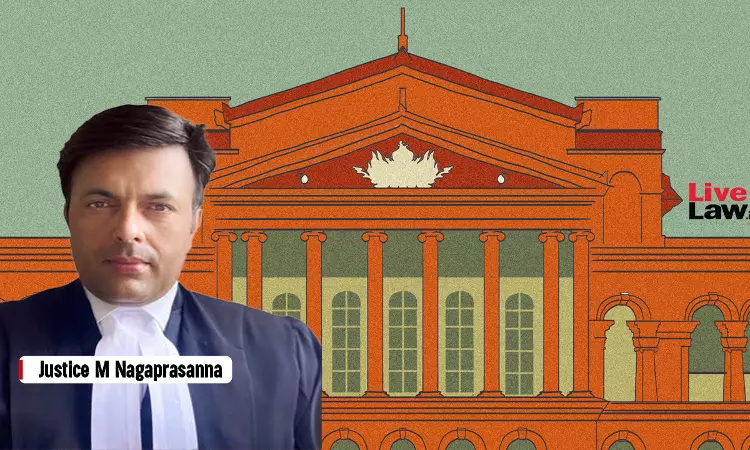
What is required is preservation of its evidentiary value, not prolonged deprivation of lawful owner's rights, Court said.
Clarifying the rights of complainants in anti-corruption cases, the Karnataka High Court has recently held that the de-facto complainant who arranges 'trap money' cannot be left in the lurch until the conclusion of a prolonged trial to recover their funds. [2026 LiveLaw (Kar) 303]The single judge bench of Justice M. Nagaprasanna, while allowing a plea, also iterated the comprehensive...
This is a premium content
Available exclusively to
Our subscribers
Subscribe Premium 
INR 1099+GST
Your support helps us to bring you more content at
an affordable subscription scheme !!!
All payment options available
Clarifying the rights of complainants in anti-corruption cases, the Karnataka High Court has recently held that the de-facto complainant who arranges 'trap money' cannot be left in the lurch until the conclusion of a prolonged trial to recover their funds. [2026 LiveLaw (Kar) 303]
The single judge bench of Justice M. Nagaprasanna, while allowing a plea, also iterated the comprehensive guidelines for the expeditious release and disposal of various categories of seized property, including cash, vehicles, and digital evidence, as laid down by the apex court and other High Courts.
“…the complainant is, beyond any pale of doubt, the rightful owner and lawful custodian of the trap money. Yet, the recognition of ownership, if divorced from possession, is but a barren declaration. A person may possess title in law, but if he is denied enjoyment of the property for years together without any legal necessity, such title becomes illusory and reduced to a mere abstraction. The law cannot content itself with acknowledging ownership while simultaneously permitting prolonged deprivation of its enjoyment”, the court laid down in the order.
While noting the above, reliance was primarily placed on the apex court judgment in Sunderbhai Ambalal Desai v. State of Gujarat [2002] which talks about procedure to be followed under Sections 451 and 457 of the Cr.P.C for managing seized property.
Examining further about how such restoration of money can be effected, the court remarked that the prosecuting agency or the State can restore to the complainant an 'equivalent amount' from the State exchequer after the trap proceedings attain finality, leaving the original currency notes to continue as material exhibits before the court.
“…such an approach would foster public confidence in anti-corruption mechanisms, encourage honest citizens to come forward with complaints against corrupt public servants, and reinforce the larger constitutional objective of eradicating corruption from public administration. The fight against corruption cannot be sustained merely by statutory provisions; it must equally be nourished by assuring every complainant that the legal system shall not reward his courage with financial hardship…”, the court added.
For context, the petitioner, a contractor, was the de-facto complainant in a trap case registered by the CBI against two accused GST officials. He had allegedly handed over Rs 80,000 in trap money to the officials who were later apprehended.
According to the petitioner, the money involved in the trap case was in the custody of the special court since it is an important exhibit in the trial, and hence aggrieved by his inability to retrieve the money which was duly his, he approached the High Court. The petitioner argued that it should be released since the trap money remaining with the special court doesn't serve any purpose, especially in light of the financial difficulties that he was facing.
The court, after hearing both sides, observed that while the original currency notes treated with phenolphthalein powder are crucial material evidence for the trial, the ownership of the money belongs undeniably to the complainant.
“….. The ownership of the trap money, therefore, admits of no ambiguity. It is not the case that the prosecuting agency advances or finances the trap amount and entrusts it to the complainant for effectuating the trap. On the contrary, it is the complainant who parts with his own money to facilitate the detection of an alleged act of corruption. The prosecuting agency merely employs that money as an instrumentality to expose criminality. Ownership, therefore, never migrates from the complainant to the State merely because the currency notes momentarily assume the character of material evidence…”, the court said in the order.
The Court also took note of the severe burden borne by the complainant-citizens while assisting the state in trap cases and applauded their courage to protest against corrupt practises instead of acceding to them. The restoration of trap money is a right of the citizen, the court opined and observed further as below:
“…every successful trap is founded upon the courage of an honest citizen who chooses the path of legality over silent submission. Such a citizen should emerge from the process with the satisfaction of having assisted the administration of criminal justice, not with the additional burden of financial impoverishment occasioned by the prolonged retention of his own money in judicial custody. To compel the complainant to wait for years together for restoration of his property, merely because he assisted the State, would amount to converting his public spiritedness into an unintended penalty…”
The Court has granted liberty to the petitioner to approach the Special Court by filing an appropriate application under Sections 497 and 503 of the Bharatiya Nagarik Suraksha Sanhita, 2023 (BNSS), which should be disposed of by the Court within a period of four weeks.
“…Upon such an application being presented, the learned Special Court shall consider and dispose of the same in the light of the observations rendered in the course of this order, bearing in mind the salutary principle that while the evidentiary sanctity of the original trap currency must remain inviolate, the proprietary rights of the complainant ought not to be rendered illusory by compelling him to await the culmination of a protracted criminal trial….”, the court concluded.
Accordingly, the plea was disposed of.
Case Title: Sri G. Eshwaraiah S/o G. Narasimhulu vs. Central Bureau of Investigation (CBI) and Others
Case Number: Criminal Petition No. 9560 of 2026
Citation: [2026 LiveLaw (Kar) 303]
For the Petitioner: Smt. H.S. Poornima, Advocate.
For Respondent No. 1 (CBI): Sri P. Prasanna Kumar, Special Public Prosecutor.
Tags

Sebin James
Sebin James is a Correspondent with LiveLaw, covering the Karnataka High Court

