



- Home
- /
- High Courts
- /
- Karnataka High Court
- /
- Drinking Water Supply Cannot Be...
Drinking Water Supply Cannot Be Subject To Technicalities: Karnataka High Court Tells Govt
Sebin James
23 Sept 2026 1:52 PM IST
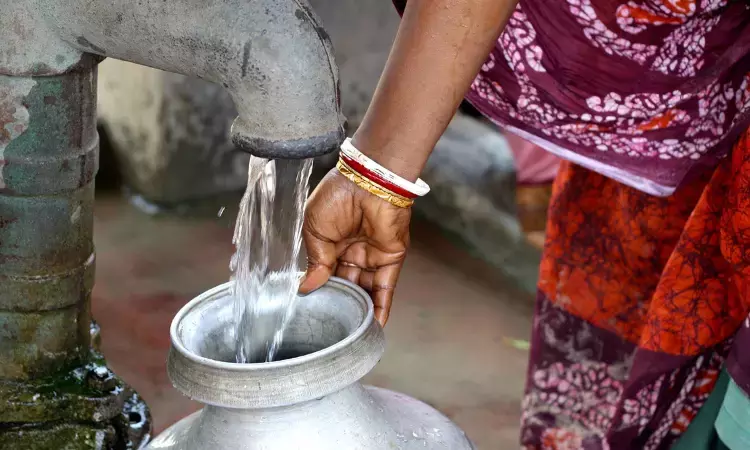
The Karnataka High Court on Wednesday (September 23) observed that drinking water supply cannot be made subject to “technicalities” and directed the State to address the issue of supply of potable water to villages covered by the Madalur Interlinking Feeder Channel project in Sira Taluk, Tumakuru district.A Division Bench comprising Justice Anu Sivaraman and Justice T.P. Vivekananda...
This is a premium content
Available exclusively to
Our subscribers
Subscribe Premium 
INR 1099+GST
Your support helps us to bring you more content at
an affordable subscription scheme !!!
All payment options available
The Karnataka High Court on Wednesday (September 23) observed that drinking water supply cannot be made subject to “technicalities” and directed the State to address the issue of supply of potable water to villages covered by the Madalur Interlinking Feeder Channel project in Sira Taluk, Tumakuru district.
A Division Bench comprising Justice Anu Sivaraman and Justice T.P. Vivekananda was hearing a PIL concerning the release of water through the Madalur Interlinking Feeder Channel and the supply of safe drinking water to 11 villages.
During the hearing, the State submitted that it had been supplying 0.9 TMC of water from the Hemavathi source for drinking purposes to identified tanks in Tumakuru.
The State further submitted that out of the 0.9 TMC, water was being released from Kallambella towards Madalur Tank, filling tanks en route cumulatively.
The State also placed on record a memo prepared by the Rural Development and Panchayat Raj (RDPR) Department stating that safe and potable drinking water was being supplied to the villages as per their requirements.
The memo stated that, with regard to the petitioners' prayer for release of 0.4 TMC of water from the Hemavathi River to Madalur Tank, water was being released from Kallambella to tanks located en route to Madalur Tank.
The Court directed the petitioners to verify the contents of the State's memo and the supporting annexures concerning the water supply being made available.
At the outset, counsel for the petitioners submitted that the Hemavathi project was a centrally sponsored scheme which had been completed and that water had initially been supplied on a test basis, but the supply was subsequently stopped.
The State however submitted that while it was committed to supplying drinking water, the release of water was subject to availability of water in the Kaveri basin.
The State informed the Court that it had identified tanks and their capacities and was releasing water subject to availability. It submitted that more than 1 TMC had been released in the previous week owing to excess water availability.
The petitioners argued that Annexure A to the project specifically contemplated supply of drinking water to the concerned taluks and pressed the State to demonstrate when and which tanks had been filled, particularly during the summer months.
The Bench, while considering the rival submissions, emphasised the distinction between irrigation requirements and drinking water.
“This year…it's a drought year…it's the government who has to look into this matter and see drinking water is provided to all taluks. The contention is that there are directions but directions are subject to availability. Irrigation is equally important but about drinking water, you cannot rely on all these technicalities,” the Court orally observed.
The State then placed on record photographs showing water purifiers installed in the villages. On the issue of water quality, it submitted that water samples were tested twice a year and sent to local laboratories.
The State submitted that the permissible threshold for fluoride was 1.5 and that the fluoride levels in the water supplied to the 11 villages were below the prescribed limit.
The petitioners had earlier submitted that, out of 12 tanks connected to the project, only one tank had been partially filled, resulting in 43 villages dependent on those tanks allegedly being deprived of adequate drinking water. They had also raised concerns regarding fluoride and other contaminants in the available water.
The hearing today follows the Court's September 18 observations expressing concern over citizens repeatedly approaching courts regarding matters falling within the executive domain. It had remarked that courts should not be burdened with managing essential public services such as drinking water supply and infrastructure.
The Court has now asked the petitioners to verify the State's compliance memo and the documents placed on record regarding the present status of water supply.
Case Title: R. Jayaramaiah & Others v. State of Karnataka & Others
Case Title: WP 4656/2020
Tags

Sebin James
Sebin James is a Correspondent with LiveLaw, covering the Karnataka High Court

