



- Home
- /
- High Courts
- /
- Kerala High Court
- /
- Brethren Assembly Hall Is A...
Brethren Assembly Hall Is A 'Church' Under Kerala Liquor Rules; Bar Distance Restrictions Apply: High Court
Anamika MJ
19 Aug 2026 8:45 PM IST
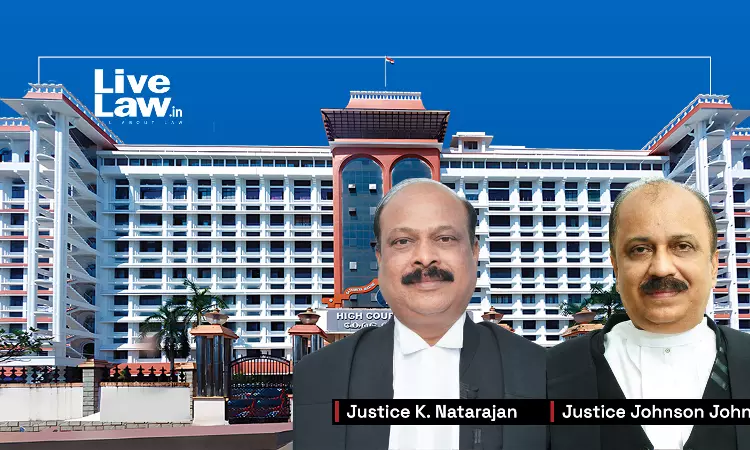
The Kerala High Court has held that an Assembly hall of the Brethren Christian denomination qualifies as a “church” under Rule 13(3) of the Foreign Liquor Rules, 1953, thereby attracting the statutory distance restriction on grant of bar licences. [2026 LiveLaw (Ker) 458]A Division Bench of Justice K. Natarajan and Justice Johnson John dismissed an appeal filed by Hotel Palace Inn,...
This is a premium content
Available exclusively to
Our subscribers
Subscribe Premium 
INR 1099+GST
Your support helps us to bring you more content at
an affordable subscription scheme !!!
All payment options available
The Kerala High Court has held that an Assembly hall of the Brethren Christian denomination qualifies as a “church” under Rule 13(3) of the Foreign Liquor Rules, 1953, thereby attracting the statutory distance restriction on grant of bar licences. [2026 LiveLaw (Ker) 458]
A Division Bench of Justice K. Natarajan and Justice Johnson John dismissed an appeal filed by Hotel Palace Inn, Angamaly, and its managing partner, and upheld the finding of a single judge that the Town Brethren Assembly Hall at Angamaly is a church for the purposes of the Rules.
A Single Judge has held that the assembly hall of the petitioner, Town Brethren Assembly is a church under the Note (1) of the first proviso to Rule 13(3) of the Foreign Liquor Rules, 1953. The appellants had challenged this order in the present appeal.
Town Brethren Assembly are members of the christian denomination 'Brethren' which is congregational in nature. They are the respondents in the present appeal.
The dispute dates back to 2008 when they initially filed an objection before the Excise Commissioner and the Assistant Excise Commissioner, Ernakulam after they came to know that the the appellant in the present appeal was about to start a bar hotel in a building at a distance of about 80 meters from the place of worship and prayers of the petitioner - Town Brethren Assembly.
Since there was no action from the concerned authorities, they approached the court by filing a writ petition. This was disposed of directing the competent authority to consider the objection. The matter was closed on the ground that there was no application from the appellants.
Thereafter, the appellants moved an application seeking Bar licence and the Circle Inspector of Excise recommended that the Brethren Assembly Hall need not be considered as a church. But the commissioner of Excise rejected the application stating that the Assembly Hall would fall under the definition of church.
Subsequently, the appellants filed a revision petition before the Government and a Government order was passed where it was held that the Brethren Assembly Hall is not a church coming within the purview of 'church' as under Note (1) of the first proviso to Rule 13(3) of the Rules, 1953.
The Court had earlier set aside the order of the government and directed it to pass fresh orders.
The principal question before the Bench was whether the Brethren Assembly Hall, where members of the Christian denomination offer prayers, falls within the statutory definition of “church” under Rule 13(3).
The Rule defines a church as a “public place where prayer is offered by Christians.” The appellants argued that the definition contains two distinct requirements: that the place must first be a “public place” and prayer must then be offered there by Christians. It was contended that the Assembly Hall could not be regarded as a public place because participation in certain religious ceremonies was restricted to members adhering to the beliefs of the Brethren denomination.
The respondents argued that Brethren Assembly Hall is a place of worship for the members of the Christian denomination 'Brethren' and that apart from worship, Sunday school, prayers, Bible study and separate prayer meetings for women and men are held in the assembly hall and therefore, the assembly hall is a place of religious worship within the purview of Note (1) of the first proviso to Rule 13(3) of the Rules, 1953.
The appellants also submitted that there was already another bar hotel and a toddy shop within the prohibited distance from the Brethren Assembly Hall and the respondents has not filed any complaint against the said bar hotel and the toddy shop.
The Court noted that this argument cannot be considered as relevant for the purpose of deciding whether the Brethren Assembly Hall of the petition is a church or not.
It further added that the object of bringing about the distance rule in Foreign Liquor Rules is to keep bar hotels away from certain places as to avoid disturbance to religious prayers and educational institutions.
The Court then went on to rely on the settled meaning of the expression “public place”, observing that a place need not be publicly owned to qualify as a public place. Reliance was placed on Gaurav Jain v Union of India [(1997) 8 SCC 114] and Chacko v. Mariakutty and others [1987 KHC 25].
The Court noted that a place can constitute a public place if it is intended for, or accessible to, the public.
“The words 'where prayer is offered by Christians' in the latter part of the Note qualifies the word 'public place' in the first part and therefore, Note (1) of the first proviso to Rule 13(3) of the Rules, 1953 can only be read conjunctively and not disjunctively as contended by the learned counsel for the appellants” Court observed.
The Court found that the appellants did not dispute either that the Brethren Assembly was a Christian religious congregation or that its members used the Assembly Hall for prayer. The material on record also showed that Christians could attend worship and prayers at the hall.
The Court also rejected the challenge to the maintainability of the writ petition based on the contention that the Town Brethren Assembly was not a registered society and had not produced its bye-laws or constitution.
The Bench held that, for determining whether the Assembly Hall is a “church” under Rule 13(3), it was not necessary to establish the ownership, possession or administrative structure of the congregation as the relevant question was whether the assembly hall is a public place where prayer is offered by Christians.
The Court also noted that an earlier Division Bench judgment had specifically directed that this question be decided on merits, and that judgment had attained finality.
The Court thus held that there was satisfactory material to establish that the Assembly Hall was a public place where members of the Brethren Christian denomination offered prayers, and hence affirmed the single judge's conclusion that it constituted a church under Rule 13(3) of the Foreign Liquor Rules.
The writ appeal was accordingly dismissed.
Case Title: M/S Hotel Palace Inn, Angamaly v Town Brethren Assembly
Case No: WA 771/ 2026
Citation: 2026 LiveLaw (Ker) 458
Counsel for Appellants: A. Sudhi Vasudevan (Sr.), George Sebastian
Counsel for Respondents: T. Sethumadhavan (Sr.), V. Boovan Cherian Varkey, Wilson Urmese, Saneej E.S (GP)
Tags

Anamika MJ
Anamika MJ is a Correspondent with LiveLaw, covering Kerala High Court

