



- Home
- /
- High Courts
- /
- Kerala High Court
- /
- Kerala High Court Seeks ITC...
Kerala High Court Seeks ITC Response On Allegation That 'Honeydew Smooth' Printed On Gold Flake Cigarette Packs Violates Law
K. Salma Jennath
26 March 2026 6:22 PM IST
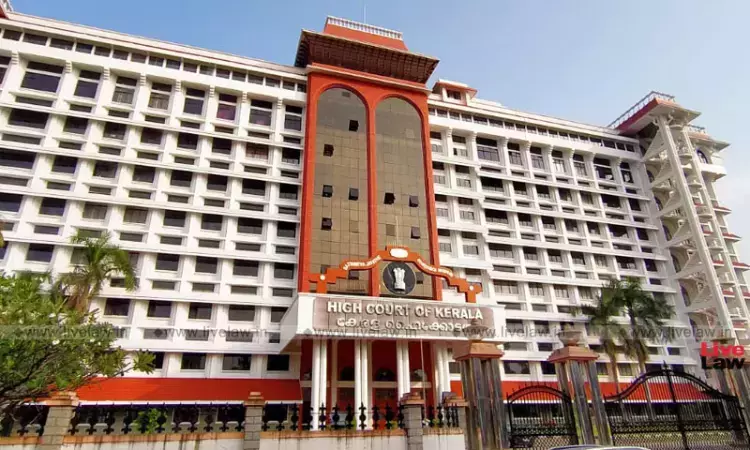
The Kerala High Court on Monday (March 26) asked Indian Tobacco Company (ITC) and Gold Flake Corporation Ltd. to respond to an allegation made in a public interest litigation that printing the words 'Honeydew Smooth', 'Flavour like never before' and 'More flavours, more experiences' on cigarette packets amounts to a violation of Cigarettes and Other Tobacco Products (Packaging and...
This is a premium content
Available exclusively to
Our subscribers
Subscribe Premium 
INR 1099+GST
Your support helps us to bring you more content at
an affordable subscription scheme !!!
All payment options available
The Kerala High Court on Monday (March 26) asked Indian Tobacco Company (ITC) and Gold Flake Corporation Ltd. to respond to an allegation made in a public interest litigation that printing the words 'Honeydew Smooth', 'Flavour like never before' and 'More flavours, more experiences' on cigarette packets amounts to a violation of Cigarettes and Other Tobacco Products (Packaging and Labelling) Rules, 2008.
Chief Justice Soumen Sen and Justice Syam Kumar V.M. also directed the other respondents in the PIL, including the Central and State governments, the Cochin Corporation and the Commissioner of Police to file affidavits regarding the issue.
"It appears that on the outer label, the words 'Honeydew Smooth' and 'Flavour like never before' are being printed. In the inside flap, the words 'More flavours, more experiences' can be found. It is argued that this may be in violation of Rule 3(g) of the 2008 Rules. The respondent Nos. 6 and 7 [ITC and Gold Flake] to respond to such allegations made by the petitioners. The other respondents are also directed to file an affidavit dealing with the same issue," the Court passed an interim order.
The Court further directed the State to ensure that its enforcement agencies to vigilant of the violations of the Act and the Rules thereunder and to proceed against violators:
"It is needless to mention that the enforcement agency of the State shall be vigilant in ensuring enforcement of the Act of 2003 and the Rules thereunder and initiate proceedings against the manufacturing units responsible for such violations. A further affidavit shall be filed regarding the progress made in this regard."
The PIL was filed seeking directions for mandatory checking of identification cards while selling tobacco products to young persons to ensure that they are 18 years old for action against illegal advertisement of cigarette products, etc.
During the last hearing, the Court had recorded the State's submission that steps are being taken to ensure that tobacco products are not sold without disclosing the nicotine and tar contents. However, the State had also pointed that in the absence of any Central rules specifying the maximum permissible nicotine and tar contents in cigarettes, it would not be possible for the State respondents to seize or confiscate cigarettes or tobacco products on the ground of not specifying the maximum permissible nicotine and tar contents.
The Court had then requested the Deputy Solicitor General of India (DSGI) to assist it and had directed the Central government to file an affidavit disclosing whether any notification has been issued specifying the maximum permissible nicotine and tar contents in cigarettes or other tobacco products under the proviso to Section 7(5) of the Cigarettes and Other Tobacco Products (Prohibition of Advertisement and Regulation of Trade and Commerce, Production, Supply and Distribution) Act, 2003 [COPTA].
Section 7 deals with restrictions on trade and commerce in, and production, supply and distribution of cigarettes and other tobacco products. Sub-section 5 states that tobacco products cannot be sold without mentioning the tar and nicotine contents as well as the maximum permissible limits on the labels. Proviso to the sub-section provides that nicotine and tar contents cannot exceed the maximum limits prescribed by the Central government.
In compliance of the afore direction, an affidavit was filed by the Centre and the DSGI had appeared today before the Court. She submitted that Section 7(5) of the Act has not yet been notified and therefore, the same is not in operation as of now. She also told the Court that the reason for not prescribing the maximum limits is because even small contents of nicotine and tar is harmful.
"Studies have come later which shows that maximum content cannot be notified and even smaller quantities not good for health...Some maximum limit can be prescribed but when the studies came in later and when the international treaties also came in, it has become impossible to quantify the maximum limit. Because it is only tobacco and tar content which is there but there are 7000 other chemicals that are there in cigarettes. That is why," DSGI told the Court.
"You mean to say that all over the world, there has been no clear indication as to what is the maximum? Then you omit that...you amend it. You keep this in the statute book and not notifying it...by an amendment you can omit this. More than 23 years have passed. Some stand has to be taken," the Court responded to the submission.
The DSGI told the Bench that she shall advise the Centre to do so.
"What you can do is this, for the time being, maximum permissible limit may not be imported. But the contents of the nicotine and tar contents may be made compulsory," the Court orally told the DSGI. It then added to its interim order:
"The Ministry of Health and Family Welfare may consider, the issue pending, as to the maximum permissible limits to be displayed/printed in the cigarette packets. The label may contain the nicotine and tar contents so as to enable the smokers to make a decision..."
Next, the Court turned to the petitioner and asked what the grievances against ITC and Gold Flake are since they are also arrayed as parties. The petitioner replied that there is violation of Sections 5 and 7(5) of the COPTA. However, the Court reminded that since the latter provision was not notified, there can be no violation of the same:
"[Section] 7(5) violation is not there. They have not notified it. And they have filed an affidavit that they have not yet decided to notify it because of...there is no uniformity. All over the world, none of the cigarette packets contain maximum or minimum. Anyone smoking would know that it would cause injury to their health. That is sufficient indication. Nicotine and contents of tar, that can be there. That can be mentioned. Of course, whoever takes the cigarette, whoever smokes, they don't go by the tar and nicotine content. But to that extent, they will decide they can possibly mention that it maybe made mandatory. But that is up to the Central government to decide on that. Some of the cigarette companies have made already."
The petitioner pressed that displaying content would be beneficial at least to the younger generation to turn away from smoking. But the Court orally remarked:
"Whoever smokes, don't look at this, madam. Whoever, any smoker, no one looks at how much of tar, they go by the brand. Nobody smoking Marlboro will look at the contents or Goldflake King will look into this. What is the content. They go by the brand. From the dawn of civilisation till date, they have not been able to. Smoking was part of life. And is still. Yes, we have become...It's for the person who smoke or not. There cannot be a direction 'you should not smoke'."
However, the Court went on to pass an interim order directing the Centre to consider laying down the maximum permissible limits of nicotine and tar, and to give effect to the provision.
Today, the petitioner had also produced two cigarette packets for the Court's perusal. She then told that the same violates the Act and 2008 Rules. The Court ordered that these be taken into the files of the case and that it shall be open for inspection by the counsel for the parties in order to enable them to respond to the allegations made against them.
One of the packets produced was of the brand 'Mond' with a strawberry picture and the same had not contained pictorial representation with warnings about the ill effects of smoking as mandated under Rule 3 and the Schedule to the 2008 Rules. Noting the same, the Court directed for registration of a complaint against the brand.
"The petitioner has placed before us a cigarette packet with a strawberry picture having the brand name 'Mond' without any pictorial representation as required under Rule 3 read with the Schedule. Complaints shall immediately be registered against the manufacturer of the brand 'Mond' for violating the aforesaid Rule," the Court ordered.
The Court also dispensed with the service of notice to Marlboro, which is arrayed as the 8th respondent, after noting that its directions apply to all cigarette manufacturing companies.
The matter is now posted after 8 weeks for further consideration.
Case No: WP(C) No. 8332 of 2025
Case Title: Sangeerthana M. and Ors. v. Union of India and Ors.
The 1st petitioner is appearing in person.
Counsel for the respondents: O.M. Shalina - DSGI, B. Vinitha - Sr. Government Pleader, K. Janardhana Shenoy - SC - Cochin Corporation
Tags

K. Salma Jennath
Salma Jennath is a Principal Correspondent with LiveLaw, covering Kerala High Court

