



- Home
- /
- High Courts
- /
- Kerala High Court
- /
- Kerala High Court Flags Financial...
Kerala High Court Flags Financial Irregularities In Ayyappa Conclave Spending; Directs Auditor Of Devaswom Board To File Statement
Anamika MJ
5 March 2026 10:15 PM IST
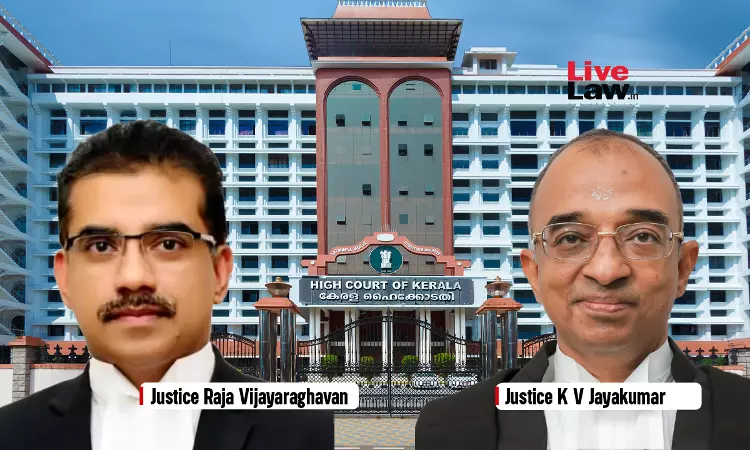
The Kerala High Court on Thursday (05 March) directed the Auditor of Travancore Devaswom Board to file a statement detailing the anomalies, deficiencies and lapses noticed by him in the course of audits conducted over the years.The Division Bench comprising Justice Raja Vijayaraghavan V. and Justice K.V. Jayakumar was considering a suo motu petition initiated on the basis of the...
This is a premium content
Available exclusively to
Our subscribers
Subscribe Premium 
INR 1099+GST
Your support helps us to bring you more content at
an affordable subscription scheme !!!
All payment options available
The Kerala High Court on Thursday (05 March) directed the Auditor of Travancore Devaswom Board to file a statement detailing the anomalies, deficiencies and lapses noticed by him in the course of audits conducted over the years.
The Division Bench comprising Justice Raja Vijayaraghavan V. and Justice K.V. Jayakumar was considering a suo motu petition initiated on the basis of the Sabarimala Special Commissioner's report regarding the audited accounts of the Travancore Devaswom Board relating to the conduct of theGlobal Ayyappa Sangamam on September 29, 2025.
The event was conducted with the approval of the High Court on the assurance by the State and the Board that it would be financed by sponsorships alone. It was also directed that the accounts be subjected to audit and to furnish a copy to the Special Commissioner within 45 days of the event for placing before the Court along with a report.
On the failure of production of the audit reports within the stipulated time, the Court had previously directed the production of all records relating to the Global Ayyappa Sangamam.
Today, when the records were produced before the Court, it noted that the TDB had entrusted the event management and infrastructure works for the conclave to the Indian Institute of Infrastructure and Construction (IIIC). However, the contract was reportedly awarded without inviting competitive quotations or tenders, contrary to the established procedures and manuals governing the Board.
The auditors had raised queries regarding the absence of documentation showing exceptional circumstances that justified bypassing the tender process. According to the audit report, no satisfactory explanation or supporting documents were produced, leading the auditors to conclude that the award of the contract was not in order.
The agreement between TDB and IIIC was structured largely on a “cost plus 10% administrative and facilitation charges” basis, requiring verification of actual expenditure through supporting bills and records.
However, auditors found that IIIC had subcontracted substantial portions of the work to other entities, including Neo Cochin Infrastructure Pvt. Ltd., Kerala Arts and Crafts Village, and Uralungal Labour Contract Co-operative Society, with consolidated invoices being produced for verification.
The court noted that the consolidated bills made it difficult to verify programme-wise expenditure and prevented independent verification of the actual base costs, which is critical in cost-plus contracts.
“As only consolidated bills were produced, the auditor was unable to independently verify possible cost escalations or to correlate the expenditure with the approved budget schedule.” Court noted
The auditors also reported non-production of original supporting bills and the asset register, preventing verification of fixed assets reflected in the balance sheet.
Further, several heads of expenditure were found to exceed the sanctioned budget, though the agreement required that such increases be separately disclosed under the cost-plus category with detailed justification.
Discrepancies were also noticed in the Joint Measurement Report, including mismatches relating to certain items such as furniture, food service charges in VIP areas, and the supply of beds for the event.
According to a revised billing statement submitted by IIIC, the total expenditure for the conclave was ₹7.04 crore, out of which ₹3 crore had already been paid as advance, leaving a balance claim of ₹4.04 crore.
The bank statements placed before the court showed sponsorship contributions including ₹2 crore from Dhanlaxmi Bank, ₹1 crore from Kerala State Co-operative Bank, and ₹98 lakh from Adani Vizhinjam Port Pvt. Ltd. Additionally, ₹5 crore was transferred to the account by the Devaswom Commissioner for the event.
The Court observed that the expenditure appeared to be substantially higher than the sponsorship amounts, despite the Board's earlier statement that the event would be funded exclusively through sponsorships.
“The records presently available indicate that substantial amounts have been committed and disbursed without vouchers and receipts and without sufficient clarity as to the financial approvals obtained. There is serious slackness in recording the basis on which the expenditure was sanctioned, and the safeguards adopted to ensure proper utilisation of funds. Such issues assume significance in the context of an institution entrusted with the administration of temple funds and contributions made by devotees.” Court noted.
The Court further observed:
“ The magnitude of the amounts involved, the multiple sources from which funds were mobilised, and the manner in which advances appear to have been released without a transparent accounting framework, prima facie indicate a disturbing lack of financial prudence and internal financial control.”
The court directed the Travancore Devaswom Board to explain the circumstances under which additional financial commitments were undertaken.
The court thus directed the Auditor to file a detailed statement outlining anomalies, deficiencies, and lapses noticed in previous audits, along with suggestions for improving financial safeguards and accountability.
The matter has been posted for further consideration on April 1.
Case No: SSCR No. 6 of 2026
Case Title: Suo Motu v. State of Kerala and Ors.
Counsel for Respondents: S Rajmohan (Sr. GP), G Biju (SC- TDB),
Amicus Curiae: Sayujya Radhakrishnan
Tags
Anamika MJ
Anamika MJ is a Correspondent with LiveLaw, covering Kerala High Court

