



- Home
- /
- High Courts
- /
- Kerala High Court
- /
- Compensation Under Probation Of...
Compensation Under Probation Of Offenders Act Is Not 'Fine', Can't Attract Service Disqualification: Kerala High Court
K. Salma Jennath
26 Nov 2026 6:02 PM IST
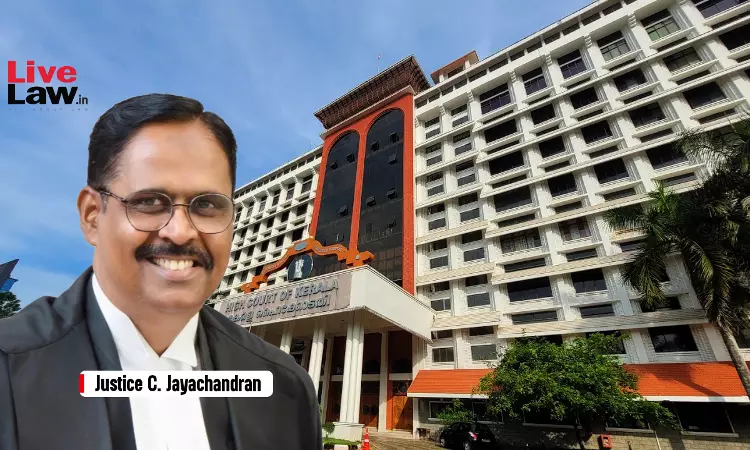
The Kerala High Court recently clarified that the compensation, which is ordered to be paid to a victim while admonishing an accused as per the Probation of Offenders Act, would not partake the character of a fine though it is recoverable as one. [2026 LiveLaw (Ker) 652]Justice C. Jayachandran observed:“For the mere reason that Section 5(2) of the Probation of Offenders Act enables recovery...
This is a premium content
Available exclusively to
Our subscribers
Subscribe Premium 
INR 1099+GST
Your support helps us to bring you more content at
an affordable subscription scheme !!!
All payment options available
The Kerala High Court recently clarified that the compensation, which is ordered to be paid to a victim while admonishing an accused as per the Probation of Offenders Act, would not partake the character of a fine though it is recoverable as one. [2026 LiveLaw (Ker) 652]
Justice C. Jayachandran observed:
“For the mere reason that Section 5(2) of the Probation of Offenders Act enables recovery of the compensation treating the same as 'fine' under the provisions of Sections 386 and 387 of the Code, the character and nature of 'compensation' cannot evaporate. There cannot be any fine, except accompanied by a sentence.”
Section 3 of the Act empowers the court to release certain offenders after admonition instead of sentencing him. As per Section 5, the court may require the released offenders to pay compensation and sub-section (2) says that the said compensation may be recovered as fine as per Sections 386 and 387 of the Code of Criminal Procedure.
The petitioner was an accused in a criminal case pending before the JFCM, Kalpetta and was charged with the offences under Sections 341 and 323 of the Indian Penal Code. In 2023, the JFCM found him to be guilty but he was released after admonishment as per Section 3 of the Act. The judgment was appealed against by the victim before the Sessions Court.
The Sessions Court modified the judgement of the Magistrate and directed the petitioner to pay Rs. 25,000 as victim compensation under Section 395(3) of the Bharatiya Nagarik Suraksha Sanhita (BNSS) [Order to pay compensation] read with Section 5 of the Act. It also observed that the “fine amount” shall be deposited within 6 weeks for the benefit of the victim and that in the event of default in paying the same, recovery steps shall be taken by the jurisdictional court.
Aggrieved by the use of the term “fine amount”, the petitioner came before the High Court by filing a revision petition. It was stated that the same could pose fetters in his service as a government servant.
The petitioner contended that the compensation directed to be paid as per the Act is not in the nature of a fine even though it is recoverable as a fine. Reliance was placed on a recent decision of the Karnataka High Court (Mahadevanna v. State of Karnataka) as well as a Kerala High Court decision (Unnikrishnan v. State of Kerala). The prosecution opposed the plea.
After hearing the parties, the Court was of the view that the petitioner is entitled to succeed. It also opined that it is doubtful whether invocation of Section 395(3) BNSS is justified in the facts of the case. It added:
“A perusal of the appellate judgment would indicate that the admonition under Section 3 of the Probation of Offenders Act has been confirmed. Section 3 specifically carves out that admonition has to be given 'instead of sentence'. Thus, there is no occasion for any sentence, when Section 3 is pressed into service. In the absence of a sentence, Section 395(3) can hardly be invoked.”
The Court further observed that Section 395(3) BNSS as well Section 5(1)(a) uses the word 'compensation' and that it does not partake the character of a fine. It then corrected the direction in the Sessions Court judgment so that the word “compensation” is used instead of “fine.”
Referring to the afore Karnataka High Court decision, the Court added that there cannot be any disqualification in the petitioner's service due to the admonition or the payment of compensation. It is also recorded the undertaking made by the petitioner's counsel that the compensation amount would be remitted within a week and kept in abeyance the non-bailable warrant, if any issued against him.
Thus, it allowed the plea.
Counsel for the petitioner: M.P. Ashok Kumar (Sr.), P.C. Gopinath, Bindu Sreedhar, Asif N.
Counsel for the respondents: N.D. Arun Das, M.C. Chithrakala, Gikku Jacob - Sr. Public Prosecutor
Tags

K. Salma Jennath
Salma Jennath is a Principal Correspondent with LiveLaw, covering Kerala High Court

