'Speeding A Major Road Safety Concern': Kerala High Court Directs Installation Of Additional Speed Cameras At Accident-Prone Locations
K. Salma Jennath
12 Nov 2026 9:00 AM IST
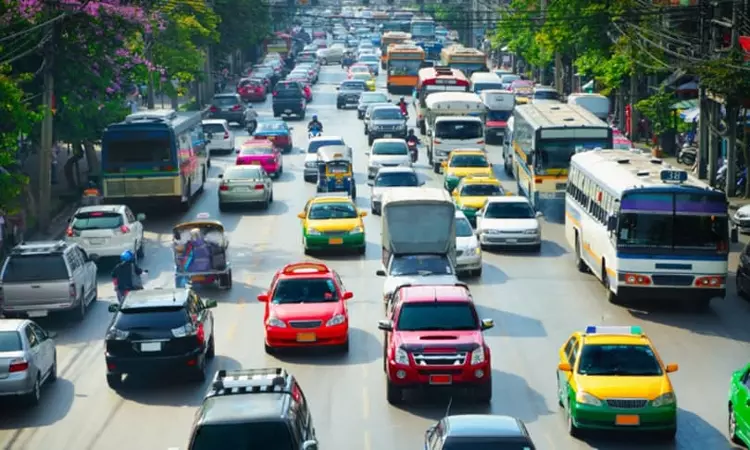
The Kerala High Court recently highlighted speeding as a major road safety concern and directed the Transport Commissioner to have more Speed Violation Detection Systems after identifying locations having high incidence of speed violations.
The Division Bench of Justice Raja Vijayaraghavan V. and Justice K.V. Jayakumar made the direction while considering a suo motu initiated writ petition to monitor road safety in the State as well as a connected plea.
“Speeding is a significant road safety concern and requires focused and sustained enforcement. We, therefore, direct the Transport Commissioner to identify locations having a high incidence of speed violations and frequent accidents and take appropriate steps to install additional Speed Violation Detection Systems at such locations. The Transport Commissioner shall also place before this Court a report indicating the locations identified, the additional systems proposed to be installed and the time frame within which the proposed expansion will be implemented,” the Court observed.


It orally added:
“If someone takes Porche and Ferari and driving at breakneck speed, you should be able to identify and within 2 days, you should be able to inform the authority, as well as the owner of vehicle that your car is being deployed for this particular purpose. These are the vehicles being driven at breakneck speed. If it is done repeatedly, your licence will go or vehicle, some action will have to be taken.”
The Court reiterated on the importance of having a State-wide, GIS-enabled Integrated Road Safety Monitoring Platform and requested the Additional Advocate General to lead the efforts in developing the same:
“We, therefore, requested the learned Additional Advocate General to take the lead in coordinating the efforts of the various departments and agencies and to ensure that the recommendations made by this Court…particularly those concerning the development and implementation of the proposed platform, are acted upon.”
Taking note of the AAG's submission that representation from the police department is also essential for the platform, the Court directed the Director General of Police to nominate a competent officer to be a member of the Steering Committee.
It also orally remarked:
“Just ensure that the platform is developed in terms of the directions. We have fixed up the responsibility of each. We can't just permit all the children, women to fall prey to the buses and go underneath the tyres and die. Why would we want to do that? Come out with something.”
Last month, the Court had mentioned that time was of the essence in addressing road safety concerns and had called for urgent practical solutions from various authorities in the State for implementing its comprehensive directions.
However, only the PWD Secretary and the Transport Commissioner had filed their respective affidavits, the Court noted. It then granted three more weeks to the National Highways Authority of India (NHAI) and the NATPAC to file their respective counters.
Perusing the PWD's affidavit, the Court remarked that the same did not specifically address the issues pointed out and directed the department to give a comprehensive and constructive response. It added:
“The affidavit shall also indicate the manner in which the PWD proposes to ensure that roads across the State are made safer and that road accidents are substantially reduced, with the ultimate objective of making the roads in the State accident-free.”
Perusing the affidavit of the Joint Transport Commissioner, the Court noted that some of the issues highlighted have been addressed. It found that directions have been issued to enforcement officers to strictly enforce the provisions as per the Motor Vehicles Act to address speed control, electronic enforcement and dangerous driving with the Commissioner regularly reviewing the same.
The Bench then directed the Transport Commissioner to formulate a comprehensive protocol for enforcement activities with mechanisms for regular monitoring, coordination and follow-up action. It also asked the Commissioner to place the materials evidencing the implementation of the enforcement measures.
The Commissioner had also submitted that the MV Department had given a proposal to the government for additional manpower to enable the enforcement squads work round-the-clock, as directed by the Court. In the affidavit, it was stated that enforcement activities relating to overloading are also duly recorded in the Parivahan portal and electronic challans issued to offending vehicles.
With the respect to the issue of private bus timings. it was stated that the MV Department has initiated steps to make reforms to the existing system of route and timing management. It also added that it is proposing to introduce an integrated digital platform, namely “KERALA BUSZ”, which would incorporate vehicle location tracking, permit management, route management, and regulation of timings and speeds of stage carriages.
The affidavit further mentioned the other measures with respect to improve the quality, reliability and transparency of vehicle inspections and the issuance of Certificates of Fitness; to phase out old and unfit vehicles in an environmentally sustainable manner, etc. It added that the department is also planning to have a digital platform for Driver Profile Mechanism as well. A meeting of stakeholders is also proposed to deliberate on the important issues mentioned in the Court's earlier order.
The Court was also informed of the Government's decision to establish a Road Safety Mission, which will adopt a comprehensive and coordinated approach, focusing on three key pillars of road safety - Education, Enforcement and Engineering.
The Bench also orally stressed upon the need for having individual responsibility in addressing black spot identification and rectification measures:
“There are black spots, we can identify which officer is responsible. Main problem is we are not fixing responsibility on anyone. Lot of officers are there, all statutes are there. We need to fix a responsibility on an officer for correction of black spots. Barrier problem, or marking problem, we just want to identify which officer is responsible and we want to scale it up to the highest level. If a particular person doesn't do, within 2 days, it should go to the higher officer and it should scale up to the highest authority so that something will be done. What we found is that even if NATPAC gave a report saying that there are 75 black spots, nothing has transpired.”
It orally added:
“If some citizen reports, some executive engineer or assistant engineer somebody should look into it and take appropriate action. The good thing is, it will be timestamped and we will come to know though this complaint was launched on this particular day, nobody has done any action. We can fix responsibility on an individual. If you fix responsibility, 80% of the issues will go.”
The case is posted to November 30 to receive the inputs and suggestions of the official authorities.
Counsel for the respondents: Mohammed Shah P.A. – Additional Advocate General, P. Sreekumar – ASGI, B.G. Bidan – SC – NHAI, B. Pramod, George Johny, Riji Rajendran, B.S. Swathi Kumar, M.A. Zohra