



- Home
- /
- High Courts
- /
- Madhya Pradesh High Court
- /
- Public Servant Can't Be Convicted...
Public Servant Can't Be Convicted Merely Because Irregularities Occurred During Her Tenure: MP High Court
Jayanti Pahwa
27 Aug 2026 2:30 PM IST
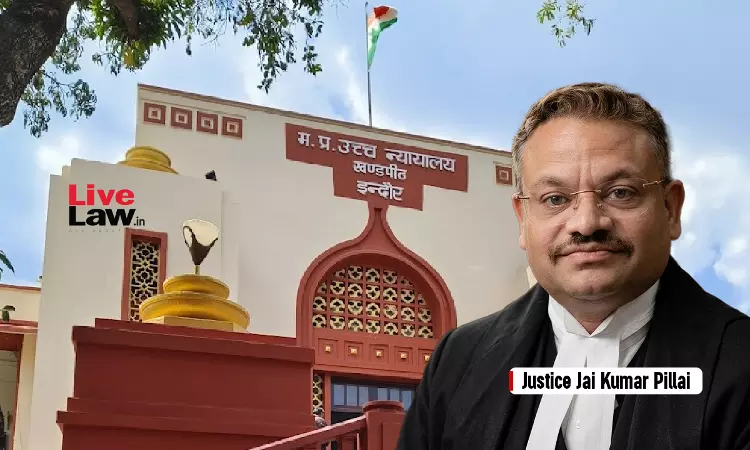
The Madhya Pradesh High Court, while setting aside the judgment convicting the Chief Executive Officer of Ujjain of criminal misconduct (Section 13 of the Prevention of Corruption Act), observed that a public servant cannot be convicted merely because the said employee was holding office when the irregularities occurred. [2026 LiveLaw (MP) 345]Noting that the prosecution failed to prove...
This is a premium content
Available exclusively to
Our subscribers
Subscribe Premium 
INR 1099+GST
Your support helps us to bring you more content at
an affordable subscription scheme !!!
All payment options available
The Madhya Pradesh High Court, while setting aside the judgment convicting the Chief Executive Officer of Ujjain of criminal misconduct (Section 13 of the Prevention of Corruption Act), observed that a public servant cannot be convicted merely because the said employee was holding office when the irregularities occurred. [2026 LiveLaw (MP) 345]
Noting that the prosecution failed to prove beyond reasonable doubt that appellant dishonestly abused her official position, the bench of Justice Jai Kumar Pillai directed:
"This Court further finds that a criminal court cannot convict aperson merely because she held office during the period when irregularities came to light".
A criminal appeal was filed challenging the judgment and conviction passed by the Special Judge (Prevention of Corruption Act). In the impugned judgment, the appellant was convicted of criminal misconduct (Section 13) of the PCA and criminal conspiracy (Section 120B) of the IPC.
The conviction was related to irregularities involving 110 missing transit passbooks, failure to execute an auction agreement for 26 mines, and excess payments made for advertising charges.
Per the facts of the case, the Collector of Ujjain had directed an inquiry into the matter and constituted a Committee. The inquiry officer found that the appellant, along with other co-accused persons, was responsible for irregularities committed in the discharge of official duties as a public servant.
Based on the inquiry report, the Chief Executive Officer lodged a complaint with the police station for breach of trust (Section 406) and forgery (Section 467) of the IPC. Thereafter, the Superintendent of Police forwarded the matter to the Economic Offence Wing in Bhopal, which re-registered the case. After obtaining prior sanction, a chargesheet was issued against the appellant and co-accused persons.
The prosecution alleged that the said irregularities occurred during the appellant's tenure as CEO.
The senior counsel for the appellant argued that the prosecution failed to prove any dishonest intention, wrongful gain, or pecuniary advantage against the appellant. It was argued that she was not the custodian of transit passbooks, and the relevant office records were handed over by accused no 5 and accused no 6.
It was argued that the appellant had ended with a clean chit in the departmental enquiry and that the prosecution's sanction was not validly proved. It was further submitted that the appellant was neither named in the FIR nor implicated at the initial stage; she was implicated on the ground that she failed to administer supervisory control over the principal accused.
The counsel for the State supported the conviction order and argued that the appellant was the administrative head of the concerned establishment. It was argued that the material on record, including financial records, auction proceedings, registers, note-sheets, transit passbook records, and sanctioned documents, clearly establishes misconduct on the appellant's part.
The State further argued that the appellant had directed the issuance of the transit passbooks, tolerated financial defaults, failed to record the auction dates, and bypassed standard departmental safeguards, and this gave unlawful pecuniary advantage to private contractors.
Referring to the cases of CBI v Ashok Kumar Agrawal [AIR 2014 SC 827] and PL Tatwa v State of MP [2014] 11 SCC 431], the bench reiterated that the prosecution must prove that adequate material was placed before the sanctioning authority and that valid sanction was granted after due application of mind.
Emphasizing that sanction was "a solemn and sacrosanct act", the bench noted that the burden was not formally discharged in the present case.
The court further noted that the Trial Court failed to consider that the appellant was exonerated in the departmental enquiry and that the appellant was promoted to a higher post. The bench held that the evidence at most discloses administrative irregularity and not criminal misconduct. The bench also highlighted:
"Although departmental findings are not conclusive in a criminal trial, they cannot be ignored where the prosecution evidence itself falls short of proving dishonest intention".
Thus, the bench held that the evidence does not establish that the appellant was the custodian of the transit passbooks or had actual knowledge, possession, or control over their issuance or misuse. Further, the bench removed the allegations of irregularities in the advertisement, noting that there was no evidence to show that the advertisement was fictitious, diverted, or used for personal gain.
Regarding allegations of criminal conspiracy, the bench noted that there was no evidence showing prior agreement between the appellant and other co-accused and that administrative irregularity by office functionaries is not enough to sustain conviction for conspiracy.
Accordingly, the court held that the prosecution had not been able to prove that the appellant had obtained any pecuniary advantage for herself or any other person or that she had deliberately caused wrongful loss to the State Exchequer.
Thus, the court allowed her appeal, set aside a conviction, and acquitted the appellant on all charges.
Case Title: Sabeena Ninama v State of Madhya Pradesh, Cr.A. NO. 2011/2018
Citation: 2026 LiveLaw (MP) 345
For Appellant: Senior Advocate Prakash Upadhyaya with Advocates Aditya Singh and Kinjal Shrivastava
For EOW: Advocate Lokendra Joshi
Tags

Jayanti Pahwa
Jayanti Pahwa is a Correspondent with LiveLaw, covering the Madhya Pradesh High Court

