



- Home
- /
- High Courts
- /
- Madhya Pradesh High Court
- /
- 'Not Rarest Of Rare': MP High Court...
'Not Rarest Of Rare': MP High Court Commutes Death Sentence For Man Convicted Of Rape-Murder Of 2-Year-Old
Jayanti Pahwa
7 Sept 2026 1:12 PM IST
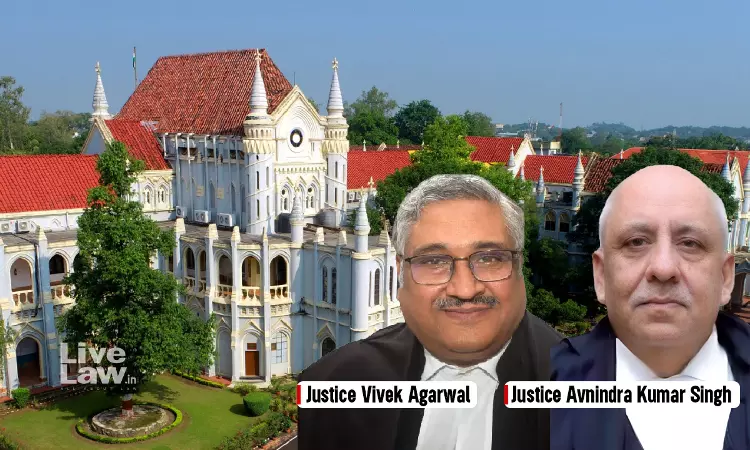
The Madhya Pradesh High Court has commuted the death sentence awarded to a man convicted of aggravated penetrative sexual assault and murder of a two-year-old girl, observing that the possibility of his reform and rehabilitation cannot be ruled out. [2026 LiveLaw (MP) 352]Emphasizing that "human life is a precious gift of god", the bench of Justice Vivek Agarwal and Justice Avanindra Kumar...
This is a premium content
Available exclusively to
Our subscribers
Subscribe Premium 
INR 1099+GST
Your support helps us to bring you more content at
an affordable subscription scheme !!!
All payment options available
The Madhya Pradesh High Court has commuted the death sentence awarded to a man convicted of aggravated penetrative sexual assault and murder of a two-year-old girl, observing that the possibility of his reform and rehabilitation cannot be ruled out. [2026 LiveLaw (MP) 352]
Emphasizing that "human life is a precious gift of god", the bench of Justice Vivek Agarwal and Justice Avanindra Kumar Singh directed;
"When taking this fact into consideration that there is no criminal history of the appellant, he is already treated as an out caste in the society only on account of performing marriage in another caste and he being not a continuous threat to society, there being no evidence of he being a professional or habitual offender, age of the accused and the fact that there is possibility of reformation or/and rehabilitation at the age of 32 years cannot be ruled out, post incarceration conduct and possibility of reform, then appellant cannot be treated to be a menace to the society requiring 'rarest of rare' punishment in the matter. We are also conscious that human life is a precious gift of God therefore in the facts and circumstances of this cse and law laid by Hon'ble Supreme Court we find that life should not be taken away lightly from appellant. Thus, partly allowing the appeal, we commute sentence from death to one of life imprisonment for at least 25 years without any remission".
Three criminal appeals and a criminal reference were filed against the order of the Special Judge under the POCSO Act, convicting and sentencing the appellant for murder (Section 302), causing disappearance of evidence (Section 201) and criminal intimidation (Section 506 Part II) of the IPC and for aggravated penetrative sexual assault (Section 5m) of the POCSO Act. He was sentenced to the death penalty, whereas two other accused persons were convicted and sentenced under Section 506 IPC.
Per the prosecution's case, a case was lodged in the FIR based on the statements of the victim's mother that the appellant, while residing in the house, had assaulted the victim. It was contended that the incident occurred while the mother was out attending the wedding with the appellant's wife. When the mother returned, she found injuries on the nose, throat, and cheeks of the victim, who was lying unconscious.
When the mother asked the appellant, he was drunk and stated that he had slapped the victim as she was crying, and he wanted to put her to sleep. It was also stated that the appellant had threatened to report the matter. The victim was then taken to the hospital.
Per the postmortem examination, the report found a skull fracture, vaginal and anal injuries. The report stated that the forceful penetration, along with head and face injuries, resulted in the death of the child victim.
Thereafter, on March 8, 2023, the appellant was taken into custody, and necessary articles were seized, including bedsheets and the victim's lower garments. After examining the evidence and statements of the witnesses, the Trial Court held the case to be a 'rarest of rare' case and sentenced him to the death penalty.
The counsel for the appellant contended that there were several contradictions in the evidence. Relying on the last seen theory, it was argued that at best, the appellant could be convicted under Section 506 and Section 201 of the IPC.
The court did not interfere with the appellant's conviction and held that the evidence was sufficient to sustain the findings under Sections 302, 201, and 506 Part II of the IPC and Section 5(m) of the POCSO Act.
Considering the issue of whether the death penalty was justified, the bench noted that there needs to be an examination of aggravating and mitigating circumstances.
The bench noted that aggressive penetrative sexual assault was proved. However, the court found significant mitigating circumstances, including the fact that the appellant had no previous criminal antecedents, was aged 32 years, and belonged to a rural and economically weaker background, had shown abnormal conduct in incarceration, and had a wife and two minor children dependent on him.
The court also considered the report of Sub Jail, which recorded that the appellant's conduct during incarceration was normal and had not committed any act of indiscipline. The court also noted the appellant's poor financial condition and unstable economic status.
The bench further noted that the appellant faced social isolation after marrying outside his caste, and there was no material to establish that he was a professional or habitual offender or posed a continuing threat to society.
Accordingly, the bench commuted the death penalty of the appellant to life imprisonment.
Case Title: In Reference v R CRIMINAL REFERENCE CAPITAL No. 1 of 2026
Citation: 2026 LiveLaw (MP) 352
For State: Government Advocate Manas Mani Verma
For Appellant: Senior Advocate Aditya Adhikari
Amicus Curiae: Advocates Nitin Gupta and Anannya Shree Adhikari
Tags

Jayanti Pahwa
Jayanti Pahwa is a Correspondent with LiveLaw, covering the Madhya Pradesh High Court

