



- Home
- /
- High Courts
- /
- Madhya Pradesh High Court
- /
- Punishment Of Dismissal From...
Punishment Of Dismissal From Service Can Be Imposed After Retirement If Departmental Enquiry Began Before Superannuation: MP High Court
Jayanti Pahwa
3 Aug 2026 4:45 PM IST
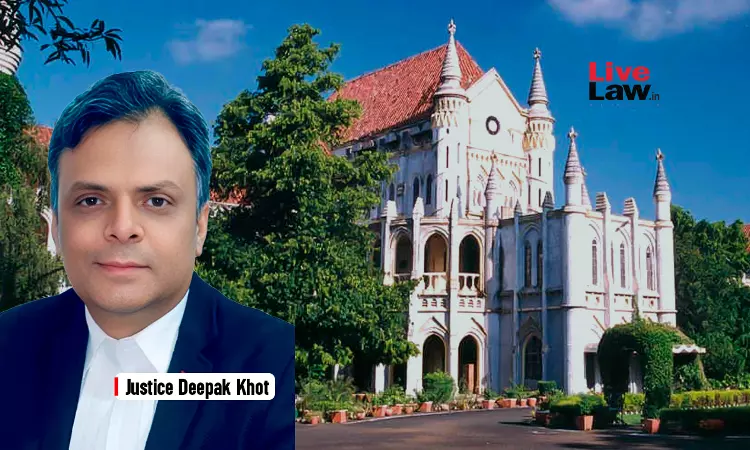
The Madhya Pradesh High Court has held that a penalty of dismissal from service can be imposed on the delinquent employee even after retirement, provided that a departmental enquiry was initiated before the employee attained the age of superannuation. [2026 LiveLaw (MP) 308]Referring to Regulations 35, 39 and 45 of the MP Gramin Bank Regulation, 2010, the bench of Justice Deepak Khot...
This is a premium content
Available exclusively to
Our subscribers
Subscribe Premium 
INR 1099+GST
Your support helps us to bring you more content at
an affordable subscription scheme !!!
All payment options available
The Madhya Pradesh High Court has held that a penalty of dismissal from service can be imposed on the delinquent employee even after retirement, provided that a departmental enquiry was initiated before the employee attained the age of superannuation. [2026 LiveLaw (MP) 308]
Referring to Regulations 35, 39 and 45 of the MP Gramin Bank Regulation, 2010, the bench of Justice Deepak Khot observed that for the purposes of the disciplinary inquiry, such delinquent employee shall be treated as being in service for such punishment to be imposed.
"even if a person has been superannuated and the departmental enquiry has been initiated prior to his retirement, then, for the purpose of conclusion of the departmental enquiry,such person is treated to be in service, it means that all the punishments available under Regulation 39 can be imposed upon such person, including the punishment of dismissal from service. On conjoint reading of Regulation 45(1) and Regulation 45(3), it becomes abundantly clear that if the charge-sheet is issued prior to retirement, then, for all purposes, the person shall be treated to be in service for infliction of punishment as provided under Regulation 39".
The petitioner challenged the order of July 17, 2014, whereby he was dismissed from service pursuant to the disciplinary authority's order. According to the case, the Special Police Establishment conducted a trap operation, registered a criminal case against the petitioner and filed a chargesheet. During the pendency of the criminal proceedings, by issuing a chargesheet containing three articles of charge.
The petitioner contended that he was never served with the chargesheet. Nevertheless, in the order of February 1, 2014, the disciplinary authority appointed an Enquiry Officer and Presiding Officer, recording that the petitioner refused to accept the chargesheet. The petitioner disputed this finding.
The petitioner further relied on the communication issued by the Lokayukta Organisation seeking clarification from the Bank regarding deposit receipts forming part of the evidence. In response, the Regional Manager stated that the receipt bore the petitioner's signatures and official seal and that no irregularity had been committed by him.
After learning about the departmental proceedings, the petitioner sought a copy of the chargesheet. According to him, only three pages of the chargesheet were supplied while relevant documents were withheld. The petitioner also requested that departmental proceedings be kept in abeyance until conclusion of the criminal case, which also arose from the same incident.
However, the disciplinary authority declined the request and continued wth the enquiry. Subsequently, the petitioner sought adjournments on medical grounds by submitting a medical certificate. The enquiry officer, however, proceeded ex parte and held all the charges proved.
During the pendency of the enquiry, the petitioner attained retirement, but still a penalty of dismissal was imposed by the disciplinary authority. Aggrieved, the petitioner preferred a departmental appeal, contending that the charge-sheet had not been served on him and that he was denied reasonable opportunity to be heard.
However, the appellate order passed a cryptic and non-speaking order. Thus, the petitioner filed the present writ petition challenging the impugned order.
The counsel for the petitioner argued that the impugned order of punishment was passed in violation of the principles of natural justice as the petitioner was not afforded a proper opportunity of hearing.
The counsel for the petitioner argued that the charges levelled in the chargesheet were vague and bald, and therefore no punishment could be inflicted on such charges. The petitioner further argued that the letter of the Lokayukta Organisation made observations that the petitioner was not at fault; however, the respondent, in an ex parte proceeding, imposed the punishment.
The counsel for the Bank argued that the petitioner was afforded an opportunity of hearing, but as the petitioner did not file any reply, the authorities initiated the departmental enquiry. The petitioner was thereafter served with a chargesheet and other relevant documents.
The court noted that the petitioner was served with a chargesheet along with an envelope containing an endorsement "refused to accept".
Thereafter, several letters were issued by the petitioner through registered post and received by the Bank, stating that a departmental enquiry had no meaning as a criminal case instituted by the Lokayukta Organisation was pending. The letters available on the records show that the petitioner was aware of the ongoing departmental enquiry and did not participate in it.
The court noted that the petitioner was also given a letter informing him about the appointment of the Enquiry Officer, which was also sent through registered post. The chargesheet also contained the postal authority's endorsement that the petitioner "refused to accept".
The court also took note of a letter filed by the wife of the petitioner stating that he had sustained injuries in an accident, and that they have been receiving letters which could not be replied to. This letter of the petitioner's wife itself shows that the family was very much aware of the departmental enquiry against the petitioner. The bench noted
"However, the letters submitted by the petitioner seeking certain copies of documents from the Bank, including copies of cheque and receipts, on the ground that they were required for the criminal trial pending at Raisen, show that the petitioner was very much aware of the pendency of the departmental enquiry. The petitioner deliberately did not participate in the enquiry but was participating in the criminal trial by seeking documents through repeated letters. Therefore, in the considered opinion of this Court, the petitioner was granted ample opportunity to submit his defence in the departmental enquiry. As the petitioner refused to accept the documents from the Bank, the proceedings culminated into an ex-parte enquiry and ex-parte punishment".
Thus, the petitioner was granted ample opportunity to present his defence in the departmental enquiry. Thus, the bench held that the impugned order suffered from no illegality and thus dismissed the petition.
Case Title: Phool Chand Kosta v Central MP Gramin Bank, WP-3601-2016
Citation: 2026 LiveLaw (MP) 308
For Petitioner: Advocate Puneet Chaturvedi
For Respondents: Advocates Rajesh Maindiretta and Dev Kumar Ramchandani
Tags

Jayanti Pahwa
Jayanti Pahwa is a Correspondent with LiveLaw, covering the Madhya Pradesh High Court

