Hindu Succession Act | Son Gets Share In Ancestral Property Only After Father's Death, No Birthright: MP High Court
Jayanti Pahwa
3 Nov 2026 10:51 AM IST
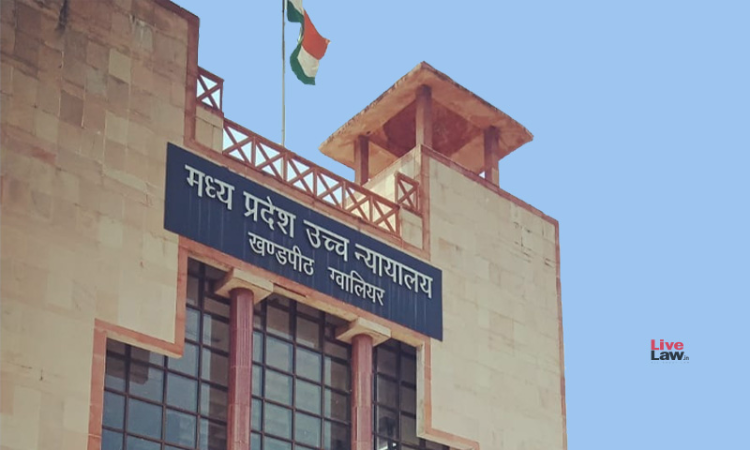
The Madhya Pradesh High Court has observed that sons do not acquire any right in ancestral property by birth and that the concept of birthright does not apply under Section 8 of the Hindu Succession Act, 1956. [2026 LiveLaw (MP) 443]
Clarifying that sons become entitled to inherit a share in ancestral property only after their father's demise, the bench of Justice Ashish Shroti observed:
"It is thus clear that after coming into force of the Hindu Succession Act, the theory of birth right does not exist, and son gets share in the property only after death of his father. It is only when the coparcener was born prior to coming into force of Hindu Succession Act, the property will devolve by survivorship upon the surviving members of the coparcenary vide Section 6".
The appellants approached the High Court challenging the judgment passed by the Appellate Court, wherein the decree of the Trial Court was affirmed, and their suit for declaration of title and possession and permanent injunction was dismissed.
The court termed the appellants as plaintiffs in the judgment and the respondents are referred to as defendants. Per the facts, the suit land is the ancestral property of Defendant No. 1. Plaintiff no 1 was the wife of Defendant No. 1, and Petitioners 2 and 3 are his sons.


The petitioners filed a suit contending that the suit land was recorded in the name of their father (Defendant No 1) and his brothers in the revenue records and is their ancestral property. On July 21, 2010, the father threatened to sell the suit land and not to give them any share. The plaintiffs thus filed the suit seeking declaration of their title and possession over the suit land and decree of permanent injunction.
During the pendency of the suit, the defendant no 1 (father) sold part of the suit land to defendant no 3. Accordingly, the plaintiffs amended the plaint and included defendant no 3 as party in the suit and also sought a declaration that the sale deed dated April 20, 2011 as null and void.
The father, in his written statement, denied the plaintiff's claim over the suit land. He argued that there was no dispute between him and his brothers and that there was already a partition between them regarding the suit land. The father also claimed that the plaintiffs had no right in the suit land during his lifetime.
The Trial Court, referring to the case of Chandrakanta v Ashok Kumar [2002 (3) MPLJ 576], reiterated that Section 8 of the Hindu Succession Act removed the concept of birthright in ancestral property.
The Court noted that the plaintiff no 1, being the wife of defendant no 1, does not come into the category of coparceners and only the sons would fall under the category. The Court upheld the trial court's decision that Section 8 of the Hindu Succession Act removed the concept of birthright in ancestral property.
Thus, the bench in the present case held,
"In the case in hand, the plaintiffs themselves have averred in para 2 of the plaint that defendant no.1 got the suit land in partition from his father. Meaning thereby, the property was received by defendant no.1 and became his self-acquired property on partition. Consequently, during the lifetime of father i.e. defendant no.1, the plaintiffs could not have claimed any share in the property. The view of the learned appellate court that the suit property is not the coparcenary property of plaintiffs, is thus upheld, though for different reasons stated above".
Accordingly, the court does not find illegality in the judgment of the Appellate Court and dismissed the appeal.
For Petitioner: Advocate Ashish Shrivastava
For State: Government Advocate Rajendra Jain