



- Home
- /
- High Courts
- /
- Madhya Pradesh High Court
- /
- 'Consent Immaterial In Legal...
'Consent Immaterial In Legal Marriage': MP High Court Quashes S.377 IPC Charge Against Husband
Jayanti Pahwa
26 March 2026 9:46 PM IST
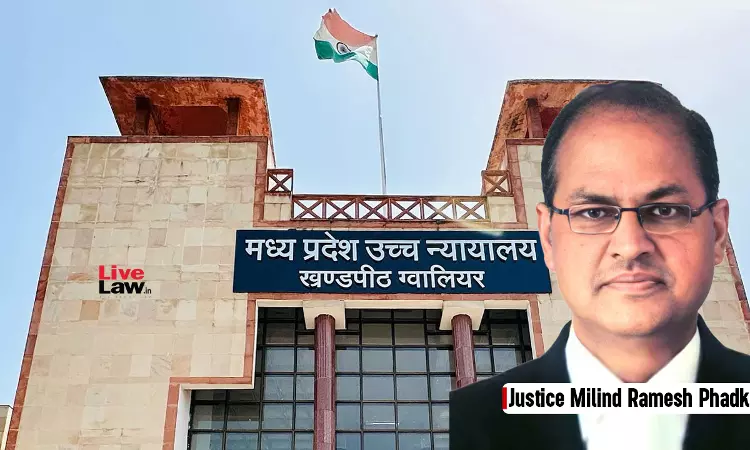
The Madhya Pradesh High Court has partly allowed a husband's petition seeking quashment of the FIR filed for sexual abuse and dowry harassment, observing that in light of exceptions provided under rape provisions, any sexual intercourse or sexual acts committed by a husband upon his adult wife do not constitute rape and therefore the aspect of consent within a marriage is legally immaterial....
This is a premium content
Available exclusively to
Our subscribers
Subscribe Premium 
INR 1099+GST
Your support helps us to bring you more content at
an affordable subscription scheme !!!
All payment options available
The Madhya Pradesh High Court has partly allowed a husband's petition seeking quashment of the FIR filed for sexual abuse and dowry harassment, observing that in light of exceptions provided under rape provisions, any sexual intercourse or sexual acts committed by a husband upon his adult wife do not constitute rape and therefore the aspect of consent within a marriage is legally immaterial.
The bench of Justice Milind Ramesh Phadke observed;
"...in light of Exception 2 to Section 375 IPC, sexual intercourse or sexual acts by a husband with his wife (not being a minor) do not constitute rape, thereby rendering the aspect of consent within marriage legally immaterial for the purpose of prosecuting such acts as rape".
The FIR was filed for cruelty (Section 498A), assault (Section 354), unnatural offences (Section 377), voluntarily causing hurt (Section 323), obscene acts (Section 294) and criminal intimidation (Section 506) of the Indian Penal Code.
Per the prosecution, the couple got married in accordance with Hindu rites and customs, with the wife's parents providing 4 Lakh in cash, along with gold ornaments and other home appliances as dowry.
Despite this, it was alleged that the husband remained dissatisfied and demanded 6 Lakh rupees, claiming that the marriage was settled for 10 Lakh. The wife further alleged that her father-in-law subjected her to inappropriate behaviour. Additionally, the husband also subjected the wife to physical and sexual abuse, including unnatural acts. The wife claimed that her husband, father-in-law, mother-in-law and sister-in-law subjected her to physical harassment.
The court first noted that the inherent powers under Section 482 CrPC, which empowers the court to quash an FIR, must be used sparingly. Further, the bench noted that the FIR could be quashed only in cases where the allegations made in the FIR and the evidence collected during the investigation do not disclose the commission of any offence.
In the present case, the bench noted that the FIR as well as the statements under Section 161 CrPC reveal only general and omnibus allegations without attributing any specific overt act. Further, it was noted that the wife, in her statement under Section 164 CrPC before a Magistrate, did not assign any specific act against the sister-in-law. Therefore, the bench quashed the FIR and the concerned proceedings related to the sister-in-law.
In relation to the allegations against the husband, the court observed that any sexual intercourse or sexual acts committed by the husband upon his adult wife do not constitute rape, and therefore, the aspect of consent is immaterial.
The bench further reiterated that the definition of rape was expanded to include acts such as anal and oral penetration. It further emphasized that such oral or anal penetration does not invoke section 377 IPC between a husband and wife during the subsistence of marriage.
Accordingly, the court held,
"Accordingly, this Court is of the considered opinion that the allegations made in the FIR do not prima facie disclose the commission of an offence under Section 377 IPC against petitioner No.1. Consequently, the proceedings against petitioner No.1 for the offence punishable under Section 377 IPC are hereby quashed".
The bench, however, did not quash other proceedings against the husband. Thus, the petition was partly allowed, and the FIR and consequent proceedings to the extent of Section 377 IPC were quashed.
Case Title: X v State of Madhya Pradesh [MCRC-23881-2024]
Citation: 2026 LiveLaw (MP) 89
Tags

Jayanti Pahwa
Jayanti Pahwa is a Correspondent with LiveLaw, covering the Madhya Pradesh High Court

