



- Home
- /
- High Courts
- /
- Madhya Pradesh High Court
- /
- Judicial Infrastructure Is...
Judicial Infrastructure Is 'Constitutional Duty', Financial Constraints No Excuse: MP High Court Asks State To Prioritise Pending Court Projects
Jayanti Pahwa
26 Aug 2026 10:30 AM IST
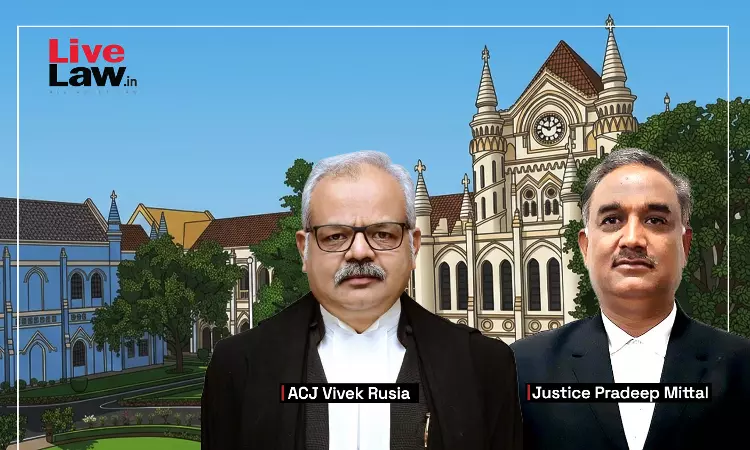
The Madhya Pradesh High Court has reminded the State Government regarding its constitutional duty under Article 21 to provide adequate judicial infrastructures, noting that multiple judicial infrastructure projects have been pending across the District and High Court waiting government sanction. Expanding the scope of a public interest litigation that was confined to lacking infrastructure in...
This is a premium content
Available exclusively to
Our subscribers
Subscribe Premium 
INR 1099+GST
Your support helps us to bring you more content at
an affordable subscription scheme !!!
All payment options available
The Madhya Pradesh High Court has reminded the State Government regarding its constitutional duty under Article 21 to provide adequate judicial infrastructures, noting that multiple judicial infrastructure projects have been pending across the District and High Court waiting government sanction.
Expanding the scope of a public interest litigation that was confined to lacking infrastructure in the District Court Building of Anuppur, the bench of Acting Chief Justice Vivek Rusia and Justice Pradeep Mittal remarked,
"We need to remind the government that the judiciary is one of the pillars of democracy and the same cannot be treated as a government department for providing necessary infrastructure. The administration of justice is an essential sovereign function. Adequate judicial infrastructure is not a matter of executive discretion or administrative largesse, but a constitutional duty owed to citizens to ensure access to justice under Article 21".
A public interest litigation was filed by an advocate and Sanyojak of Jila Vikas Manch of Anuppur seeking directions for the construction of a new District Court Building with 14 courtrooms. It was submitted that currently the district court functions from an old rented building which lacks adequate space and infrastructure, resulting in inconvenience to advocates, litigants, and the general public attending the court.
The petitioner referred to the memorandum of February 3, 2021, of this High Court, in which the Principal Secretary of the Law and Legislature Department was directed to take prompt action on all pending administrative and financial sanctions for the construction of the new building in Anuppur.
Thereafter, the Bar Association submitted representations requesting sanction of the new building, but their representations were pending approval due to a lack of budgetary allocation. The respondents stated that their representations would be approved when budgetary resources became available, but despite the passage of several years, no sanction was approved. Further, the Ministry of Law and Justice had communicated to the State, requesting that appropriate action be taken regarding the new building, but no action was taken.
Taking note of the submissions, the bench in its previous order had directed the Principal Secretary of Finance of PWD and the Secretary of the Law Department to explain why adequate budget was not allocated for the construction of the court building, employees' quarters, and residential quarters of judicial officers.
The court had also directed the Registrar of Works and Inspection of the HC Infrastructure Committee and the District Judiciary Infrastructure Committee of the ongoing projects related to the construction of the court building, employees' quarters, and residential quarters of judicial officers pending approval.
The Advocate General informed the court that the Evaluation Committee had recommended a sanction amount of ₹45 crores in its meeting of July 17, 2026, but due to financial constraints, the allocation was delayed.
Highlighting concern over similar projects that are still pending government sanction, the bench directed the State Government to prioritise all pending projects that are uploaded to the ERP list.
Additional Chief Secretary (Finance) submitted that the budget allocated to the Law Department for this year was exhausted while completing two projects, namely, the construction of 60 courtrooms in the High Court building at Jabalpur and the MP Judicial Officers Academy in Jabalpur.
The officer further submitted a proposal that needs to be made for 2027-28 so that more funds could be allocated for the construction of other projects.
Referring to the Supreme Court case of All India Judges' Association, the bench reiterated that financial constraints cannot be pleaded by the State to deny proper infrastructure, working conditions, and administrative resources to the judiciary.
The court also noted the lack of courtrooms in the court buildings of major cities, including Jabalpur and Bhopal. The bench noted that criminal cases were not being decided and that trial prisoners were lingering in jail due to an acute shortage of courtrooms.
Remarking that inadequate infrastructure leads to a large pendency of cases, the court directed:
"There is no land available for further expansion within the court campus. Therefore, the respondents are directed to consider allotment of extra land near the existing court building for construction of more courtrooms".
The bench further noted that the HC Infrastructure Committee and District Judiciary Infrastructure Committee have already sanctioned various projects for construction of new buildings/ expansion of existing ones for which "there should not be any constraint in allocation of the funds by the government".
The bench further directed, "The necessary funds for infrastructure projects of the judiciary can be met out from the budget of the Madhya Pradesh Public Works Department, which normally undertakes the work of construction as well as maintains all court buildings and residential accommodations of High Court judges, judicial officers and staff".
However, the court noted that the said request was not considered by the Finance Committee in August of 2026.
Thus, the bench directed the Registrar (Works & Infrastructure), High Court to provide the list of all the pending projects of the High Court and District Courts relating to the infrastructure work to Amicus Curiae appointed by the court who will advise on the measures that can be taken in future.
Highlighting that "Lack of infrastructure in the judiciary is a serious matter", the bench directed:
"Lack of infrastructure in the judiciary is a serious matter, which is directly related to the public at large; hence, more deliberation needs to be done in this matter. We expect that the learned Advocate General will apprise the Hon'ble Chief Minister of this State and will appear on the next date of hearing with a solution"
Accordingly, the matter was listed for September 30, 2026.
Case Title: Basudev Chatterjee v State of Madhya Pradesh, WP-6278-2025
For Petitioner: Advocates Anubhav Singhal and Deepak Kumar Pandey
For State: Advocate General Prashant Singh with Deputy Advocate General Swapnil Ganguly
Amicus Curiae: Senior Advocate Kailash Chandra Ghildiyal with Advocates Karnik Singh and Anshuman Singh
Tags

Jayanti Pahwa
Jayanti Pahwa is a Correspondent with LiveLaw, covering the Madhya Pradesh High Court

