



- Home
- /
- High Courts
- /
- Madhya Pradesh High Court
- /
- Absence Of Suicide Note Alone No...
Absence Of Suicide Note Alone No Ground To Discharge Accused If Material Raises Grave Suspicion Of Abetment: MP High Court
Jayanti Pahwa
26 Oct 2026 2:10 PM IST
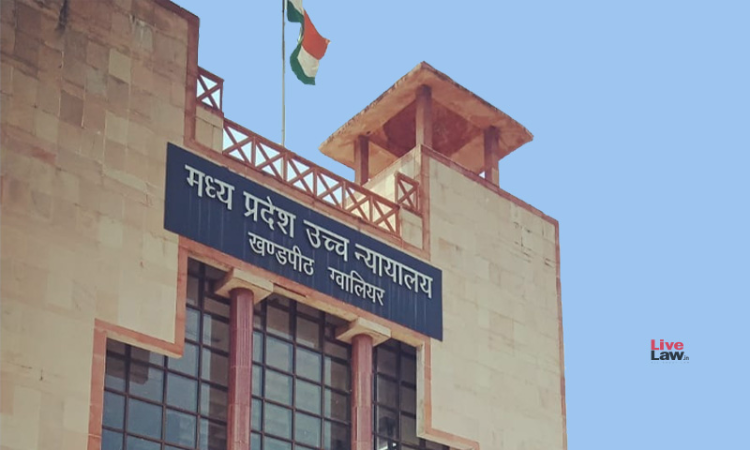
The Madhya Pradesh High Court dismissed an accused's plea challenging the framing of charges under Sections 306 (abetment of suicide) IPC, observing that the mere absence of a suicide note cannot by itself be a ground for discharge when the material on record raises grave suspicion of abetment of suicide.The bench of Justice Pushpendra Yadav observed:"Mere absence of a suicide note, by...
This is a premium content
Available exclusively to
Our subscribers
Subscribe Premium 
INR 1099+GST
Your support helps us to bring you more content at
an affordable subscription scheme !!!
All payment options available
The Madhya Pradesh High Court dismissed an accused's plea challenging the framing of charges under Sections 306 (abetment of suicide) IPC, observing that the mere absence of a suicide note cannot by itself be a ground for discharge when the material on record raises grave suspicion of abetment of suicide.
The bench of Justice Pushpendra Yadav observed:
"Mere absence of a suicide note, by itself, cannot justify discharge where the material on record otherwise raises a grave suspicion that the deceased committed suicide, prima facie, due to the aforesaid conduct of the petitioner, which was capable of provoking, urging or encouraging the deceased to do so".
A criminal revision was filed by an accused challenging the order of the Sessions Judge wherein his application for discharge was rejected, and charges were framed for abetment to suicide (Section 306), rape (Section 376), Stalking (Section 354D) and sexual Harassment (Section 254A) of IPC.
Per the prosecution, on January 28, 2023, the daughter of the complainant committed suicide by hanging herself with her dupatta from the ceiling fan. An merg intimation was registered, and the complainant alleged that the petitioner had continuously harassed her and stalked her.
On the basis of material collected, an FIR was registered under Section 306 of the IPC. During further investigation, the vaginal slide report indicated the presence of human sperm. Thus, other sections were added against the accused for allegedly sending obscene messages and demanding sexual favours.
The chargesheet was filed before the Trial Court which rejected the accused's application for discharge was rejected and charges were framed against him.
The counsel for the accused/petitioner argued that he is a BAMS Doctor and Community Health Officer who was falsely implicated in the case. The petitioner and the deceased were well acquainted and used to travel together on his motorcycle for their respective duties.
The counsel also referred to an earlier crime lodged by the deceased for house trespassing (Section 452), voluntarily causing hurt (Section 323), obscenity in public (Section 294), and sexual harassment (Section 354A) but the accused was acquitted in that case as the deceased did not support the prosecution case.
The counsel for the petitioner argued that the deceased woman was mature and divorced and had left no suicide note indicating any act of abetment on the petitioner's part.
The counsel for the State argued that at the stage of framing charges, only a prima facie case is seen. The State further argued that the DNA profiling found on the deceased's clothes matches the DNA profile of the petitioner.
The State argued that the witnesses have alleged repeated stalking by the petitioner, sending obscene messages, and subjecting the complainant to mental and physical harassment.
The court first examined the provision of Section 306, noting that a person is guilty of abetment if he (i) instigates any person to do that thing; (ii) engages with one or more other person or persons in any conspiracy for the doing of that thing if an act or illegal omission takes place in pursuance of that conspiracy; and (iii) intentionally aids by any act or illegal omission the doing of that thing.
The court then delved into each situation, observing that the word 'instigates' was clarified by the Supreme Court in the case of Ramesh Kumar v. State of Chhattisgarh [2001 9 SCC 618]. The court reiterated that instigation is where the accused had, by his acts or omissions or by a continued course of conduct, created such circumstances that the deceased was left with no other option except to commit suicide, in which case, an instigation may have to be inferred.
Further, the court examined the issue of the cause of suicide, remarking that there is "no easy answer" as different individuals in the same situation react and behave differently because of the personal meaning attached to each event.
At the framing-of-charges stage, the court clarified that it must assess the material and documents and consider whether they disclose the existence of the ingredients on their face value.
In the present case, the court noted that the petitioner was continuously irritating, annoying, stalking, threatening, and harassing the deceased over a continued period of time. The deceased had earlier taken action against the petitioner, but the harassment continued even after compromise. The court also considered the incident where the petitioner entered the deceased's room in a drunken state, quarreled and misbehaved with her, assaulted her, broke her mobile phone, and threatened to kill her parents and children, ruin her career, and make her obscene videos go viral if she did not compromise.
The bench noted, "The aforesaid circumstances, if taken at their face value, discloses a continuous harassment to the deceased and cannot, at this stage, be brushed aside assuming it to be a mere quarrel or isolated act. The cumulative effect of the material on record, therefore, cannot be said to give rise to a mere suspicion only; rather, it raises a grave suspicion regarding the petitioner's involvement and constitutes sufficient ground to proceed against him for the alleged offences".
Regarding the argument that the relationship was physical, the court observed that this fact ought to be examined at trial and that the High Court could not conclusively determine these disputed questions at this stage.
The court further rejected the contention against prosecution under Section 354D and 354 A owing to earlier acquittal, noting that the earlier acquittal arose from distinct allegations and therefore does not preclude consideration of the present material.
Thus, the court dismissed the petition and upheld the impugned order.
For Petitioner: Sanjay Gupta
For State: Public Prosecutor Vikram Pippal
For Complainant: Advocate Mahendra Singh Yadav
Tags

Jayanti Pahwa
Jayanti Pahwa is a Correspondent with LiveLaw, covering the Madhya Pradesh High Court

