



- Home
- /
- High Courts
- /
- Madhya Pradesh High Court
- /
- Father's Caste Certificate Doesn't...
Father's Caste Certificate Doesn't Automatically Entitle Children To Scheduled Tribe Status: MP High Court
Jayanti Pahwa
16 Nov 2026 4:05 PM IST
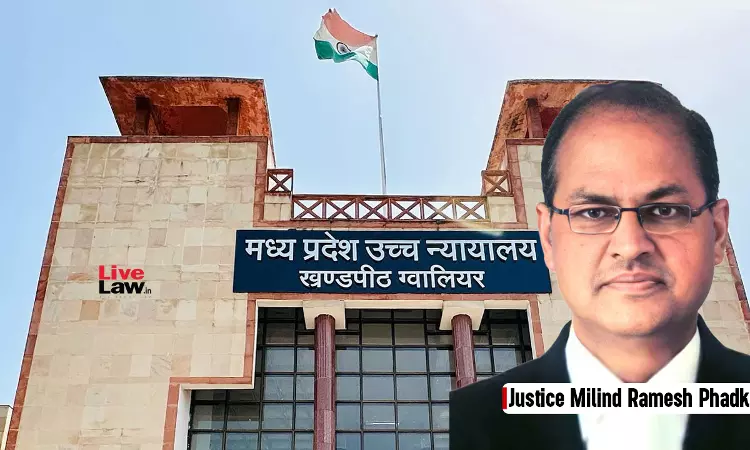
The Madhya Pradesh High Court has held that the mere existence of certain documents indicating the tribe or caste status of the father does not, by itself, confer an indefeasible right to recognition as a Scheduled Tribe member. [2026 LiveLaw (MP) 460]The bench of Justice Milind Ramesh Phadke observed:"The mere existence of certain documents indicating the caste or tribal status of the...
This is a premium content
Available exclusively to
Our subscribers
Subscribe Premium 
INR 1099+GST
Your support helps us to bring you more content at
an affordable subscription scheme !!!
All payment options available
The Madhya Pradesh High Court has held that the mere existence of certain documents indicating the tribe or caste status of the father does not, by itself, confer an indefeasible right to recognition as a Scheduled Tribe member. [2026 LiveLaw (MP) 460]
The bench of Justice Milind Ramesh Phadke observed:
"The mere existence of certain documents indicating the caste or tribal status of the ancestors or other family members does not, by itself, confer an indefeasible right to recognition as a member of a Scheduled Tribe".
The petitioner challenged order of August 21, 2012, passed by the High Power Scrutiny Committee, wherein his claim for issuance of Scheduled Tribe certificates for the Mogia Tribe was rejected.
The counsel for the petitioners argued that the Mogia Tribe is included in the list of Scheduled Tribes in the State. The counsel also submitted that the petitioner had submitted applications for issuance of the same along with relevant documentary evidence, including a caste certificate issued in favour of their father.
The counsel for the petitioners argued that their claim was earlier considered by the High Power Scrutiny Committee, which rejected the same through an order dated October 13, 2008. Also, it was argued that the impugned order was passed without granting an opportunity of hearing to the petitioners and that the impugned order was cryptic and non-speaking.
The State's counsel argued that the competent scrutiny committee examined the petitioners' claims in the exercise of statutory and administrative authority. Counsel argued that the mere fact that certain family members were issued a certificate is insufficient to establish the petitioner's tribal status.
The court noted that the petitioners failed to establish any illegality, procedural infirmity or jurisdictional error in the impugned order. The court noted that the documents showing the tribal status of a certain family member alone are not sufficient. Such documents are required to be considered with other relevant circumstances per the applicable provisions.
Relying on the Supreme Court case of Kumari Madhuri Patil vs Addl. Commissioner, Tribal Development [1994 6 SCC 241], the bench reiterated that the scrutiny committee was required to undertake fresh consideration of the claim and arrive at its own conclusion on the basis of material available.
The court noted that the petitioners failed to demonstrate that the impugned order suffers from any infirmity. Accordingly, the court dismissed the petition.
For Petitioners: Advocate Divakar Vyas
For State: Government Advocate Dharmendra Nayak
Tags

Jayanti Pahwa
Jayanti Pahwa is a Correspondent with LiveLaw, covering the Madhya Pradesh High Court

