



- Home
- /
- High Courts
- /
- Madhya Pradesh High Court
- /
- Inconclusive Voice Sample Report No...
Inconclusive Voice Sample Report No Ground To Accept Closure Report In Bribery Case Against Police ASI: MP High Court
Jayanti Pahwa
2 Nov 2026 3:35 PM IST
The Madhya Pradesh High Court has observed that an inconclusive voice sample examination report by itself cannot form the basis for accepting a closure report in a bribery case registered against a Police Assistant Sub-Inspector under the Prevention of Corruption Act. [2026 LiveLaw (MP) 440]The division bench of Justice Anand Pathak and Justice Deepak Khot dismissed a petition filed by the...
This is a premium content
Available exclusively to
Our subscribers
Subscribe Premium 
INR 1099+GST
Your support helps us to bring you more content at
an affordable subscription scheme !!!
All payment options available
The Madhya Pradesh High Court has observed that an inconclusive voice sample examination report by itself cannot form the basis for accepting a closure report in a bribery case registered against a Police Assistant Sub-Inspector under the Prevention of Corruption Act. [2026 LiveLaw (MP) 440]
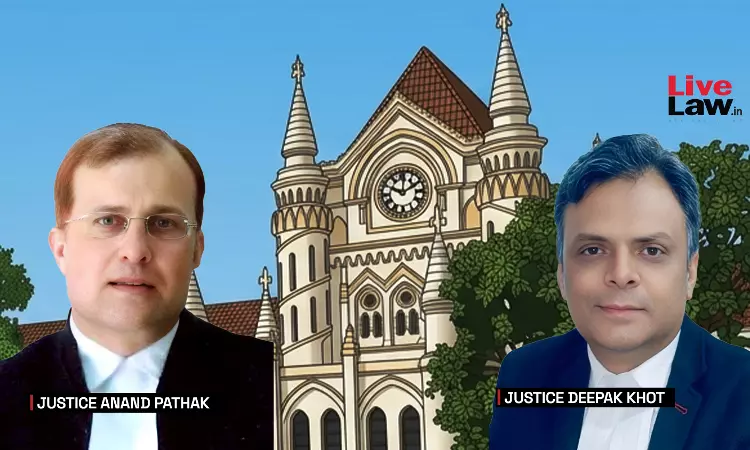
The division bench of Justice Anand Pathak and Justice Deepak Khot dismissed a petition filed by the ASI challenging the trial court's decision to reject a closure report and direct further investigation into a bribery case against him, including collecting fresh voice samples for forensic examination.
Observing that the forensic laboratory had not given any opinion on voice matching due to insufficient and inappropriate material, the bench held,
"From perusal of the FSL report filed in the reference tab of the ERP, this court is of the considered opinion that the sample which was sent to the FSL was inappropriate and insufficient to form an opinion. Therefore, closure report on the basis of such inconclusive evidence does not lead to the conclusion that on the basis of collected evidence no offence is made out".
The case arose from a complaint lodged by Karan Gurjar against his landlord Syed Noman Hussain, alleging vandalism at the hotel premises he had rented out and wrongful retention of hotel articles. An FIR was filed for cheating (Section 420 IPC) against the landlord, and the petitioner ASI was assigned to investigate.
It was subsequently alleged that the ASI demanded a bribe of ₹30,000 from the complainant on the pretext of having investigated the matter and registered the FIR against the landlord. The complainant reached the Deputy Superintendent of police, who provided him with a digital voice recorder to record conversations concerning the alleged bribery demand.
According to the prosecution, the complainant later alleged that the ASI had asked him to bring ₹10,000 as illegal gratification. The recorded conversation was handed over to the investigating agency, following which a transcript was prepared and an FIR under Section 7 of the Prevention of Corruption Act was registered against the petitioner.
The investigating agency subsequently submitted a closure report, stating that the transcript did not disclose any direct or indirect demand for a bribe. It also relied on the RFSL report, which could not provide an opinion because the recorded conversation did not contain sufficient common words or suitable speech material for comparison.
However, the Special Judge (PCA) rejected the closure report and directed further investigation, including collection of a fresh voice sample of the petitioner and its re-examination by RFSL.
Aggrieved, the ASI approached the High Court arguing that the direction for fresh voice sampling amounted to a roving inquiry and violated the protection against self-incrimination under Article 20(3) of the Constitution. The petitioner further contended that the transcript did not establish any demand or acceptance of illegal gratification and that the trap proceedings had failed as neither the petitioner nor any recovery was secured.
Opposing the petition, the State submitted that the trial court was not bound to accept the investigating agency's closure report and could not direct further investigation if material on record disclosed the need for further inquiry. It was argued that the recorded conversation prima facie indicated a demand for undue advantage and that obtaining a voice sample did not violate Article 20(3) of the Constitution.
The court noted that two legal questions emerged: "whether the learned Special Court (P.C. Act) had committed any illegality or irregularity while directing further investigation in the matter by not accepting the closure report and with further direction to collect the appropriate voice sample of the petitioner and ii) whether the material and evidence which was submitted before the learned Court below do not constitute any offence under the Prevention of Corruption Act".
The bench noted that the trial court, while considering the closure report, found that the offence was registered under the Prevention of Corruption Act based on the transcript. The Trial Court further noted that the Deputy SP, after hearing the transcript, found that such demand by itself constitutes an offence under Section 7 of the Act.
The trial court, examining Section 7 of the Act, noted that the transcript of voice of the petitioner constituted a prima facie offence under the Act and therefore, a case was made out and cannot be thrown out at the stage of investigation.
The bench held, "Therefore, the ground that no offence is made out from the evidence and investigation conducted by the respondent agency is not found to be a sound ground to quash the entire investigation or the FIR".
Further, the bench noted that the RFSL Bhopal has not given any opinion regarding matching of the voice samples as the material sent was not sufficient. The bench further noted;
"the opinion is that that because of large intra-speaker variation it seems that the petitioner had made deliberate attempt of disguise because of inappropriate data containing speech which also does not contain proper words and phrase/sentence. Therefore, the opinion was tendered that no opinion can be given on such voice sample".
Referring to the Supreme Court case of Ramswaroop Soni v State of MP and other cases, the bench reiterated that the Magistrate is empowered to direct re-investigation when he/she holds the opinion that the investigation is faulty or found to be lacking material and sufficient evidence.
From the facts and evidence of the cases, the court held that the Magistrate did not commit any illegality, irregularity, or jurisdictional error in rejecting the closure report and directing further investigation by collecting a voice sample of the petitioner. Accordingly, the petition is dismissed.
For Petitioner: Senior Advocate Anil Khare with Advocate Priyank Agrawa
For State: Advocate Abhinav Shrivastav
Tags

Jayanti Pahwa
Jayanti Pahwa is a Correspondent with LiveLaw, covering the Madhya Pradesh High Court

