



- Home
- /
- High Courts
- /
- Madhya Pradesh High Court
- /
- Decree Holder Can't Defeat...
Decree Holder Can't Defeat Compromise Or Trigger Execution By Refusing To Accept Judgment Debtor's Cheque: MP High Court
Jayanti Pahwa
29 Jan 2026 8:30 PM IST
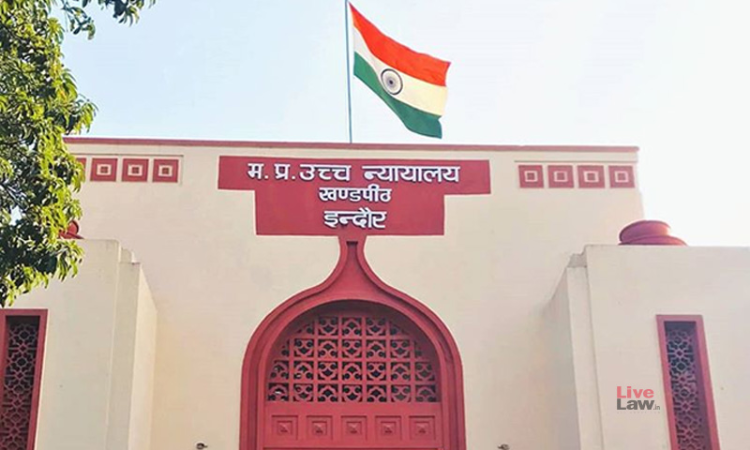
The Madhya Pradesh High Court has held that a decree holder cannot frustrate the terms of a compromise decree or trigger execution proceedings by deliberately refusing to accept or encash a cheque tendered by the judgment debtor in lawful satisfaction of the decree. The bench of Justice Alok Awasthi held that where a compromise decree does not prescribe any specific mode of payment, interest...
This is a premium content
Available exclusively to
Our subscribers
Subscribe Premium 
INR 1099+GST
Your support helps us to bring you more content at
an affordable subscription scheme !!!
All payment options available
The Madhya Pradesh High Court has held that a decree holder cannot frustrate the terms of a compromise decree or trigger execution proceedings by deliberately refusing to accept or encash a cheque tendered by the judgment debtor in lawful satisfaction of the decree.
The bench of Justice Alok Awasthi held that where a compromise decree does not prescribe any specific mode of payment, interest or consequences for delayed instalments, the lawful presentation of cheques within the stipulated period constitutes valid compliance and the decree must be treated as satisfied in the eyes of law.
The bench observed;
"This Court also finds that under the said compromise application and decree, installment amount has not been prescribed, no consequence upon failure to pay installment has been prescribed, no mode or manner of payment has been precribed and it has also not been prescribed that Decree Holder/ Respondent is entitled to any interest over the agreed amount in the case that the installment is delayed... Thus, in the considered opinion of this Court, the decree stood satisfied upon presentation of cheques before Executing Court and respondent cannot get benefit of his own fault of not presenting the cheques for encashment despite getting the knowledge of the same well within time".
The petition was filed by Partha Credit challenging the order of the Executing Court that rejected the application under Order 21 Rule 2 of CPC, which governs the modes of paying money under a decree.
Briefly, a land sale agreement was executed between Partha Credit and Ideal Electronics, wherein an amount of Rs 35,50,000 was shown as security for a loan. One suit was filed by Ideal Electronics for the enforcement of the specific agreement.
During this period, the parties entered into a compromise under which Partha Credit had to pay Rs. 5,32,38,000/- to Ideal Electronics for the settlement of both cases. Upon settlement, the petitioner promptly paid Rs. 5,00,000/- as an instalment.
Under the compromise decree, Partha Credit became the judgment debtor, and Ideal Electronics became the decree holder. The compromise stipulated that in the event of default, the decree holder would be entitled to seek execution of the sale deed for the remaining unpaid portion of the land. Notably, the compromise did not prescribe any instalment structure, mode of payment or liability to pay interest.
In compliance, Partha Credit deposited cheques of Rs 5,32,38,000 in the name of the court and Rs 5,32,38,000 in the name of Ideal Electronics under Order 21 Rule 1 CPC. The court records reflected that the cheques were not dishonoured and that Ideal Electronics refused to accept the cheques within 90 days, as mentioned in the order sheet of July 24, 2023.
Subsequently, on October 4, 2023, Ideal Electronics accepted that a cheque was deposited by Partha Credit. It was also stated that on humanitarian grounds, Ideal Electronics was willing to release the land provided that the judgment debtor paid the amount of the last instalment by demand draft aling with interest f 12% per annum from the date of the decree, within 3 days. This demand was contested by Partha Credit on ground that no interest was stipulated in the compromise decree of July 18, 2021.
Thus, Partha Credit applied Section 47 CPC before the Trial Court, questioning the maintainability of the execution filed by Ideal Electronics. However, the Trial Court failed to adjudicate the said application and proceeded to pass orders by treating the matter as one for the enforcement of a specific agreement, without recognising the cheques as valid payment in accordance with law.
The bench found the approach of the Executing Court legally unsustanable noting that the Executing Court had travelled beyond the scope of the compromise deed and introduced conditions not agreed upon by the parties.
The bench rejected the decree holder's contention that the petition was barred by the doctrine of res judicata.
The bench noted that the earlier execution order did not adjudicate the application Order 21 Rule 1 CPC and therefore, the issue regarding satisfaction of the decree remained undecided. Consequently, the present petitioner was held to be maintainable.
While examining whether the payment by cheque constituted a valid tender, the court relied upon several Supreme Court judgments and reiterated that the payment by cheque is recognised and a lawful mode of tender unless cash payment is expressly mandated and that upon encashment, payment relates back to the date of delivery of the cheque.
Applying these principles, the bench held that the judgment debtor has duly satisfied the compromise decree by depositing the entire amount within the stipulated period.
The court emphasized that the decree holding having failed to present cheques for encashment despite having knowledge, could not be allowed to derive any benefit from his own omission.
Accordingly, the court held that the decree stood satisfied upon presentation of the cheques before the Executing Court, quashed the impugned execution order and allowed the petition.
As a consequential direction, the judgment debtor was directed to deposit the decretal amount afresh by way of a new cheque along with simple interest at the rate of 12% per annum from July 18, 2022, within 30 days.
Case Title: Partha Credit and Capital Market v Ideal Electronics [MP-2145-2025]
Citation: 2026 LiveLaw (MP) 36

Jayanti Pahwa
Jayanti Pahwa is a Correspondent with LiveLaw, covering the Madhya Pradesh High Court

