



- Home
- /
- High Courts
- /
- Madhya Pradesh High Court
- /
- MP High Court Rejects Husband's Bid...
MP High Court Rejects Husband's Bid For Wife's Medical Examination In Divorce Case, Says Roving Inquiry Not Permitted
Jayanti Pahwa
23 Sept 2026 5:43 PM IST
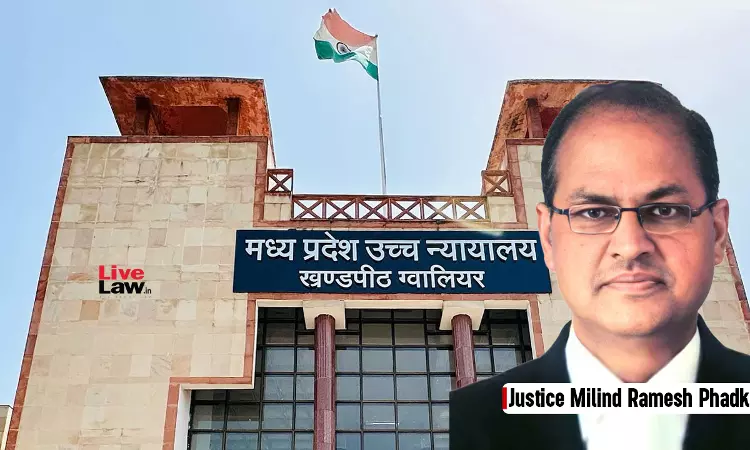
The Madhya Pradesh High Court has set aside the order directing a woman to undergo medical examination at the instance of her husband in divorce proceedings, holding that such power cannot be exercised to permit a roving or fishing inquiry, particularly at the stage of final arguments. [2026 LiveLaw (MP) 385]Observing that medical examination at the stage of final arguments could not be...
This is a premium content
Available exclusively to
Our subscribers
Subscribe Premium 
INR 1099+GST
Your support helps us to bring you more content at
an affordable subscription scheme !!!
All payment options available
The Madhya Pradesh High Court has set aside the order directing a woman to undergo medical examination at the instance of her husband in divorce proceedings, holding that such power cannot be exercised to permit a roving or fishing inquiry, particularly at the stage of final arguments. [2026 LiveLaw (MP) 385]
Observing that medical examination at the stage of final arguments could not be permitted if exceptional necessity isn't demonstrated, the bench of Justice Milind Ramesh Phadke observed,
"Once the parties had completed their evidence and the matter had reached the stage of final arguments, permitting a medical examination without demonstrating exceptional necessity would cause serious prejudice to the petitioner and would enable the respondent to collect additional evidence in support of a case which had already been tried on the basis of the pleadings and evidence brought before the Court. This Court is conscious of the fact that medical evidence may, in an appropriate matrimonial proceeding, materially assist the Court in determining an issue concerning the physical or mental condition of a spouse. However, the power to obtain such evidence cannot be converted into a means for conducting a roving or fishing inquiry".
The marriage between the parties was solemnized on April 28, 2004, and they lived together till July 15, 2011. The husband subsequently initiated divorce proceedings under Section 13 of the Hindu Marriage Act (HMA), alleging cruelty by his wife. The wife denied the allegations in her written statement and expressed her willingness to reside with her husband.
After both parties led their evidence, the matter was fixed for final arguments. At that stage, the husband moved an application under Section 151 CPC seeking the wife's medical examination on the allegation that she had undergone operations on three occasions before the marriage.
The wife opposed the application, but the District Court allowed the application on July 2, 2012. She thereafter approached the High Court.
The counsel for the wife argued that the medical examination application was filed only after evidence from both sides had concluded. Further, the husband failed to demonstrate the necessity of such medical examination.
The counsel for the husband argued that they had specifically pleaded that the wife had undergone an operation and therefore, due to her physical condition, she had declined to maintain normal matrimonial relations.
Referring to the case of Sharda Vs. Dharampal (2003), the court reiterated that the matrimonial court does possess the power, in appropriate cases, to direct a party to undergo medical examination. However, the Apex Court further clarified that such power is discretionary and therefore the applicant must establish a strong prima facie case before such a direction is issued.
Examining the present case, the court noted that the husband moved the application after the matter was fixed for final arguments and the record does not disclose any material demonstrating the necessity for medical examination to determine the issues already framed.
Further relying on the case of Samar Ghosh v. Jaya Ghosh (2007), the court reiterated that the factual and evidentiary foundation is required to be established before ordering compulsory medical examination.
The bench highlighted,
"The impugned order, therefore, does not disclose the requisite application of mind to the parameters governing exercise of such discretionary power. The stage at which the application was filed is also of considerable significance".
Therefore, the court allowed the petition and set aside the order of the Trial Court.
Case Title: S v SKO, WP-4819-2012
Citation: 2026 LiveLaw (MP) 385
For Wife: Advocate Madhur Bhargava
For Husband: Advocates Ajay Singh Rathore and Satya Prakash Singh
Tags

Jayanti Pahwa
Jayanti Pahwa is a Correspondent with LiveLaw, covering the Madhya Pradesh High Court

