



- Home
- /
- High Courts
- /
- Madhya Pradesh High Court
- /
- Acquittal In Criminal Case No Bar...
Acquittal In Criminal Case No Bar On Employer To Conduct Departmental Proceedings: MP High Court Denies Relief To Cop
Jayanti Pahwa
4 March 2026 1:50 PM IST
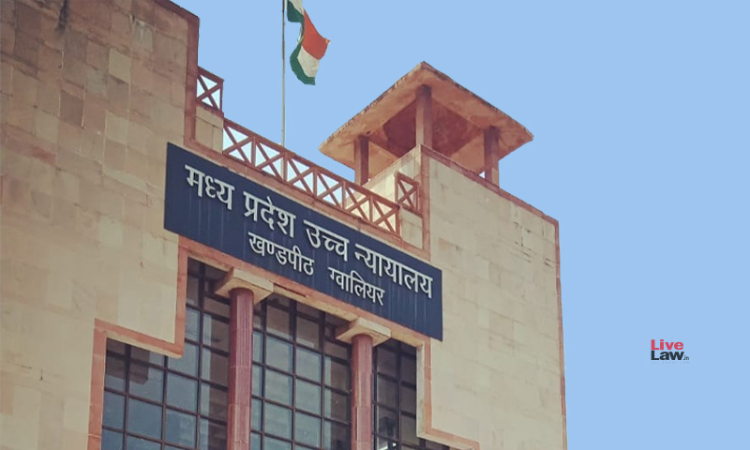
The Madhya Pradesh High Court has dismissed an appeal filed by an Assistant Sub Inspector of Police challenging the order dismissing him from service, emphasizing that mere acquittal from criminal proceedings does not bar an employer from initiating departmental proceedings. The division bench of Justice Anand Pathak and Justice Anil Verma reiterated that mere acquittal by Criminal Court...
This is a premium content
Available exclusively to
Our subscribers
Subscribe Premium 
INR 1099+GST
Your support helps us to bring you more content at
an affordable subscription scheme !!!
All payment options available
The Madhya Pradesh High Court has dismissed an appeal filed by an Assistant Sub Inspector of Police challenging the order dismissing him from service, emphasizing that mere acquittal from criminal proceedings does not bar an employer from initiating departmental proceedings.
The division bench of Justice Anand Pathak and Justice Anil Verma reiterated that mere acquittal by Criminal Court would not debar an employer from exercising the power to conduct departmental proceedings in accordance with the rules and regulations. Both proceedings; criminal and departmental, are entirely different.
They operate in different fields and have different objectives," the Court said.
Per the acts of the case, on the night of May 7 and 8, 2011, the appellant, along with other constables, Ashok Kumar Sharma, Jeetu Nagpal and Balveer Singh Rana, de-boarded the complainant Babu Singh from the Train Rajdhani Express and abducted him. Thereafter, they allegedly looted about 4kg of gold from him. Accordingly, a criminal case was registered for Kidnapping (Section 365), robbery (Section 392), and acts done in furtherance of a common intention (Section 34). of IPC.
Subsequently, a departmental inquiry was initiated, but he and other co-delinquents were acquitted in a criminal case by the Sessions Court. After conducting an inquiry, the appellant was punished and dismissed from service by an order dated May 11, 2021, passed by the authorities, and his mercy petition was also dismissed by the appellate authority.
The appellant thus filed a writ petition for quashment of the order before the writ court, which categorically held that the he was found guilty of serious charges. Aggrieved, he filed the appeal before the High Court claiming that the writ court failed to take into consideration that the certificate under Section 65B of the Evidence Act and the CCTV footage cannot be taken into consideration while deciding the punishment.
While examining the validity of the departmental inquiry, the court held that criminal proceedings and departmental proceedings are entirely different and operate in different fields, and therefore, mere acquittal in criminal court would not debar an employer from initiating departmental proceedings.
The court noted that the appellant was acquitted in a session trial, but also noted that his acquittal was not honourable as most prosecution witnesses turned hostile and the appellant was given the benefit of the doubt.
The Court said that the jurisdiction of High Court in a writ petition under Article 226 of the Constitution of India is to examine the decision making process rather then to act as a Court of appeal to substitute it's own decisions.
"In this regard, from perusal of departmental inquiry proceedings against the appellant, it appears that three charges were framed against the appellant and detailed inquiry has been conducted by the respondents wherein, the appellant has been given sufficient opportunity for filing written statement and also cross-examining the witnesses. The statements of witnesses were also found supported by documentary evidence available on record. Therefore, the appellant/petitioner has failed to prove that the departmental inquiry has been conducted against him without providing sufficient opportunity of hearing," the Court said.
It held that the appellant was terminated from service and therefore, the order of dismissal could not be said to be passed by the authorities violating the principles of natural justice.
"In the instant case, the appellant has failed to prove that the decision making process of departmental inquiry is arbitrary or illegal," the judges held.
Case Title: Sultan Singh Nagar v State of Madhya Pradesh [WA-516-2026]
Citation: 2026 LiveLaw (MP) 69
For Appellant: Senior Advocate MPS Raghuvanshi and Mohd Amir Khan
For State: Government Advocate Ravindra Dixit

Jayanti Pahwa
Jayanti Pahwa is a Correspondent with LiveLaw, covering the Madhya Pradesh High Court

