



- Home
- /
- High Courts
- /
- Madhya Pradesh High Court
- /
- MP High Court Upholds TB Screening...
MP High Court Upholds TB Screening Guidelines, Says Radiographers' Body's Subjective Apprehension Can't Substitute Administrative Findings
Jayanti Pahwa
4 Jun 2026 9:20 PM IST
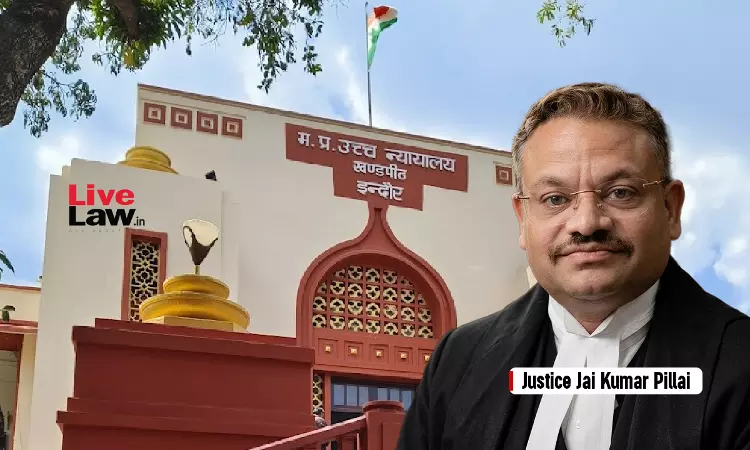
Finding that the association's plea lacked foundation, the HC said that National Public Health Welfare Policy cant be stalled under Article 226
The Madhya Pradesh High Court upheld the 'Installation and Operational Guidance on Ultraportable Handheld X-Ray Device (HHXray) for Tuberculosis Screening in the Community' guidelines, holding that a radiographers' association's apprehension over radiation hazards, informal experiments cannot substitute formal administrative findings.The petitioner association, Pragatisheel Radiographers...
This is a premium content
Available exclusively to
Our subscribers
Subscribe Premium 
INR 1099+GST
Your support helps us to bring you more content at
an affordable subscription scheme !!!
All payment options available
The Madhya Pradesh High Court upheld the 'Installation and Operational Guidance on Ultraportable Handheld X-Ray Device (HHXray) for Tuberculosis Screening in the Community' guidelines, holding that a radiographers' association's apprehension over radiation hazards, informal experiments cannot substitute formal administrative findings.
The petitioner association, Pragatisheel Radiographers Sangh, representing government radiographers and X-ray technicians across the State, challenged the guidelines over the installation and operation of the Ultraportable Handheld X-Ray Device for Tuberculosis screenings. The circular was issued by the Central TB Division, Ministry of Health and Family Welfare, in August 2023.
Justice Jai Kumar Pillai observed that the TB screening policy forms part of a "broader public interest" aimed at eradicating tuberculosis and that its implementation falls within the domain of health authorities.
It said that the domain of framing and executing health screening targets rests exclusively with the administrative authorities. Regarding the district-level circulars, the court noted that it was an administrative order issued strictly to implement the said welfare policy.
"Such administrative mechanisms, including the prescription of operational targets (such as 100-150 X-rays per day) in community camps, are essential administrative tools to achieve the objectives of the TB Mukt Bharat Abhiyan and cannot be categorized as arbitrary merely because they impose demanding work schedules," the court said.
Further, the bench rejected the petitioner's apprehensions regarding radiation hazards and lack of protective measures, noting that there was no material in the record establishing how it would affect the petitioners. It said that informal experiments cannot substitute formal administrative findings.
The bench held,
"Regarding the petitioner's apprehensions concerning radiation hazards and lack of protective measures, this Court observes that there is no manifest material in the record that definitively establishes how this will affect the petitioners. The subjective apprehensions or informal experiments conducted by an association cannot substitute for formal administrative findings, and thus, no actionable prejudice is manifest on the record before this Court...
"Similarly, upon examining the arguments relating to the terms of employment, this Court finds that there is no condition imposed with regard to it in the service rules which restricts the State authorities from deploying the radiographers to field camps or assigning specific daily targets. In the absence of any statutory or service rule violation, a writ of mandamus cannot be issued to interdict the administrative orders.Therefore, in light of the specific directions and issues analyzed hereinabove, the challenges mounted by the petitioner lack legal foundation. This Court is of the considered opinion that relief cannot be granted under Article 226 of the Constitution of India to stall or modify a national public health welfare policy and its administrative implementation
The association also challenged a subsequent circular issued by the National Health Mission and district-level orders directing radiographers to conduct community-based TB screening camps using handheld X-ray devices, with daily targets ranging between 100 and 150 chest X-rays.
The counsel for the association contended that the impugned guidelines relied solely on the manufacturer's claim that radiation exposure from the HHX-ray devices was negligible and significantly lower than that of conventional digital X-ray machines. It was argued that the radiographers were being compelled to operate the devices in temporary camps located in Panchayat Bhawans, schools and Anganwadi centres without adequate shielding or sufficient protective equipment.
According to the petitioner, such conditions violated the Atomic Energy Radiation Protection Rules, AERB Safety Standards, and the right to a safe working environment under Article 21 of the Constitution.
The association further claimed that they had conducted an experiment demonstrating that radiation could penetrate the lead aprons provided to radiographers. It also sought enhancement of the radiation allowance paid to them, pointing out that the employees in the State received ₹50 per month, a rate alleged to be unchanged for decades.
The counsel for the Union and State authorities opposed the petition, arguing that the impugned measures formed part of the TB Mukt Bharat Abhiyan, a national welfare initiative intended to eradicate tuberculosis in the larger public interest.
The respondents maintained that the policy and consequential administrative orders were issued by competent authorities to implement a crucial public health programme.
The plea was dismissed.
Case Title: Pragatisheel Radiographers Sangh MP v Union of India, W.P. No. 17859/2026
Citation: 2026 LiveLaw (MP) 195
For Petitioner: Advocate Prathviraj Singh Parmar
For Union: Advocate Romesh Dave
For State: Deputy General Advocate Kushagra Singh

Jayanti Pahwa
Jayanti Pahwa is a Correspondent with LiveLaw, covering the Madhya Pradesh High Court

