



- Home
- /
- High Courts
- /
- Madhya Pradesh High Court
- /
- MP High Court Sets Aside Rejection...
MP High Court Sets Aside Rejection Of SSC Candidate Over Domicile Mismatch, Says Technical Error Can't Be Treated As Suppression
Jayanti Pahwa
26 March 2026 4:00 PM IST
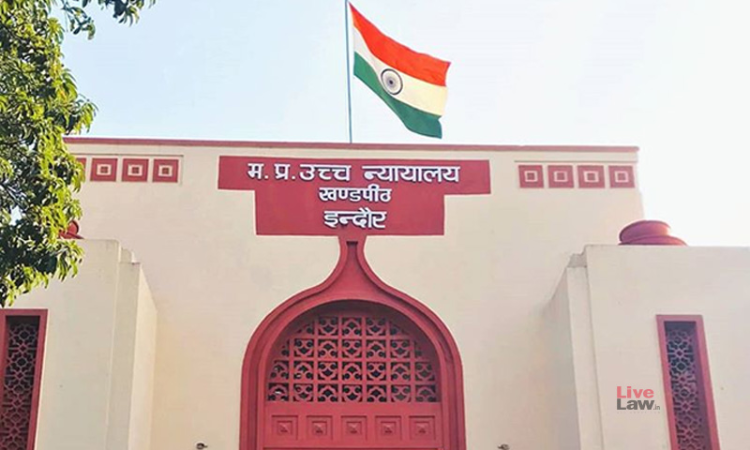
The Madhya Pradesh High Court, on Wednesday (March 25), set aside the rejection of the Staff Selection Commission aspirant, holding that stringent clauses in the advertisement cannot be applied mechanically to penalise a bona fide candidate who possessed a valid domicile certificate but was merely a victim of a data entry error at a cyber kiosk. The bench of Justice Jai Kumar Pillai...
This is a premium content
Available exclusively to
Our subscribers
Subscribe Premium 
INR 1099+GST
Your support helps us to bring you more content at
an affordable subscription scheme !!!
All payment options available
The Madhya Pradesh High Court, on Wednesday (March 25), set aside the rejection of the Staff Selection Commission aspirant, holding that stringent clauses in the advertisement cannot be applied mechanically to penalise a bona fide candidate who possessed a valid domicile certificate but was merely a victim of a data entry error at a cyber kiosk.
The bench of Justice Jai Kumar Pillai observed,
"this Court must draw a firm distinction between an inadvertent technical error and the suppression of material facts. The stringent clauses in the advertisement, which mandate cancellation for a mismatch of domicile, are fundamentally designed as a shield to penalize misrepresentation and prevent unscrupulous candidates from illegally usurping territorial reservations. They are not intended to be applied as a mechanical sword to destroy the career of a truthful candidate who genuinely holds a valid certificate and simply fell victim to a data-entry error at a cyber kiosk".
The petitioner had applied for the post of Constable (GD) in Central Armed Police Forces (CAPFs), NIA, SSF and Rifleman (GD) in Assam Rifles Examination, 2018. His candidature was rejected solely on the grounds of a mismatch between the domicile district mentioned in his online application form and the original domicile certificate produced during the Detailed Medical Examination (DME) and document verification stage.
Thus, the petitioner approached the High Court seeking directions to the respondents to accept his original, valid domicile certificate.
Per the facts of the case, the Staff Selection Commission issued an advertisement on July 21, 2018, inviting online applications for the post of Constable. The petitioner submitted his application, but while filling out the online form, the computer operator at the Kiosk inadvertently selected Khargone as his domicile district. The petitioner's domicile district was Kalapipal (Shajapur).
However, in the same form under columns 24 and 25, the petitioner provided his detailed address in Kalapipal, District Shajapur. The petitioner asserted that this data entry occured due to a bona fide mistake by the kiosk operator, further compounded by a severely slow-running server.
The petitioner, despite the typographic error in the form, successfully participated in the written examination, securing a score of 90% out of 100 marks against a cut-off of 73.8%. Following this, he was called for the Physical Standard Test and Physical Efficacy Test, which he also cleared.
During document verification, the petitioner submitted all his original documents, including his original domicile certificate, which was rejected, citing a discrepancy with column 17 of the online form. Despite this, the petitioner submitted an affidavit explaining the error. However, a rejection order was passed on January 31, 2020.
The counsel for the petitioner argued that a technical error should lead to cancellation if it provides any undue advantage to the candidate. However, in the present case, the petitioner secured 90% marks, vastly exceeding the cut-off of 73.8%.
The counsel for the petitioner further drew a sharp distinction between inadvertent error and suppression of a material fact. It was contended that the rules cited by respondents for cancellation are designed to catch candidates cheating in the process, not to punish genuine human error.
The counsel for the respondents argued that the terms and conditions of the notice of examination were found, and that the online form contained a double verification system for domicile, where the student was to first select their district from a drop-down menu and verify it again in a subsequent column.
The court first examined the first issue of whether the incorrect entry of the domicile district in the online application form demonstrates a malafide intent, or if it can be established as an inadvertent human error given the internal consistency of the form?
The court noted that if the petitioner had malafide intent to secure a fraudulent domicile in Khargone, he would have invariably manipulated his permanent address to be in that district. The fact that the address was truthfully and correctly stated demonstrated that the entry in column 17 was a mechanical slip.
The bench further emphasized,
"A hurried kiosk operator, navigating a sluggish server, can easily select the wrong adjacent drop-down option starting with the letter 'K' and repeat the same error in the verification column. The system only confirms the repetition of the data entry; it does not negate the human error inherent in the process".
Regarding the second issue of unfair competitive advantage, the bench noted that the petitioner was an exceptionally meritorious student who secured outstanding marks of 90%. Therefore, the bench noted that the petitioner gained zero competitive advantage from this error and qualified entirely on his own merit.
Further, the court distinguished between an inadvertent technical error and the suppression of material facts. The bench held that stringent clauses in the advertisements are designed to shield the process from misrepresentation and to prevent unscrupulous candidates from illegally usurping territorial reservations.
However, the bench highlighted that such clauses must not be applied as mechanical swords to hold back meritorious candidates who genuinely held a valid certificate but were simply victims of a data entry error by a kiosk operator.
Additionally, the court noted that in the earlier writ petition, the respondents were directed to consider if the mistake had any effect on the selection and, if not, to treat the same as a technical error. The respondents, however, passed a rejection order. The bench noted,
"By passing the impugned order dated 16.11.2020, the respondents exhibited a pedantic, closed-mind approach, wholly ignoring the spirit and mandate of the judicial directive. By failing to objectively assess the lack of competitive advantage and the internal consistency of the form, the impugned order suffers from the vice of non-application of mind and manifest arbitrariness, thereby violating Articles 14 and 16 of the Constitution of India".
Thus, the bench allowed the petitioner, noting that the error committed by the petitioner was trivial, inadvertent and a bonafude typing error which had no bearing on the merits of selection.
Therefore, the bench quashed the rejection order and directed the respondents to treat the domicile of the petitioner as 'Kalapipal', instead of 'Khargone'. The respondents were also directed to accept the original domicile certificate of District Shajapur and to process his candidature and appointment for the post of Constable (GD).
Case Title: Rohit Gami v Union [W.P. No. 19419/2020]
Citation: 2026 LiveLaw (MP) 88
For Petitioner: Advocate Manoj Manav
For Respondent: Advocate Nidhi Bohara
Tags

Jayanti Pahwa
Jayanti Pahwa is a Correspondent with LiveLaw, covering the Madhya Pradesh High Court

