



- Home
- /
- High Courts
- /
- Madhya Pradesh High Court
- /
- S.407 IPC | Diverting Goods Midway...
S.407 IPC | Diverting Goods Midway From Designated Delivery Point Is Misappropriation; Actual Sale, Disposal Not Mandatory: MP High Court
Jayanti Pahwa
19 Jan 2026 12:00 PM IST
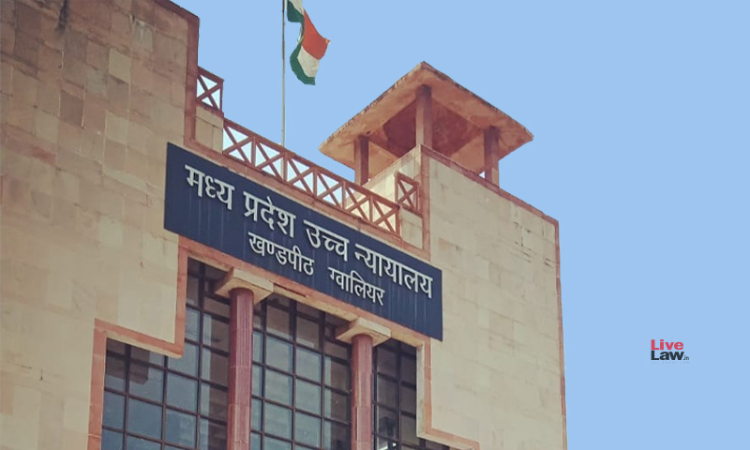
The Madhya Pradesh High Court, on Friday (January 16), held that the diversion of goods midway from the designated delivery point also constitutes misappropriation of goods, one of the essential ingredients of criminal breach of trust (section 407 IPC) and actual sale or disposal of good need not be established. The bench of Justice Rajesh Kumar Gupta emphasized that actual sale or disposal...
This is a premium content
Available exclusively to
Our subscribers
Subscribe Premium 
INR 1099+GST
Your support helps us to bring you more content at
an affordable subscription scheme !!!
All payment options available
The Madhya Pradesh High Court, on Friday (January 16), held that the diversion of goods midway from the designated delivery point also constitutes misappropriation of goods, one of the essential ingredients of criminal breach of trust (section 407 IPC) and actual sale or disposal of good need not be established.
The bench of Justice Rajesh Kumar Gupta emphasized that actual sale or disposal of the goods is not a mandatory requirement to establish the offence of criminal breach of trust. It observed,
"Once entrustment is established, any deviation from the agreed purpose may amount to criminal breach of trust. Criminal breach of trust is made out when entrusted property is dealt with in violation of legal direction or contract, even if temporary or without permanent loss. Dishonesty can be inferred from circumstances. Diversion of goods mid-way from the designated delivery point constitutes misappropriation by a carrier. Actual sale or disposal is not mandatory to establish the offence".
Five petitions were filed challening the order of December 3, 2014, passed by the Chief Judicial Magistrate of Vidisha, wherein the charges under Section 406 and 407 of IPC, along with Sections 3 and 7 of the Essential Commodities Act, 1955, were made out. The revisional court also affirmed the order.
According to the facts, on March 4, 2006, the District Supply Officer of Vidisha, along with other officers, conducted a surprise inspection at Swastik Agro Mill. It was discovered that the wheat that was meant for distribution under the Public Distribution System (PDS) to BPL cardholders was diverted from the authorized route and destination.
Upon inquiry, it was revealed that the M.P. State Civil Supply Corporation issued wheat for transportation and delivery to fair price shops, which were not being delivered and instead were being stored in private godowns, allegedly with the intent to sell the same in the black market. Thus, an FIR was registered.
Naresh Sawala, who had rented the godown where the wheat was stored, contended that he had no control over the storage and transportation of the wheat and that no wheat was entrusted to him.
Ashok Kumar Jain, the owner of RR Enterprises, the transportation company engaged by the Civil Supply Corporation, argued that the dispute was contractual, and since the penalty for the wheat cost was recovered, no further case was made out.
Kammod Singh, the owner of the Swastik Agro Mill, contended that he had rented out his mill to Naresh Sawala and had no control over the storage of wheat.
Sanjay Pancharatna, along with other truck owners and drivers, argued that they were merely acting on the instructions of the contractor due to heavy rainfall and had no involvement in the offence.
Regarding the involvement of Naresh Sawala, the bench noted that at the stage of framing of charges, the court is required to assess whether the basic ingredients of the offence are prima facie made out.
Sawala's contention that he was merely a lessor of the godown is purely a question of fact to be proved using evidence and cannot be adjudicated upon under Section 482 CrPC.
In Ashok Kumar Jain's case, the bench noted that the evidence prima facie shows alleged diversion and unauthorized storage of the entrusted PDS wheat. The bench further observed that the intent and knowledge of the petition regarding the offence is a matter of evidence.
In Kammod Singh's case, the court again held that the evidence prima facie shows the unauthorised storage of PDS Wheat, giving rise to a triable issue. Whether Singh has the intent or knowledge of the same should be adjudicated at trial.
In the case of truck drivers, the court noted that the delivery was unloaded midway and stored in private premises and not the designated delivery point. Such actions attract the offence of criminal breach of trust (Section 407 IPC).
The court, referring to the case of Prakash Babu v. State of Rajasthan, (2016) 12 SCC 335 and Shiv Kumar v. State of Haryana, (1994) 4 SCC 445, observed that at the time of framing of charges, the courts are not required to examine the veracity of the charges but examine whether violation of a Control Order is prima facie disclosed.
Additionally, the bench empahszied that the Essential Commodities Act was enacted to protect the common consumer from hoarding and black marketing, and therefore, while interpreting provisions of the Act, the courts must adopt a purposive interpretation.
The bench highlighted, "The technical pleas or hyper-technical objections should not be permitted to defeat prosecution at the threshold, particularly when prima facie material discloses unauthorized handling of essential commodities".
Citing the case of K. Raghunathan v. State of Kerala, (1981) 2 SCC 552, the bench held that the procedural lapses of technical defects should not defeat the object and purpose of the EC Act at the threshold.
The court added that the offence under the EC Act is regulatory and therefore the requirement of strict proof of mens rea is not mandatory at the initial stages of the trial, and whether the accused had the intention or knowledge of the offence is "a matter of the trial".
The bench further discussed the offence punishable under Section 407 IPC, which is an aggravated form of criminal breach of trust. The bench noted that the offence is made out when entrusted property is dealt with in violation of contract or legal directions, even if temporarily and without permanent loss.
The court further delved into whether offences under the EC Act and IPC can co-exist. The bench held that the prosecution under the EC Act does not bar simultaneous prosecution under IPC for criminal breach of trust arising out of the same transaction.
Thus, the bench held, "In view of the aforesaid authoritative pronouncements, this Court finds that the allegations relating to entrustment, diversion, unauthorized storage and breach of trust by carriers clearly disclose prima facie offences under Sections 3/7 of the Essential Commodities Act and Sections 406/407 IPC".
Therefore, the bench dismissed the petitions.
Case Title: Naresh Sawnla v State of Madhya Pradesh [MCRC-9918-2015]
Citation: 2026 LiveLaw (MP) 22
For Petitioners: Advocates Sameer Kumar Shrivastava, Abhijeet Singh Tomar, Romesh Pratap Singh and Pawan Singh Raghuvanshi
For State: Public Prosecutor Dinesh Savita
Click here to read/download the Order
Tags

Jayanti Pahwa
Jayanti Pahwa is a Correspondent with LiveLaw, covering the Madhya Pradesh High Court

