NEET PG | 'Merit Includes Professional Experience': MP Govt Defends Incentive Marks For In-Service Doctors Before High Court
Jayanti Pahwa
17 Nov 2026 6:21 PM IST
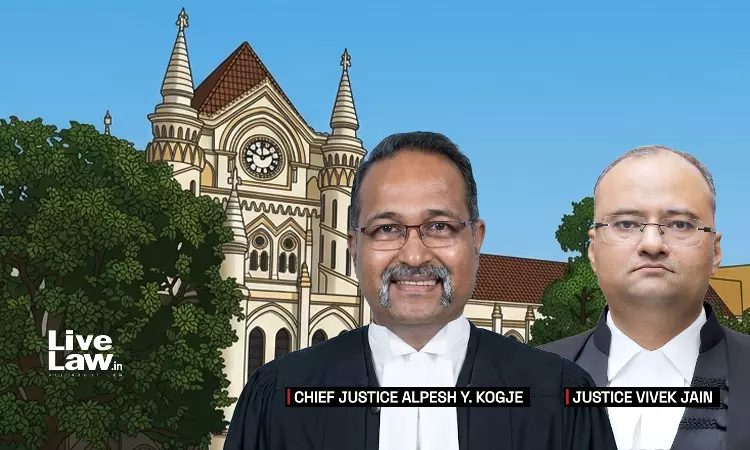
The Madhya Pradesh government has defended before the High Court the grant of incentive marks to in-service doctors in NEET PG counselling, arguing that merit for admission to postgraduate medical courses is not confined to academic performance but also includes professional experience.
The State made the submission while opposing a petition challenging the grant of service-based incentive marks to in-service candidates alongside the 30% quota earmarked for them.
Appearing for the State, the Additional Solicitor General (ASG) submitted that amendments to the Postgraduate Medical Education Regulations had removed the reference to "academic merit", thereby broadening the concept of merit to include professional experience.
"Regulation 9 of the Postgraduate Medical Education Regulations in cases (Satyabrata Sahoo and Gopal D. Tirthani) cited talks only about academic merit, but this phrase 'academic merit' has been done away with. Now, (post amendments) it only says 'merit', and is not confined to only academic merit but also includes experience," the ASG submitted.


The Division Bench of Chief Justice Alpesh Y. Kogje and Justice Vivek Jain was hearing a petition filed by a fresh candidate challenging the manner in which incentive marks are awarded to in-service doctors during NEET PG counselling.
The petitioner contended that under Rule 14 of the MP Chikitsa Shiksha Pravesh Niyam, 2018, in-service candidates are entitled to incentive weightage based on their length of service. It was argued that these additional marks artificially improve their merit positions, adversely affecting fresh candidates who have secured higher NEET PG scores.
In the previous hearing, the High Court had directed the State to ensure that admissions of in-service candidates to postgraduate medical courses remained restricted to the 30% seats earmarked for them under the existing seat distribution framework.
Appearing for the petitioner, Senior Advocate Aditya Sanghi argued that in-service doctors constitute a separate channel of admission and cannot be permitted to compete with fresh candidates for open-category seats by relying on their enhanced scores.
"The State has mixed the open category with in-service candidates, and the result is that the top six out of the top 10 are all in-service candidates," Sanghi submitted.
Relying on the Supreme Court's decision in Satyabrata Sahoo v. State of Orissa (2012), Sanghi argued that in-service candidates cannot receive the benefit of a separate 30% quota while also using incentive marks to improve their standing in the open-category merit list.
Opposing these submissions, the ASG argued that the relevant regulations had undergone substantial amendments and that the concept of merit could no longer be interpreted as referring exclusively to academic scores.
The State further submitted that granting incentive marks to doctors serving in rural and tribal areas was intended to place them on a level playing field with fresh candidates.
Highlighting the shortage of medical professionals in underserved areas, the ASG stated:
"There have been PILs in rural areas where there is a dearth of medical officers and specialists. We help candidates with less than 3 years of service by giving them incentive marks."
The ASG also argued that the petitioner was not challenging the provision granting incentive marks to in-service doctors but was instead questioning the manner in which such candidates were considered during counselling, without challenging the relevant counselling provisions.
The State further contended that the advantage arising from incentive marks was independent of the 30% reservation quota. According to the ASG, even if the separate quota were removed, in-service candidates receiving incentive marks could still secure higher positions than fresh candidates in the open-category merit list.
"Hypothetically, if we imagine a condition where a 30% quota is not provided and only the incentive marks are provided, even then, the position will remain the same. As they will still compete in open-category seats, irrespective of quota," the ASG submitted.
After recording the rival submissions, the High Court adjourned the matter for further hearing on November 18 at 2:30 PM.
For Petitioners: Senior Advocate Aditya Sanghi with Advocates Vinita Ahuja and Alka Singh
For State: Additional Advocate Generals Janhavi Pandit and BD Singh