



- Home
- /
- High Courts
- /
- Madhya Pradesh High Court
- /
- 'Prima Facie' Observation By...
'Prima Facie' Observation By Magistrate While Directing Registration Of FIR Under Section 156(3) CrPC Not Cognizance: MP High Court
Jayanti Pahwa
6 Oct 2025 11:15 AM IST
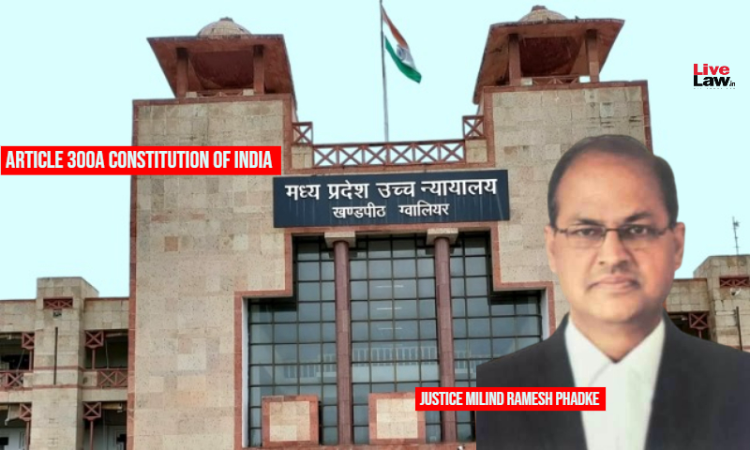
The Madhya Pradesh High Court has said that a prima facie observation made by the Magistrate that a cognizable offence is made out while directing registration of an FIR on a private complaint under Section 156(3) would not amount to taking cognizance of the offence. It said that the magistrate merely recording that a "prima facie" cognizable offence is made out without recording statements...
This is a premium content
Available exclusively to
Our subscribers
Subscribe Premium 
INR 1099+GST
Your support helps us to bring you more content at
an affordable subscription scheme !!!
All payment options available
The Madhya Pradesh High Court has said that a prima facie observation made by the Magistrate that a cognizable offence is made out while directing registration of an FIR on a private complaint under Section 156(3) would not amount to taking cognizance of the offence.
It said that the magistrate merely recording that a "prima facie" cognizable offence is made out without recording statements of witnesses/complaint indicates that only Section 156(3) CrPC was invoked and cognizance of the offence under Section 200 CrPC had not been taken.
The court was hearing a plea challenging sessions court's order which had quashed Section 156(3) proceedings initiated by the magistrate but refused to quash the FIR. The sessions court had observed that the Magistrate had taken cognizance while passing the order under Section 156(3) CrPC and that "prima facie satisfaction recorded by the Magistrate amounts to cognizance".
Against this the petitioner moved the high court, who had claimed to be assaulted by a cop and had moved a private complaint based on which magistrate had directed registration of FIR.
Justice Milind Ramesh Phadke in his ordered said that the issue revolves around whether the Magistrate while passing the order under Section 156(3) CrPC had infact taken cognizance of the offence or had simpliciter directed to register an FIR and investigate the matter.
"The law is settled in this regard that the Magistrate has two courses open when a complaint disclosing a cognizable offence is filed; either to direct registration and investigation under Section 156(3), or to take cognizance under Section 200 CrPC. Once cognizance is taken, the Magistrate cannot resort to Section 156(3). A careful reading of the order dated 10.06.2023 shows that the Magistrate merely recorded that prima facie a cognizable offence is made out and directed the police to register FIR and investigate. No statements of complainant or witnesses were recorded, nor was any inquiry initiated under Section 200 or 202 CrPC. Thus, the Magistrate had not taken cognizance, but rightly exercised jurisdiction under Section 156(3)".
For context under Section 200 a Magistrate taking cognizance of an offence on complaint shall examine upon oath the complainant and the witnesses present, if any, and the substance of such examination shall be reduced to writing and shall be signed by the complainant and the witnesses and by the Magistrate :
Background
The petitioner alleged that his relative had asked respondent no. 2 a sub-inspector to remove his car parked infront of the front gate of the petitioner's house. The Sub-Inspector, allegedly became annoyed and threatened bystanders using filthy language.
When the petitioner tried to intervene, the Sub-Inspector returned with more police officers in a police vehicle and illegally arrested the petitioner and his relative. They were allegedly taken to the police station and subjected to third-degree treatment.
The petitioner filed a private complaint before the Judicial Magistrate First Class under Section 156(3) CrPC (Section 175 BNSS). After examining reports and available material, the JMFC on June 10, 2023, directed the police to register a complaint against the accused officers and investigate.
Section 156(3) of CrPC authorizes any magistrate empowered under Section 190 of the Act to order an investigation into a cognizable offence to a police officer.
A FIR, against the accused officers, was filed for Public Servant Disobeying Direction of Law (Section 166), Punishment For Wrongful Restraint (Section 341), Punishment For Voluntarily Causing Hurt (Section 323), Causing Hurt By Dangerous Weapons and Means (Section 324), Punishment for Criminal Intimidation (Section 506), Obscene Acts In Public (Sections 294), Punishment for Criminal Conspiracy (Section 120-B) and Common Intention (Section 34 IPC).
The Sub-Inspector challenged the order before the Sessions Court, which dismissed the same on grounds of maintainability. After the high court remanded the matter back to the Sessions Court it then partly allowed the cop's petition by quashing proceedings initiated by the magistrate under Section 156(3) CrPC; it however did not quash the FIR.
The high court rejected the view of the sessions court that a prima facie observation by the magistrate amounted to taking cognizance.
"The view taken by the Revisional Court in para 15 of the impugned order that a prima facie observation amounts to taking cognizance is clearly unsustainable and contrary to the law laid down by the Hon'ble Supreme Court including the judgment relied upon by the petitioner. In these circumstances, the impugned order dated 05.12.2024 passed by the learned 7th Additional Sessions Judge, Gwalior in Criminal Revision No.197/2023 is hereby quashed".
The plea was allowed.
Case Title: Ashish Jain v State of MP (MCRC-55135-2024)
Citation: 2025 LiveLaw (MP) 212
For Petitioner: Senior Advocate Arvind Dudawat with Advocate Abhishek Singh Kourav
For State: Public Prosecutor Dinesh Savita
For Respondent no 2: Senior Advocate Rakesh Kumar Sharma
Click here to read/download Order
Tags

Jayanti Pahwa
Jayanti Pahwa is a Correspondent with LiveLaw, covering the Madhya Pradesh High Court

