



- Home
- /
- High Courts
- /
- Madhya Pradesh High Court
- /
- No Presumption Of Joint Hindu...
No Presumption Of Joint Hindu Family Merely Because Brothers Inherited Property Jointly From Father: MP High Court
Jayanti Pahwa
17 Sept 2026 3:30 PM IST
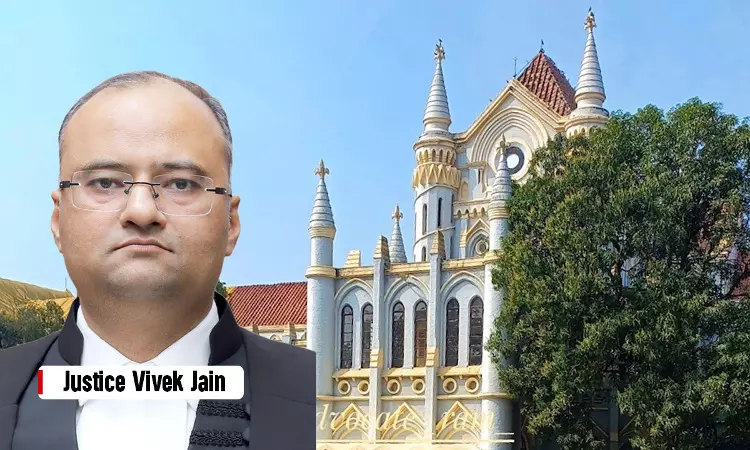
The Madhya Pradesh High Court has held that merely because children inherit some property jointly from their father, it cannot be presumed that they constitute a joint Hindu family or that every property subsequently acquired by them would be joint family property. [2026 LiveLaw (MP) 370]The bench of Justice Vivek Jain observed that holding inherited property is distinct from the experience of...
This is a premium content
Available exclusively to
Our subscribers
Subscribe Premium 
INR 1099+GST
Your support helps us to bring you more content at
an affordable subscription scheme !!!
All payment options available
The Madhya Pradesh High Court has held that merely because children inherit some property jointly from their father, it cannot be presumed that they constitute a joint Hindu family or that every property subsequently acquired by them would be joint family property. [2026 LiveLaw (MP) 370]
The bench of Justice Vivek Jain observed that holding inherited property is distinct from the experience of a joint Hindu family or coparcenary.
"This Court does not agree with such drastic proposition by the Trial Court that if some children inherit any property from their father jointly, then every property which would be acquired by his children would be joint Hindu family property and there would be presumption of joint Hindu family or coparcenary".
An original suit was filed by the plaintiffs (two brothers) seeking that the Will executed by their third deceased brother granting properties to plaintiff no 1 be declared null and void. Further, it sought declaration of ownership of various lands and a permanent injunction to restrain the defendants 1 and 2 (their sister and her husband) from interfering with the plaintiff's possession. The defendants 1 and 2 were aggrieved as defendant 1 was excluded from the case by the Trial Court by holding that it was a Hindu Undivided Family.
The counsel for the defendants/appellants, before the High Court, argued that the trial court had wrongly presumed the existence of a Hindu Undivided Family merely because the brothers had jointly inherited property. It was contended that there was a distinction between property jointly held by persons and the existence of coparcenary.
The plaintiffs, on the other hand, argued that their father died before the Hindu Succession Act, 1956, came into force and that the property had therefore devolved upon the three sons under classical Hindu law. According to them, since there had been no partition, the joint Hindu family continued to exist.
The bench disagreed with the trial court's approach. The court held that there is no automatic presumption that property inherited jointly by children from their father becomes joint Hindu family property in the broader sense, nor does such inheritance establish that all properties subsequently acquired by those children are joint family properties.
The bench explained that upon their father's death, each successor would succeed to the property in his own right. If their names were jointly recorded in the revenue records, it would indicate that the property remained unpartitioned, with each co-owner having a distinct share. It would not, by itself, establish the existence of a coparcenary.
The bench further noted that the plaintiff's own plaint did not plead the existence of a joint Hindu family. Instead, it described the property as being jointly owned by the three brothers. The revenue records also showed the inherited land in their joint names.
Additionally, the court observed that the plaintiffs themselves had stated that two of the brothers had gone to Rishikesh to earn their livelihood and had allegedly sent money to the third deceased brother to purchase additional properties in his name. However, no documentary evidence was produced to show the alleged remittances, their earnings, or contributions made towards the purchase of these properties.
Reliance was placed on the Supreme Court judgment of Appasaheb Peerappa Chamdgade v Devendra Peerappa Chamdgade [2007], wherein it was reiterated that there is no presumption of a joint Hindu family and that the initial burden of proving the same lies on the person claiming it to be joint Hindu family property.
In the present case, the court noted that there was no evidence that a joint Hindu family had been established or constituted. Consequently, the court held that there was no evidence to infer the existence of a joint Hindu family or coparcenary, although the 5 properties inherited by their father were admittedly held jointly by three brothers in unpartitioned shares.
Accordingly, the court held that the 5 survey numbers acquired in his name by the third deceased brother during his lifetime were his individual property. The plaintiffs could not claim a declaration of those properties as joint family properties.
The court also took notice of the will allegedly executed by the third deceased brother reportedly five days before his death. The court noted that the will was unregistered but notarised and had two attesting witnesses. Thus, the court found the circumstances surrounding the Will as suspicious and upheld the trial court's finding that the will was invalid.
Thus, the bench held that the share of the third deceased brother in the father's property would devolve equally upon two plaintiffs and defendant no 1, with each receiving 1/3rd share. The appeal was accordingly partly allowed and disposed of.
Case Title: Krishni Devi v Baladatt, F.A. No.280 of 2003
Citation: 2026 LiveLaw (MP) 370
For Appellants: Senior Advocate Sanjay Agrawal with Advocate Aishwarya Nandani Tiwari
For Respondents: Advocates Aditya Singh Rajput and Vijay Kumar Shukla
Tags

Jayanti Pahwa
Jayanti Pahwa is a Correspondent with LiveLaw, covering the Madhya Pradesh High Court

