



- Home
- /
- High Courts
- /
- Madhya Pradesh High Court
- /
- Running Factory Sans Legal...
Running Factory Sans Legal Permission "Is A Crime"; Pollution Control Board Can Order Immediate Closure Without Show-Cause Notice: MP High Court
Jayanti Pahwa
16 Oct 2026 1:10 PM IST
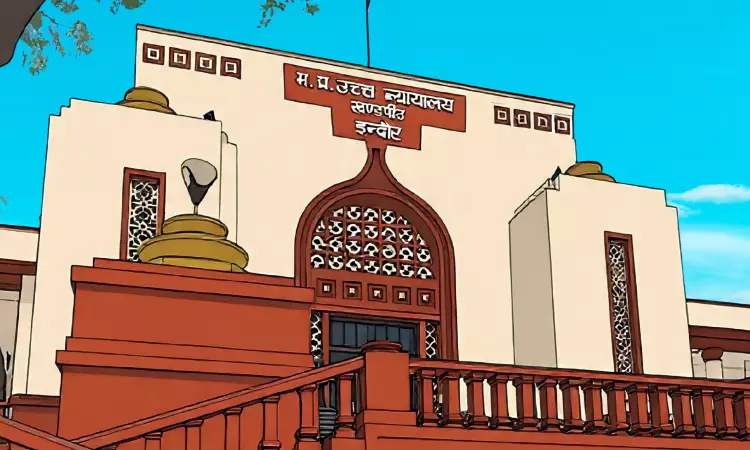
The Madhya Pradesh High Court recently dismissed a steel factory's plea claiming that the closure order passed against it was without providing a show cause notice and thus violating natural justice principles. [2026 LiveLaw (MP) 418]The division bench of Justice Subodh Abhyankar and Justice Jai Kumar Pillai rejected this argument noting that the petitioner was operating without a valid...
This is a premium content
Available exclusively to
Our subscribers
Subscribe Premium 
INR 1099+GST
Your support helps us to bring you more content at
an affordable subscription scheme !!!
All payment options available
The Madhya Pradesh High Court recently dismissed a steel factory's plea claiming that the closure order passed against it was without providing a show cause notice and thus violating natural justice principles. [2026 LiveLaw (MP) 418]
The division bench of Justice Subodh Abhyankar and Justice Jai Kumar Pillai rejected this argument noting that the petitioner was operating without a valid Consent to Operate and therefore no right was violated by non issuance of showcause notice.
The bench accordingly held,
"Since the petitioner was operating without a valid legal permission, no legal right was violated by not issuing a show-cause notice. Running a factory without consent is a crime under the Air Act. The Board has the emergency power to stop pollution immediately. Giving a long notice period to an illegally running factory would defeat the purpose of the environmental laws".
A petition was filed challenging the closure directions of August 27, 2026, passed by the MP Pollution Control Board. The petitioner also challenged two orders of April 29 and September 11, wherein his applications for fresh Consent to Operate (CtP) were rejected.
The petitioner, a TMT steel bars manufacturing private company, was granted Consent to Operate on April 21, 2025, and was valid up to March 31, 2026, with the specific condition that the industry must install a "Dog House Type" fume extraction system on both induction furnaces within six months. The petitioner applied for renewal on March 28, 2026, but was rejected after the authorities inspected the factory on April 14, 2026, on the grounds that multiple defects were found, including non-compliance with the condition.
Subsequently, the Board issued an order on May, 8, 2025, under Section 31A of the Air Act and directed closure of the factory and disconnection of the electricity connection. A representation was thereafter submitted, but the petitioner sought 90 days to upgrade the fumes and submitted a bank guarantee of ₹17 lakhs.
Based on this bank guarantee, the board against issued a coniditon order on June 16, 2026. Accordingly, the earlier closure order was put on hold and petitioner was allowed to upgrade the extraction system till July 31, 2026.
Subsequently the petitioner filed a fresh application on August, 13, 2026 for Consent to Operate. An inspection was again conducted by the Board on August 19, 2026. Meanwhile the Collector of Dhar, upon complaints, conducted a surprise inspection and found that the pollution control systems were not working properly. Thus, the board encashed the bank guarantee and ordered closure on August 27, 2026. Thereafter, the board rejected another application for consent on September 11, 2026.
The senior counsel for the petitioner argued that the Closure order of August 28, 2026 was passed without jurisidiction and that a full board is empowered to pass such orders under Section 4 of the Air Act. The senior counsel argued that no show cause notice was given to the petitioner before closing the factory. It was also argued that no oportunity of hearing was provided and therefore there was a violation of principle of natural justice.
The counsel for the respondents argued that the petitioner has a clear alternate remedy. Under Section 31 of the Air Act, an appeal lies before the Appellate Authority. It was further argued that the petitioner operated a large industry in orange category, melting iron at high temperatures creating dangerous smoke and hazardous waste. The counsel especially focus on petitioner non complaince with order to install correct fumes extraction system within six months.
The court noted that the entire dispute iniaited from first Consent to Operate in April, 2025 with a very clear condition that industry must install a Dig House Type Fumes Extraction System. Rejecting the petitioner's arguement over violation of natural justice principle, the bench noted that it is not a rigid mathematical formula and depends on facts of each case. The bench held,
"A person claiming a right to be heard must show that they have a legal right that is being taken away. In this case, the petitioner's right to operate ended on 31.03.2026. The factory had no valid consent on the date the closure order was passed on 27.08.2026".
Since the petitioner was operating without valid legal permission, no right was violated by not issuing show cause notice. The court further rejected the arguement that the Chairman had no power to issue closure report, noting that
"Under emergency situations, the Chairman is allowed to take immediate steps to stop pollution, which are later placed before the Board. The pollution caused by the open induction furnace is severe, and the authorities have to act quickly to protect public health".
Comparing the two inspection records, the court noted that "Having a machine is useless, if it is not turned on during the manufacturing process", The court further noted that law requires strict complaince and under Section 21(4) of Air Act, the State Board has the power to cancel consent.
Thus, the bench held,
"After a complete analysis of the facts and the law, this Court reaches a clear conclusion, that the petitioner failed to comply with the mandatory condition of the original consent order. The factory continued to operate without a valid legal consent after March 2026. Thus, the Board acted properly to protect the environment and public health".
Accordingly, the court dismissed the petition, but gave liberty to the petitioner to file afresh application for consent to operate.
For Petitioner: Senior Advocate Amit Agrawal with Advocate Akhil Godha
For State: Government Advocate Pradyumna Kibe
For Pollution Control Board: Advocate Aniket Naik
Tags

Jayanti Pahwa
Jayanti Pahwa is a Correspondent with LiveLaw, covering the Madhya Pradesh High Court

