



- Home
- /
- High Courts
- /
- Madhya Pradesh High Court
- /
- 'Mahant Cannot Seek Declaration of...
'Mahant Cannot Seek Declaration of Temple Lands in His Personal Name': MP High Court
Jayanti Pahwa
7 Aug 2026 10:05 AM IST
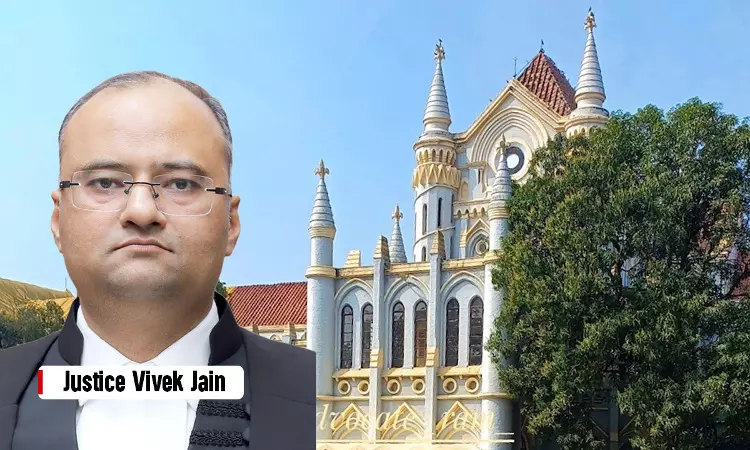
The Madhya Pradesh High Court has upheld the Trial Court's order dismissing the appeal of the Mahant of Janrai Toriya Temple seeking a declaration of proprietary rights in his personal name, observing that the Mahant cannot seek declaration of temple lands in his personal name. [2026 LiveLaw (MP) 316]Remarking that the Trial Court had rightly denied the Mahant's suit, the bench of Justice...
This is a premium content
Available exclusively to
Our subscribers
Subscribe Premium 
INR 1099+GST
Your support helps us to bring you more content at
an affordable subscription scheme !!!
All payment options available
The Madhya Pradesh High Court has upheld the Trial Court's order dismissing the appeal of the Mahant of Janrai Toriya Temple seeking a declaration of proprietary rights in his personal name, observing that the Mahant cannot seek declaration of temple lands in his personal name. [2026 LiveLaw (MP) 316]
Remarking that the Trial Court had rightly denied the Mahant's suit, the bench of Justice Vivek Jain observed:
"In the present case, what has been sought is the declaration of proprietary rights of property in the personal name of Mahant, which is something which cannot be granted by the Trial Court and has rightly been denied by the Trial Court".
An appeal was filed by a disciple of Mahant Dharam Das challenging the order of the Trial Court wherein his suit was dismissed. The appellant contended that Janrai Toriya Temple is situated at Chhatarpur, where the mode of succession is the Guru-disciple tradition.
The appellant in its plaint contended that he was the Mahant of the temple and wanted to get a declaration as the title holder of the properties of 67 acres.
The State in its written submission argued that the property is not a self-acquired property but the land attached to the public temple. The State argued that the mahant was granted a monthly allowance. It was further argued that being a mahant, he can manage the temple affairs but cannot claim proprietary right over the land.
The Trial Court, after framing the issues, held that the appellant was neither a title holder nor entitled to claim reliefs as he is only a priest of the public temple. On the question of the State auctioning some land during pendency of the suit, the Trial Court held that the said auction was not illegal as it was made for cultivation rights for one year.
The counsel for the appellant argued that the Trial Court erred in not recognising the right of Temple Mahant, which is at a higher level than the rights of a 'mere priest' and more than the rights of a 'shebait'.
For context, a Shebait serves and sustains the deity in the capacity of a manager of the debuttar property ( property vested with the deity).
The appellant contended that a Mahant is entrusted with overall management of the temple properties and cannot be equated with a mere priest and that it is distinct from a pujari and carries greater legal rights.
The appellant further argued that the temple was established in 1603 and that he successions of Mahants has continued ever since the first Mahant, Hardev Ji. It was argued that a receipt was issued for diversion of land in the name of the then Mahant but that he was murdered in 1965.
It was claimed that the dispute started arising regarding the management of the temple and math. It was argued that notice was issued for depositing charges for diversion and notice was issued in the name of the Mahant for diversion of land for commercial purpose, which was then deposited.
It was argued that the revenue entries till 1974 showed the Mahant's name, and only in 1974-75, without justification, the Collector's name was inserted in revenue records as manager of the temple.
The counsel for the State argued that the Trial Court has specifically recorded that the property was not self-acquired property of the Mahant. It was argued that the priest cannot claim any proprietary rights over temple property.
Rejecting the submissions, the bench noted that the reliefs sought in the suit were fundamentally misconceived. The bench noted that the appellant did not seek a declaration that he was mahant of the temple or that he was entitled to manage the temple or its properties, but instead sought a declaration of 67 acres in his personal name.
The court observed that the suit would have stood on a different footing if the appellant had sought recognition as Mahant with consequential rights to administer the temple and manage the temple properties in the temple's interest. However, the present suit was filed to seek ownership of temple lands in his personal name. The bench held that such relief was legally impermissible.
Further, the court noted that there was no pleading that any previous Mahant had acquired the property in his individual capacity or for personal use. On the contrary, the appellant's own case was that lands were attached to the temple. The court had that the pleadings were inconsistent with the relief claimed, which would effectively permit the Mahant to alienate the temple property as his own.
Referring to M. Siddiq (Ram Janmabhumi Temple v. Suresh Das, (2020) 1 SCC 1, the bench reiterated that protection of trust property is of pivotal importance and that a shebait cannot claim proprietary interest in the property.
Rejecting the petitioner's contention that the State had auctioned some part of the temple land, the court held that the Trial Court has duly noted that the auction was given only to cultivate the land for one year. The bench clarified that nothing beyond the cultivation rights was carried out.
Thus, the appeal was dismissed.
Case Title: Mahant Bhagwandas Sadik Shishya v State of MP, FIRST APPEAL No. 249 of 1998
Citation: 2026 LiveLaw (MP) 316
For Petitioner: Advocate Abhishek Shrivastava
For State: Government Advocate Rakesh Kesharwani
Tags

Jayanti Pahwa
Jayanti Pahwa is a Correspondent with LiveLaw, covering the Madhya Pradesh High Court

