



- Home
- /
- High Courts
- /
- Madhya Pradesh High Court
- /
- Shifting Idols From Dilapidated...
Shifting Idols From Dilapidated Temple To Continue Worship Not Misconduct By Priest: MP High Court
Jayanti Pahwa
25 July 2026 9:00 AM IST
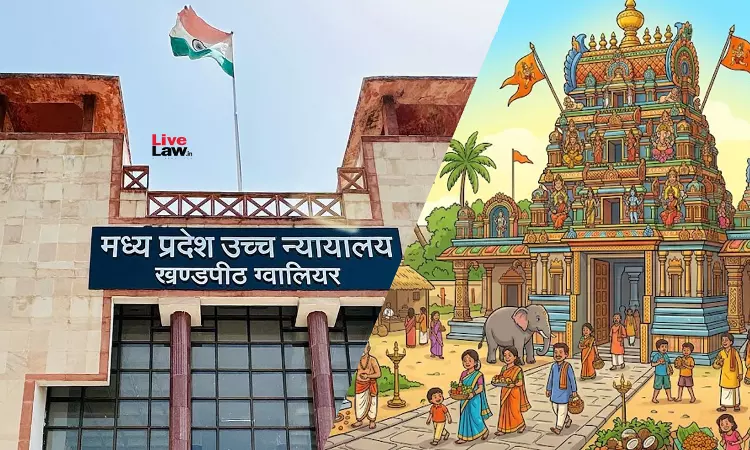
The Madhya Pradesh High Court has held that the action of a priest in shifting the idols from a dilapidated temple structure to a nearby functional temple to continue uninterrupted worship cannot be termed as misconduct or abandonment of duty. [2026 LiveLaw (MP) 295]Setting aside the removal of the priest of Temple Radha Gopalji Shri Ram Jankiji in Shivpuri District, the bench of Justice...
This is a premium content
Available exclusively to
Our subscribers
Subscribe Premium 
INR 1099+GST
Your support helps us to bring you more content at
an affordable subscription scheme !!!
All payment options available
The Madhya Pradesh High Court has held that the action of a priest in shifting the idols from a dilapidated temple structure to a nearby functional temple to continue uninterrupted worship cannot be termed as misconduct or abandonment of duty. [2026 LiveLaw (MP) 295]
Setting aside the removal of the priest of Temple Radha Gopalji Shri Ram Jankiji in Shivpuri District, the bench of Justice Milind Ramesh Phadke observed;
"When an ancient structure becomes unsafe and unfit for worship, the act of transferring the idols to a nearby functional temple to ensure uninterrupted performance of religious rituals cannot be treated as misconduct or abandonment of duty. Rather, such conduct reflects diligence and devotion on the part of the petitioners in safeguarding the interests of the deity and the religious sentiments of the devotees".
The petitioners (legal representatives of the priest Late Narayan Das) were granted the temple and connecting agricultural land by His Highness Madhav Rao Scindia in the early 20th century. However, in 1976-77, the Collector's name was entered as Manager of the Temple without the knowledge of the petitioners.
The dispute arose when certain local residents filed a complaint alleging that the petitioners had mismanaged the property, allowed encroachment and misappropriated the income generated therefrom. The locals also complained that the temple of Radha Gopalji was no longer standing at the spot.
Upon receiving such complaints, the Sub Divisional Officer initiated an inquiry and found that the original temple structure was in a completely dilapidated state and had naturally fallen, due to which the idols were shifted to the other active temple. The inquiry report found no irregularities, misappropriation of land, or mismanagement on the part of the petitioners. The Sub Divisional officer thereafter, on January 5, 2004, dropped the proceedings and allocated funds for reconstruction.
The Collector, allegedly, ignored the detailed spot inquiry report and partly allowed the appeal, directing reconstruction but removal of the petitioners. The Divisional Commissioner also dismissed the petitioners' appeal. Aggrieved, the petitioners approached the High Court.
The counsel for the petitioners argued that the entry of the Collector's name as Manager in 1976-77 was done unilaterally and is bad in law since the MP Land Revenue Code grants the temple, through its priest, the status of Bhumiswami.
The counsel for the State argued that land attached to the temple is trust property and therefore the State is the ultimate custodian and manager of such trusts. The counsel further argued that the petitioners failed in their duty to maintain the temple. The counsel argued that the petitioners committed 'serious irregularity' by shifting the idols to a different temple without official permission.
The counsel for the State supporting the Collector's order argued that the property must be protected from any private encroachment under the 'garb of priesthood'.
The bench noted that the Collector, while exercising appellate jurisdiction, set aside a well-reasoned order of the Sub Divisional Officer without recording any cogent reasons for discarding the inquiry report. The bench also noted that the revenue records from 1951-61 show the deity as Bhumiswami and do not indicate that the State owned the property. Regarding recording of Collector as Manager in revenue records, the court held,
"subsequent recording of the Collector as Manager in the revenue records in the year 1976-77, by itself, does not confer ownership rights upon the State nor it extinguishs the rights and obligations of the deity or the persons lawfully managing its affairs".
Further, regarding the complains against the petitioner, the bench noted that the Collector did not record any findings showing that funds were misappropriated. Further, the bench noted that
"Mere existence of local complaints cannot constitute sufficient basis for removal of hereditary priests who have admittedly been managing the affairs of the temple for decades unless such allegations are substantiated by credible evidence".
Therefore, the bench held that the Collector's order was arbitrary and liable to be set aside. The petition was allowed.
Case Title: Narayan Das v State of Madhya Pradesh, WP-3716-2010
Citation: 2026 LiveLaw (MP) 295
For Petitioners: Senior Advocate V K Bhardwaj with Advocate Anand V Bharadwayj
For State: Government Advocate Shiraz Qureshi
Tags

Jayanti Pahwa
Jayanti Pahwa is a Correspondent with LiveLaw, covering the Madhya Pradesh High Court

