



- Home
- /
- High Courts
- /
- Madhya Pradesh High Court
- /
- Vehicle Seized In NDPS Case Can't...
Vehicle Seized In NDPS Case Can't Be Released To Financier Over Owner's Loan Default: MP High Court
Jayanti Pahwa
23 Sept 2026 2:30 PM IST
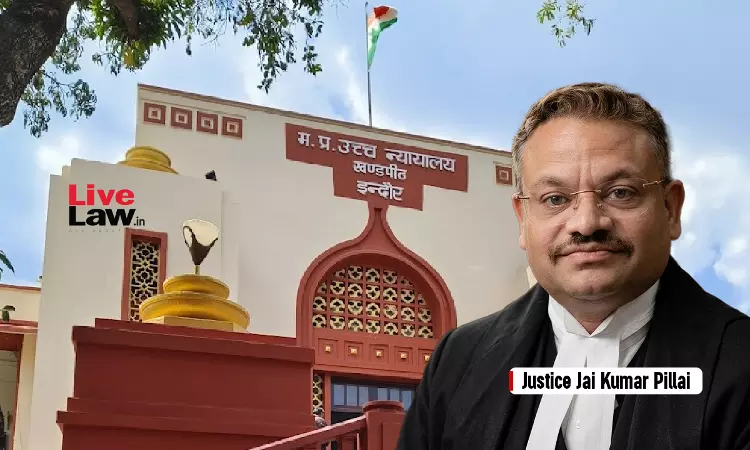
The Madhya Pradesh High Court has held that a vehicle seized in connection with an offence under the Narcotic Drugs and Psychotropic Substances Act, 1985 (NDPS Act) cannot be released to a financier merely because the registered owner defaulted on repayment of the loan. [2026 LiveLaw (MP) 384]Observing that the financier cannot claim custody merely on the basis of contractual rights arising...
This is a premium content
Available exclusively to
Our subscribers
Subscribe Premium 
INR 1099+GST
Your support helps us to bring you more content at
an affordable subscription scheme !!!
All payment options available
The Madhya Pradesh High Court has held that a vehicle seized in connection with an offence under the Narcotic Drugs and Psychotropic Substances Act, 1985 (NDPS Act) cannot be released to a financier merely because the registered owner defaulted on repayment of the loan. [2026 LiveLaw (MP) 384]
Observing that the financier cannot claim custody merely on the basis of contractual rights arising from loan agreements, the bench of Justice Jai Kumar Pillai stated:
"the finding of the learned Special Judge that the petitioner-company, being merely a financier and not the registered owner, is not entitled to the interim custody of the vehicle is legally sound and fully supported by the documentary evidence (Annexure P/3) available on record. The argument that the registered owner (Respondent No. 2) has used the vehicle in violation of the loan agreement and hence lost his right to custody is extraneous to the present proceedings. Such a violation may give rise to civil consequences or arbitration proceedings between the parties, but it does not automatically authorize the criminal court to hand over the case property to the financier during the pendency of a trial under the NDPS Act".
A criminal revision was filed by SK Finance Ltd, challenging the order dated April 2, 2026, in which the Special Judge (NDPS Act) dismissed the application seeking interim custody of the seized vehicle.
As per the facts, the Neemuch City Police Station had received information that the owner of the vehicle was delivering opium to someone in Rajasthan. The Police intercepted the vehicle and seized 7 kgs of opium from the owner's custody. Consequently, the owner was arrested, and the vehicle was seized.
The accused (owner of the vehicle) had purchased the said vehicle by availing a loan of ₹5,04,741 from the finance company. Under the loan agreement, he was required to repay the loan in 36 Equated Monthly Instalments (EMIs) of ₹17,499/-. It was claimed that the owner defaulted on the payment, and installments to the tune of ₹4,70,274.20/- are due to be paid. Thus, to gain custody of the vehicle, the finance company filed an application before the Special Judge.
The counsel for the finance company argued that the Special Judge failed to consider the hire-purchase/loan agreement, which explicitly vests the right of repossession with the finance company in the event of EMI default. The counsel further argued that the registration certificate itself lists the finance company as the owner, and that until the loan is fully repaid, the vehicle cannot be said to be owned by the accused.
It was further argued that since the vehicle was used for the commission of an offence which violated the terms of the loan agreement, the financier is the appropriate party to be granted interim custody.
The counsel for the State argued that the financier cannot be substituted for the registered owner in criminal proceedings for the purpose of granting interim custody.
The bench noted that the issue relating to vehicle seizure under the NDPS Act was dealt with in the case of Bishwajit Dey v State of Assam. The court noted,
"A criminal court exercising jurisdiction under Sections 497 and 503 of the BNSS is not the appropriate forum to execute the terms of a civil contract or a loan agreement. The contractual right of repossession upon default is a civil dispute between the financier and the borrower".
Referring to the argument that the registration of the vehicle records the finance company as owner, the bench held,
"The endorsement of hypothecation on a registration certificate merely protects the financial interest of the company but does not transfer the statutory "ownership" of the vehicle to the financier for the purpose of criminal proceedings".
The bench noted that the finance is neither the registered owner or agent of the owner. The petitioner company is merely a financier and not the registered owner and therefore not entitled to the interim custody of the vehicle.
Referring to the Supreme Court case of Bishwajit Dey (supra), the bench reiterated that only the owner or his agent can be entitled to Supurdagi of the vehicle.
The bench further highlighted:
"The argument that the registered owner (Respondent No. 2) has used the vehicle in violation of the loan agreement and hence lost his right to custody is extraneous to the present proceedings. Such a violation may give rise to civil consequences or arbitration proceedings between the parties, but it does not automatically authorize the criminal court to hand over the case property to the financier during the pendency of a trial under the NDPS Act".
The bench noted that the order of the Special Judge was correct and thus, no interference was warranted. Accordingly, the bench dismissed the petition.
Case Title: SK Finance Ltd v State of Madhya Pradesh, Cr.R. No. 3437/2026
Citation: 2026 LiveLaw (MP) 384
For Petitioner: Advocate Anuj Bhargava
For State: Government Advocate Gaurav Rawat
Tags

Jayanti Pahwa
Jayanti Pahwa is a Correspondent with LiveLaw, covering the Madhya Pradesh High Court

