



- Home
- /
- High Courts
- /
- Madras High Court
- /
- “Good Ground, But Not At This...
“Good Ground, But Not At This Stage”: Madras High Court Rejects Plea For Audio-Enabled VVPAT For Visually Impaired Voters Ahead Of TN Polls
Upasana Sajeev
15 April 2026 1:15 PM IST
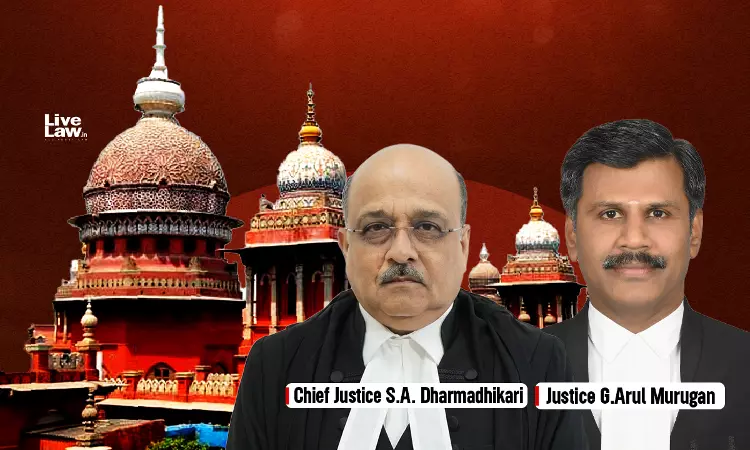
The Madras High Court, on Wednesday (15 April) dismissed a public interest litigation seeking directions to the Election Commission of India to introduce audio-enabled Voter Verifiable Paper Audit Trail (VVPAT) for visually impaired voters in the upcoming Tamil Nadu assembly elections. While the bench of Chief Justice SA Dharmadhikari and Justice G Arul Murugan appreciated the...
This is a premium content
Available exclusively to
Our subscribers
Subscribe Premium 
INR 1099+GST
Your support helps us to bring you more content at
an affordable subscription scheme !!!
All payment options available
The Madras High Court, on Wednesday (15 April) dismissed a public interest litigation seeking directions to the Election Commission of India to introduce audio-enabled Voter Verifiable Paper Audit Trail (VVPAT) for visually impaired voters in the upcoming Tamil Nadu assembly elections.
While the bench of Chief Justice SA Dharmadhikari and Justice G Arul Murugan appreciated the grounds raised in the petition, the court noted that it could not issue directions to the ECI to introduce a new system after the electoral process has begun.
“The process of election has already commenced. When the process starts, we can't modify the procedure. After election you can make a representation, which can be considered to make changes in the next election…This is not the stage. After the election, if you come we'll definitely direct them to consider your representation. It's a good ground,” the court orally remarked.
When the petitioner organisation Nethrodaya insisted that the court direct the ECI to consider a representation submitted by it in this regard, the court pointed out that no provision allows it to ask election authorities to introduce a system in between the elections.
“Show us any provision which shows we can introduce something in between. Is it not a new thing? Representation has to be made in advance. Now file representation after the election,” the court said.
The petitioner organisation which works for the empowerment of visually challenged persons, submitted that due to the lack of assistive devices like the audio-enabled Electronic Voting Machines (EVMs), the independent participation of the visually impaired voters is getting affected.
The organisation submitted that visually impaired voters are often compelled to rely on others to cast their votes, which compromises the secrecy of their ballot and raises serious concern about their privacy and autonomy.
The petitioner submitted that as per the 2011 census, there were 1,27,405 visually impaired persons in the State of Tamil Nadu. To make the voting process more accessible and inclusive for the visually impaired voters, the organisation proposed a solution, by introducing audio enabled VVPAT, which would provide an audio confirmation of the selected candidate after the vote is caste, instead of relying solely on visual verification.
The organisation submitted that through this system, an audio message would be played through headphones. It was submitted that the key feature of the audio VVPAT is that it ensures secrecy through headphones and would have multilingual support, adjustable volume control and optional activation by the voter.
The organisation submitted that apart from the visually impaired, the system could be used for independent verification by the elderly, illiterate, mobility impaired, and other print-disabled voters. The organisation pointed out that while a braille system would only be useful for educated blind voters, the audio system could support a larger percentage of visually impaired voters, enhancing accessibility, inclusivity, preserving secrecy and increasing voter confidence and trust in the electoral process.
Counsel for Petitioner: Mr. R.S.Raveendhren
Counsel for Respondents: Mr. Niranjan Rajagopalan Standing Counsel, Mrs. E.Ranganayaki Addl. Govt. Pleader, Mr. V.Chandrasekaran Senior Panel Counsel
Case Title: Nethrodaya v The Chief Electoral Officer and Others
Citation: 2026 LiveLaw (Mad) 161
Case No: WP 14501 of 2026
Tags
Upasana Sajeev
Upasana Sajeev is a Principal Correspondent with LiveLaw, covering Madras High Court

