



- Home
- /
- High Courts
- /
- Madras High Court
- /
- Madras High Court Issues Directions...
Madras High Court Issues Directions To State, Judiciary For Speedy Trial Of Rape & POCSO Cases
Upasana Sajeev
30 July 2026 10:00 AM IST
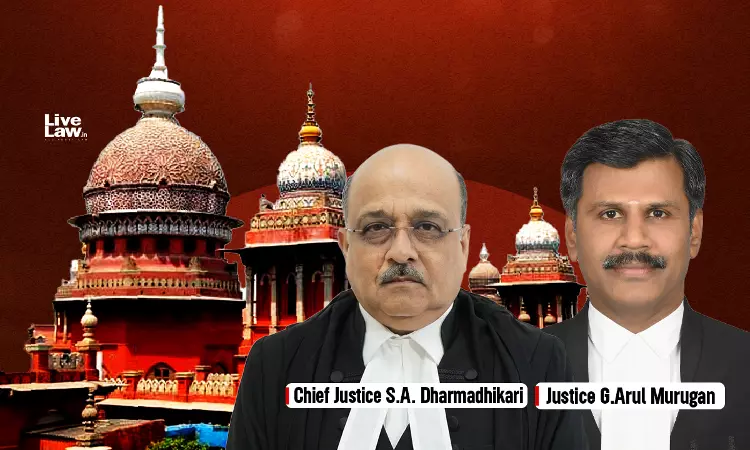
The Madras High Court has issued a slew of directions to the State Government and the State judiciary for speeding up the investigation and trial of cases of crimes against women and children. [2026 LiveLaw (Mad) 350] The bench of Chief Justice SA Dharmadhikari and Justice G Arul Murugan stressed the need to follow the time limit prescribed for completing trial and witness...
This is a premium content
Available exclusively to
Our subscribers
Subscribe Premium 
INR 1099+GST
Your support helps us to bring you more content at
an affordable subscription scheme !!!
All payment options available
The Madras High Court has issued a slew of directions to the State Government and the State judiciary for speeding up the investigation and trial of cases of crimes against women and children. [2026 LiveLaw (Mad) 350]
The bench of Chief Justice SA Dharmadhikari and Justice G Arul Murugan stressed the need to follow the time limit prescribed for completing trial and witness examination under Section 346 of BNSS and Section 35 of the POCSO Act.
It may be noted that as per the proviso to Section 346 of the BNSS, when the enquiry or trial relates to an offence under Section 64 [punishment for rape], 65 [punishment for rape in certain cases], 66 [punishment for causing death or persistent vegetative state of victim], 67 [sexual intercourse by husband upon wife during separation], 68 [sexual intercourse by person in authority], 70 [gang rape], or 71 [punishment for repeat offenders] of the BNS, the inquiry or trial should be completed within a period of two months from the date of filing of the chargesheet.
As per Section 35 of the POCSO Act, the evidence of the child victim should be recorded within 30 days of cognisance and the trial should be concluded, as far as possible, within 1 year therefrom.
The court has directed the Registrar General of the Madras High Court to issue a circular, within 4 weeks, to all District and Sessions Judges in the State reiterating the obligation to comply with Section 346(1) of the BNSS and the mandate of recording reasons while granting adjournment as contemplated under Section 346(2) of the BNSS.
The court also directed the Registrar General to reissue an earlier circular, reminding the Presiding Officers of the Special POCSO court about their obligation to record evidence of victim child within 30 days and to conclude the trial within a year as far as possible.
The bench was hearing a Public Interest Litigation filed by a rape survivor seeking directions to all trial courts in the State entrusted with the trial of rape and sexual offence cases to strictly comply with the mandatory two-month timeline under the proviso to Section 346(1) BNSS, and to ensure day-to-day examination of witnesses without the grant of unnecessary adjournments.
It was alleged that on September 29, 2025, while she and her family were travelling to Tiruvannamalai for a temple pilgrimage from Andhra Pradesh, their vehicle was intercepted by two police constables who then took the petitioner and her mother separately in the patrol motorcycle on the pretext of further inquiry. During the travel to a secluded place, the petitioner's mother jumped from the moving motorcycle and the petitioner was taken to a remote spot where the two police constables committed rape on her and fled. The petitioner took refuge in a brick kiln nearby and was admitted to the hospital. Later, an FIR was registered on September 30, 2025.
The petitioner submitted that there was a systemic failure on the part of the subordinate judiciary in Tamil Nadu to comply with the legislative mandate to ensure a speedy trial for survivors of sexual violence and to cast a potent deterrent effect upon the predators. The petitioner also submitted that a prolonged trial was a severe threat to society since there was a probability of witnesses being subjected to intimidation.
During the previous hearing, the court had directed the State and the High Court registry to file a detailed report on the functioning of POCSO courts in the State, the existing infrastructure, and the need for additional special courts.
Following this, a report was filed informing the court that 1,920 rape cases (registered both under the BNS and the erstwhile IPC) and 18,518 POCSO cases were pending trial across Tamil Nadu. The court was also informed that in 1,471 (76.7%) of the rape cases, the trial has already crossed the two months mandated by the proviso to Section 346(1) BNSS. Further, the report also stated that in 10,202 POCSO cases (54.06%) the trial has exceeded the one year contemplated under Section 35(2) of the POCSO Act.
The report also highlighted the cause of delay as pendency of forensic reports, delay in obtaining dates from Magistrates for recording statements under Section 183 BNSS, absence of sanctioned POCSO courts in twenty districts, vacancies of Presiding Officers etc.
The State informed the court that it was taking steps to ensure speedy trial of cases. It was submitted that DNA testing laboratories were being set up in various districts so that forensic reports could be obtained more quickly. The State also submitted that periodic review of the existing Special Task Force, and Crime Against Women and Children Wing would be held and steps would be taken to monitor and expedite the cases.
While the court noted that the petitioner has brought in a genuine public interest to court's notice, the court also took note of the thoughtful and workable suggestions for systemic reform. The court noted that a lot of reliefs claimed by the petitioner had already been taken care of during the pendency of the plea. Additionally, the court directed the trial court to conduct the petitioner's witness examination in camera, and strictly in accordance with the mandate of Section 366(2) of the BNSS.
With respect to POCSO cases, the court directed the State Government and the Registrar General to ensure that every POCSO case in the State is tried by a duly constituted Special Court and that the Presiding Officers of the court receive training in child-sensitive procedure.
The court directed the Tamil Nadu State Judicial Academy to periodically conduct special training sessions for Presiding Officers on the requirement to take evidence of the victim child within 30 days and to complete the trial within 1 year.
The court also directed the POCSO Special Court to restrict adjournments except in genuinely exceptional circumstances. The court also directed the Committee for Effective Implementation of the Juvenile Justice Act to regulate and monitor the progress of POCSO trial and call for periodic compliance reports.
The court further directed the Director General of Police to ensure that the Special Task Force functions effectively in every district and secures proper investigation of POCSO cases and timely production of witnesses before trial courts.
Finally, the court directed the State to fill up vacancies in the 4 POCSO courts in Cuddalore, Dindigul, Madurai and Thoothukudi which were currently vacant and to take steps to set up courts already sanctioned.
Counsel for Petitioner: Mr. S. Kamalakannan for Ms. K. Jayasudha and Ms. S. Sundaravalli
Counsel for Respondent: Mr. John Sathyan State Public Prosecutor Assisted by Mr. Arun Anbumani Additional Public Prosecutor and Mr. M. Dinesh Govt Advocate (Criminal Side), Mr. Vasanthakumar Vengadessane
Case Title: XXX v The Director General of Police and Others
Citation: 2026 LiveLaw (Mad) 350
Case No: W.P.No.20751 of 2026
Tags

Upasana Sajeev
Upasana Sajeev is a Principal Correspondent with LiveLaw, covering Madras High Court

