



- Home
- /
- High Courts
- /
- Madras High Court
- /
- Allegations Of EVM Malfunction Can...
Allegations Of EVM Malfunction Can Be Raised Only In Election Petition, Not Writ: Madras High Court While Dismissing Stalin's Plea
Upasana Sajeev
3 Sept 2026 12:36 PM IST
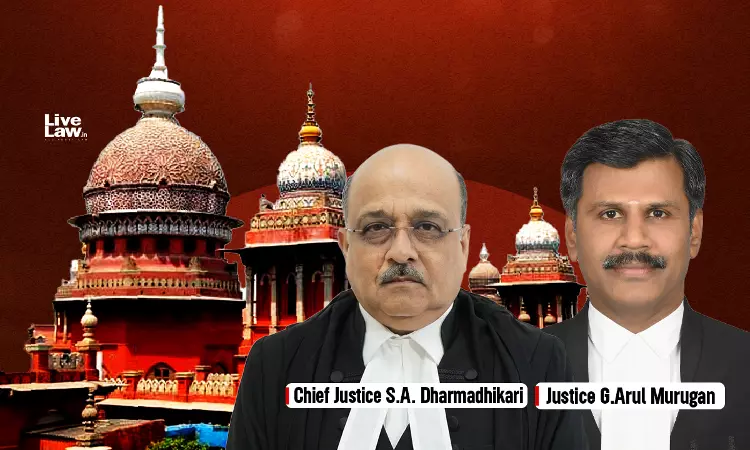
While dismissing a writ petition filed by former CM and Chief of Dravida Munnetra Kazhagam, MK Stalin, challenging the victory of TVK's VS Babu on alleged EVM failure, the Madras High Court held that the grounds raised by Stalin could not be gone into in a writ petition. The bench of Chief Justice SA Dharmadhikari and Justice G Arul Murugan noted that while Stalin had alleged...
This is a premium content
Available exclusively to
Our subscribers
Subscribe Premium 
INR 1099+GST
Your support helps us to bring you more content at
an affordable subscription scheme !!!
All payment options available
While dismissing a writ petition filed by former CM and Chief of Dravida Munnetra Kazhagam, MK Stalin, challenging the victory of TVK's VS Babu on alleged EVM failure, the Madras High Court held that the grounds raised by Stalin could not be gone into in a writ petition.
The bench of Chief Justice SA Dharmadhikari and Justice G Arul Murugan noted that while Stalin had alleged infirmities in the checking and verification process, the relief was beyond the process and called into question the victory of the returned candidate itself. Such a prayer, the court said, was barred under Article 329(b) of the Constitution.
“The petitioner does not merely seek a fresh or more thorough verification, he seeks a declaration that the election of the fourth respondent, the returned candidate, is void, and a further declaration that he himself be declared the duly elected candidate for No.13, Kolathur Assembly Constituency. These are reliefs that go to the very root of the election and its result. No matter how the pleadings are structured, a prayer of this description is, in substance, nothing but a challenge to the correctness of the election and squarely attracts the bar under Article 329(b) of the Constitution of India,” the court said.
The court also found force in the argument of the ECI that entertaining such petitions would open a pandora's box. The court held that if such anomalies were taken as a basis for a writ seeking to unseat an elected candidate, the statutory scheme prescribed for an election petition would be rendered wholly illusory and the purpose of Article 329(b) would be lost.
“If every such anomaly, as pleaded in this writ petition, is made a basis for filing the writ petition seeking to unseat the returned candidate and to declare the runner-up elected, the statutory scheme of election petitions, hedged as it is with limitation, verified pleadings, security for costs and recrimination, would be rendered wholly illusory. Every defeated candidate placed second or third would have a ready alternative to the election petition, and the finality that Article 329(b) of the Constitution of India seeks to secure for the constitution of legislative bodies would be lost,” the court said.
Though Stalin had relied on the decision of the Supreme Court in Association for Democratic Reforms v Election Commission of India, which allowed candidates who came 2nd and 3rd to seek checking and verification of burnt memory of Control Unit, Ballot Unit and VVPAT in 5% of machines, the court noted that the judgment was not intended to substitute the remedy of an election petition.
The court held that the verification process was allowed as an additional safeguard and not as a substitute. The court added that if any material was collected during the verification process, it would only serve to strengthen the evidentiary foundation of the election petition, rather than furnishing an independent cause of action in the writ petition.
“Nothing in that judgment suggests that an order passed under the resultant Standard Operating Procedure was intended to be justiciable under Article 226 of the Constitution of India in derogation of the statutory election petition remedy, or that the Supreme Court intended to carve out, for this narrow category of post-result verification, an exception to the constitutional bar under Article 329(b) of the Constitution of India. The verification mechanism was engrafted as an additional safeguard and not in substitution of the remedy of an election petition and, in fact, if any material is gathered during such verification, it would go to strengthen the evidentiary foundation of an election petition, rather than furnish an independent cause of action in writ jurisdiction. The reliance placed on that judgment, therefore, does not advance the petitioner's case on maintainability,” the court said.
The court also took note of Stalin's submission that the verification process itself was conducted after expiry of 45 days, the time period for filing an election petition. However, the court noted that such an argument could not be used to enlarge the jurisdiction of the court under Article 226 of the Constitution when there was an express bar under Article 329(b).
The court added that the extent of delay, whether it would be considered while taking into account the limitation period, and whether any remedy was available to Stalin were matters to be considered by the Election Tribunal, by way of an election petition. The court added that even if there was a genuine difficulty, it could only be a ground to be urged before the election tribunal.
Thus, though the court dismissed the plea as not maintainable, the court left it open to Stalin to approach the court by way of an election petition.
Counsel for Petitioner: Mr.Kapil Sibal Senior Counsel and Mr.J.Ravindran Senior Counsel for Ms.Aruna Elango and Mr.Agilesh Kumar
Counsel for Respondents: Mr.Dama Seshadri Naidu Senior Counsel and Mr.G.Rajagopalan Senior Counsel for Mr.Niranjan Rajagopalan Stdg. Counsel, Mr.V.Raghavachari Senior Counsel for M/s.Dixita Gohil, Pranjal Agarwal, and Yash S.Vijay Mr.G.Murugendran
Case Title: MK Stalin v Election Commission of India and Others
Citation: 2026 LiveLaw (Mad) 425
Case No: WP 34892 of 2026
Tags
Upasana Sajeev
Upasana Sajeev is a Principal Correspondent with LiveLaw, covering Madras High Court

