



- Home
- /
- High Courts
- /
- Madras High Court
- /
- Article 212 Bars Challenge To...
Article 212 Bars Challenge To Internal Proceedings Of Legislative Assembly: Madras High Court On Mekedatu Dam Resolution
Upasana Sajeev
23 Sept 2026 1:25 PM IST
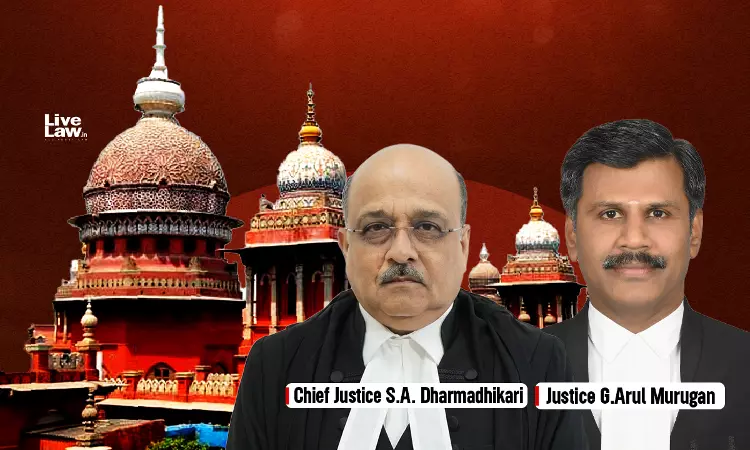
The Madras High Court has dismissed a plea filed by the All India Anna Dravida Kazhagam (AIADMK) party challenging a part of the resolution passed by the Tamil Nadu Legislative Assembly on June 19, urging the Union Government to setup fresh tribunal under the Inter-State River Water Disputes Act, with respect to the Mekedatu Dam issue. The bench of Chief Justice SA Dharmadhikari...
This is a premium content
Available exclusively to
Our subscribers
Subscribe Premium 
INR 1099+GST
Your support helps us to bring you more content at
an affordable subscription scheme !!!
All payment options available
The Madras High Court has dismissed a plea filed by the All India Anna Dravida Kazhagam (AIADMK) party challenging a part of the resolution passed by the Tamil Nadu Legislative Assembly on June 19, urging the Union Government to setup fresh tribunal under the Inter-State River Water Disputes Act, with respect to the Mekedatu Dam issue.
The bench of Chief Justice SA Dharmadhikari and Justice G Arul Murugan noted that the party did not have any objection to the content of the resolution but had only objected to the manner in which the part, urging the Union Government to set up a tribunal, was introduced in the resolution.
The court noted that the challenge, in its core, was about the compliance of procedure as per Rule 104 of the Tamil Nadu Legislative Assembly Rules. The court highlighted that Article 212 of the Constitution explicitly barred courts from interfering in proceedings of the Legislative Assembly merely on irregularity of procedure.
“In the present case, the grievance is that a suggestion made by the Leader of the Opposition during debate was accepted by the Chief Minister and incorporated into a Resolution without a separate formal motion, seconder, debate and division under Rule 104 of the Tamil Nadu Legislative Assembly Rules. That is, by definition, a complaint about the internal procedure by which the House arrived at its Resolution. It is not a complaint that the House lacked the power to pass such a Resolution, nor that the Resolution is void for want of jurisdiction, nor that it was carried by fraud or in bad faith. The petitioner's own affidavit disclaims any challenge to the substance of the Assembly's opposition to the Mekedatu project; he confines himself to the process. That is exactly the kind of grievance Article 212 of the Constitution of India was designed to keep outside the doors of this Court,” the court held.
The party had argued that on June 18, a resolution was circulated to them on objection to the Karnataka Government's proposal to build a dam at Mekedatu and asking the Government to withhold clearance for the project. It was submitted that on June 19, when the matter was taken up for debate, the Leader of Opposition raised the demand for a separate tribunal, and this demand was incorporated into the Resolution without being moved separately, seconded, debated or put to a distinct vote.
The party thus questioned the legality of the process by which the tribunal clause was added into the final text of the resolution. It was argued that though Article 212 bars courts from questioning the validity of legislative proceedings, in the present case, the party was challenging the authenticity of the document communicated to the Union Government.
The Secretary of the Legislative Assembly informed the court that on June 19, shortly before the resolution was moved, the Leader of Opposition had given a notice seeking to add a paragraph on the tribunal. However, due to the shortness of notice, it could not be taken up by the Speaker in the ordinary course. Later, during the debate, the LoP asked for his suggestion to be included. The Chief Minister replied, stating that a consultation has been held on setting up a special tribunal and that steps were underway to establish it.
The Secretary informed that when the Chief Minister asked the Speaker to add the suggestion to the resolution, no member opposed it. Further, when the Speaker put the Resolution to vote, no member opposed it, and it was declared as carried unanimously. It was also submitted that on August 7, when the leader of the AIADMK party raised the same grievance on the assembly floor, the Speaker ruled that there was no illegality and this ruling was also not questioned.
The court noted that in the present case, the challenge was only with respect to incorporating the suggestion without a separate motion, seconding, debate and division ordinarily contemplated under Rule 104 of the Tamil Nadu Legislative Assembly Rules. The court held that the complaint is one with respect to the procedure of the House and would fall under Article 212(1) of the Constitution.
The court also noted that though the party had claimed to challenge the authenticity of the document, what is claimed to be inauthentic was not the text of the resolution but only the sequence of steps by which the text was arrived at.
Discussing the decisions of the Supreme Court on the issue, the court held that the complaint is specifically one which falls under Article 212 of the Constitution and the court could not interfere in the same.
The court also noted that the members of the party had not objected at the time of introduction of the amendment and thus, could not come to the court after several weeks and claim that they were affected.
“A challenge of this kind cannot succeed unless prejudice is "ex facie apparent". The petitioner's own conduct, his continued presence through the debate, his silence at the vote, and his party's subsequent unsuccessful attempt to reopen the issue within the House itself demonstrates that no such prejudice exists. Courts exercising jurisdiction under Article 226 of the Constitution of India are not obliged to entertain a challenge founded on an irregularity that the petitioner himself was in a position to object to at the time, and chose not to,” the court observed.
Thus, noting that there was no mala fide or substantive illegality, the court dismissed the plea.
Counsel for Petitioner: Mr. S. R. Rajagopal Senior Counsel Asst by Mr. Lamech Indian and Mr. I. S. Inbadurai
Counsel for Respondent: Mr. Vijay Narayan Advocate General Asst by Mr. J. Lenin Special Govt Pleader and Mr. Akash Srinandha Govt Advocate, Mr. A. Kumaraguru Senior Panel Counsel
Case Title: Agri SS Krishnamurthy v The Secretary TN Legislative Assembly
Citation: 2026 LiveLaw (Mad) 457
Case No: WP No 29570 of 2026
Tags

Upasana Sajeev
Upasana Sajeev is a Principal Correspondent with LiveLaw, covering Madras High Court

