Madras High Court Slams State For Denying RSS March Permission Citing Mosques On Route, Says 'Don't Give Muslims A Bad Name'
Upasana Sajeev
15 Oct 2026 3:26 PM IST
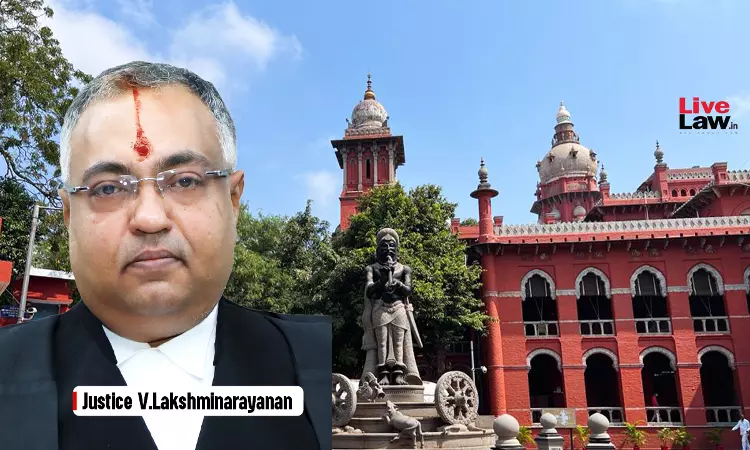
The Madras High Court, on Thursday (October 15), observed that the State police could not deny permission for a route march by Rashtriya Swayamsevak Sangh (RSS) citing the existence of a mosque on the proposed route, and not give muslims a bad name.
Justice V Lakshminarayanan made the oral remark while hearing a plea by the State Secretary of Rashtriya Swayamsevak Sangh (RSS), North Tamil Nadu, against the denial of permission for a route march proposed by the party.
On perusing the reasons pointed out by the State for rejecting permission, the court noted that one of the reasons cited was the existence of mosques and Eidgah on the route of the procession. Taking strong objection to this, the court remarked that the State should not portray Muslims in a bad light, as if the minorities would be objecting to the procession.
“Eidgah is for Ramzan and Bakrid. For gathering and praying. You're saying that they (Muslims) will celebrate Ramzan in October? You're giving a bad name for Muslims,” the court told the State.


“It is a matter of agony that the police authorities are mentioning as if those belonging to the minority community are having issues with the procession being held by the petitioner's organisation,” the court recorded in its order.
The court also orally remarked that the rights of the citizens could not be surrendered to the police.
“The problem is you (State) are surrendering everything to the police. Citizens' rights cannot be surrendered to the whims and fancies of the police…God forbid I surrender the rights of the citizens to the Director General of Police,” the court orally remarked.
It may be noted that during the hearing yesterday, the court had questioned why RSS was being denied permission for a route march in Tamil Nadu, when it was permitted to hold marches even in terrorist infested places like Jammu and Kashmir. The court had asked the counsel for the party to have a talk with the State Public Prosecutor John Sathyan and come up with a solution to conduct the meeting peacefully.
When the matter was again taken up today, the court was informed that the meeting yesterday was not fruitful.
The court noted that during the previous litigations, Justice G Jayachandran had laid down detailed guidelines to ensure that such unnecessary and frivolous litigations do not take up the court's time in future. The court added that the judge had previously rejected the same reasons cited by the State, terming it as “lame”. Despite the same, the court noted that the State had rejected permission, citing the same lame reasons.
“Before framing guidelines, the judge had concluded that the reasons that there are mosques and churches, possibility of traffic congestion, presence of organisation with different ideology, should not be taken as a reason for rejection. In fact, he had termed these reasons as lame. It was the fervent hope of the Supreme Court and this court that after the guidelines, such unnecessary and frivolous litigation would be avoided. Alas, it was not to be,” the court observed.
“The reasons which this court had found lame had been yet again given by the police…The purpose for which the guidelines has been framed has been breached by the petitioner and the State. It was expected that the parties will cooperate with each other. This faith has been entirely misplaced. This matter has been heard at length and time has been spent on a litigation that should not have arisen at all,” the court further observed.
The court thus directed the petitioner to provide details as mentioned in the earlier orders, including list of routes proposed, details of person in charge, details of participants etc in the form of an affidavit. The court also directed the petitioner to give an undertaking that they would scrupulously adhere to the conditions given by the court.
The court further directed the Advocate General to get instructions from the Director General of Police with respect to granting permission upon filing of such affidavit.
The court adjourned the hearing to tomorrow.