



Voluntary Discharge From Service Entails Forfeiture Of Past Service, Pension Benefit Cannot Be Invoked: Meghalaya High Court
LIVELAW NEWS NETWORK
6 Nov 2026 4:05 PM IST
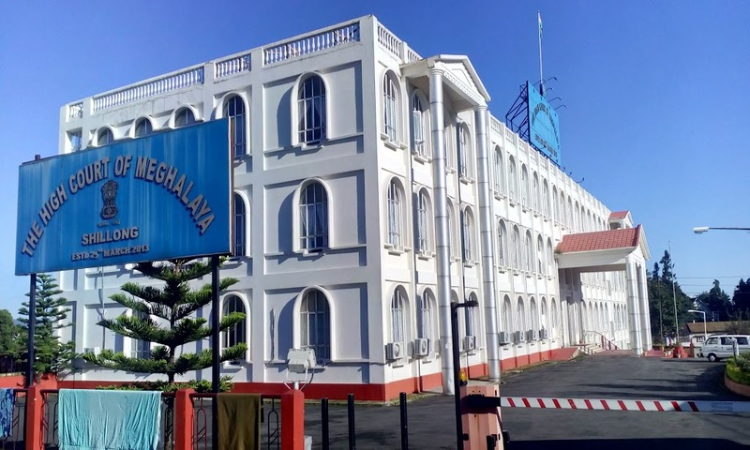
Image By: Kausik Roy
The Meghalaya High Court has dismissed a pension claim filed by a former Assam Rifles Rifleman who was discharged from service on his own request after rendering over 13 years of service, holding that voluntary resignation entails forfeiture of past service under Rule 26(1) of the Central Civil Services (Pension) Rules, 1972.
The Court clarified that an employee cannot invoke Rule 49(2), which provides pensionary benefits after completion of 10 years of qualifying service, when Rule 26(1) operates as a bar to such benefits.
The Court also rejected the petitioner's challenge on the ground of delay and laches, as he approached the authorities approximately 22 years after his discharge.
“Voluntarily resignation from a post entails forfeiture of all past services and is therefore not entitled to pensionary benefits. Rule 26(1) placed in juxtaposition with Rule 49(2), it is apparent that since Rule 26(1) operates as a bar to future service benefits, therefore, Rule 49(2) would become inapplicable in such a scenario.”


The petitioner, L. Pearlson, was appointed as a Rifleman (General Duty) in Assam Rifles on January 3, 1986. He claimed that he was discharged from service on June 30, 1999, without voluntarily seeking discharge, alleging that his signatures had been obtained on a pre-typed document.
The respondents, however, contended that he had sought premature discharge in 1998 on extreme compassionate grounds due to his wife's illness and had acknowledged that he would not be entitled to pensionary benefits. After his request for pension was rejected by the authorities on November 5, 2021, he approached the Meghalaya High Court challenging the decision.
The Meghalaya High Court observed that the petitioner's discharge certificate and a certificate dated December 23, 1998, established that he had sought discharge on compassionate grounds and was aware that he would not be entitled to pensionary benefits. The Court further noted that he challenged his discharge only in 2021, nearly 22 years after the discharge, without providing any plausible explanation for the delay.
On the question of pension, the Court held that voluntary discharge on one's own request could be treated as resignation, attracting Rule 26(1) of the CCS (Pension) Rules, 1972, which entails forfeiture of past service. It clarified that Rule 49(2), providing pension after completion of 10 years of qualifying service, would not apply where Rule 26(1) operates as a bar.
Accordingly, the Court dismissed the petition while directing the authorities to release ₹5,656 towards the petitioner's IRLA account and ₹53,642 towards his GPF account within 30 days, if not already paid.
Date of Decision: 29.10.2026


