Employee Can't Refuse Transfer Or Remain Absent From Duty By Filing Representation Against Posting: Patna High Court
Namdev Singh
28 Nov 2026 2:00 PM IST
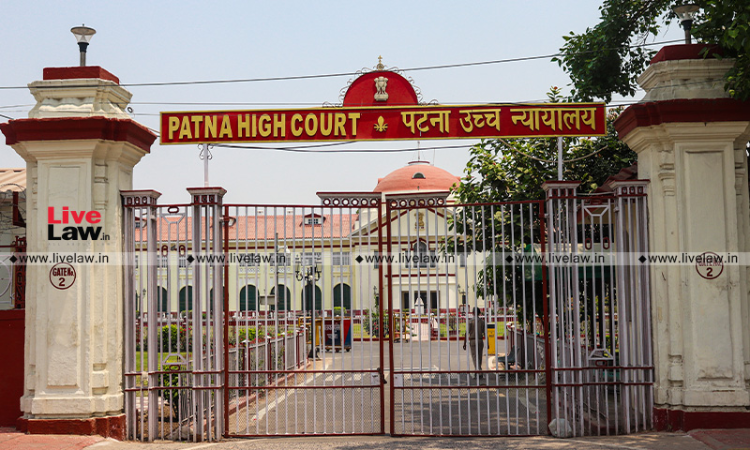
Image by: Siddharth Anand
A Division Bench of the Patna High Court comprising Justice Mohit Kumar Shah and Justice Sourendra Pandey held that employee cannot refuse a transfer or remain absent from duty merely by filing a representation, as transfer is an ordinary incident of service and the employer has discretion to decide postings based on administrative requirements.
Background Facts
The petitioner was appointed in the East Central Railway on compassionate grounds in 2015 after the death of his father. His father was working as a Goods Supervisor. At the time of appointment, he undertook to maintain his dependent mother. His mother was diagnosed with breast cancer and required constant medical assistance.
In 2017, the employee was transferred to Danapur. He was promoted to TCM Grade-II in December 2020 and continued working in the Danapur Division. Later, he was promoted to TCM Grade-I and transferred to Ara. However, due to his mother's medical condition, he sought retention at Danapur.
On 19.08.2025, the Senior Divisional Signal and Telecommunication Engineer issued an office order showing the employee as posted at Danapur. On the same day, the Senior Section Engineer issued another communication directing him to join at Ara. The employee claimed that these conflicting orders prevented him from marking his attendance at Danapur.


Subsequently, the Railway authorities issued a minor penalty charge memorandum alleging unauthorised absence from duty.
The employee approached the Central Administrative Tribunal, which directed the authorities to consider his representation. The authorities rejected his representation stating that no TCM Grade-I vacancy was available at Danapur, Patna or Patliputra. On 13.04.2026, the employee submitted a refusal of promotion. He stated that he could not join at Ara due to his mother's medical condition.
He again approached the Tribunal, challenging the rejection of his representation and the charge memorandum. However, the Tribunal dismissed his application.
Challenging the Tribunal's order, the employee approached the Patna High Court by filing a petition.
It was submitted by the employee that the Railway authorities had issued conflicting orders which prevented him from joining at either station. It was further argued that vacancies of TCM Grade-I existed at Danapur and Patna. The employee relied on information obtained under the Right to Information Act and contended that the authorities had incorrectly stated that no vacancies were available.
It was argued by the employee that his refusal of promotion was not voluntary but he was compelled by the authorities' insistence on transferring him to Ara despite his mother's medical condition.
On the other hand, the Railway authorities submitted that the employee had failed to comply with the promotion-cum-posting order and had not joined at Ara. It was argued that the employee could not be considered for promotion to the same post within one year of refusing the promotion, as per the Railway guidelines.
The authorities further submitted that disciplinary proceedings were initiated because the employee remained absent from duty without authorisation.
Findings and Observations of the Court
It was noted by the Division Bench that the employee had been promoted to TCM Grade-I on 23.12.2024 and was directed to join at Ara. However, he continued at Danapur for several months. It was observed that the employee claimed that he had been permitted to resume duty at Danapur on 03.01.2025, but he had not produced any document to substantiate this claim.
It was noted that the employee did not immediately approach the authorities regarding the alleged conflicting orders issued on 19.08.2025. Instead, he approached the Tribunal after more than four months.
Relying upon B. Varadha Rao v. State of Karnataka and Ors., it was held that transfer is an ordinary incident of government service and does not amount to an alteration of service conditions to the disadvantage of a government servant.
Relying on the Supreme Court's decision in N.C. Singhal v. Union of India, it was held that an employee who refuses an offered promotion cannot subsequently claim the promotional post from the date on which the opportunity for promotion arose.
The judgment in The Tamil Nadu Agricultural University v. R. Agila was also relied upon wherein it was observed that an employee must comply with a transfer order unless it is stayed, modified or cancelled by the competent authority. It was held that filing a representation against the transfer does not entitle an employee to remain absent from duty.
It was held by the Division Bench that merely because vacancies existed at Danapur or Patna, the employee could not claim a right to be posted there. The employer has the discretion to decide the posting of employees according to administrative requirements.
Accordingly, the order of the Tribunal was upheld by the Division Bench. Consequently. The petition filed by the employee was dismissed by the Bench.
Counsel for the Petitioners: Amrendra Narayan, Ravi Bhushan
Counsel for the Respondent: Shally Kumari, CGC